


Could choosing a soy-free creamer support hormone balance, or does it simply make ingredient screening easier? If conflicting claims about soy have left you unsure what to believe, you’re not alone. A soy free creamer for hormone balance may sound like a simple wellness step, but avoiding soy isn’t an established way to regulate hormones. It may still be the right choice for an allergy, dietary preference, or personal comfort.
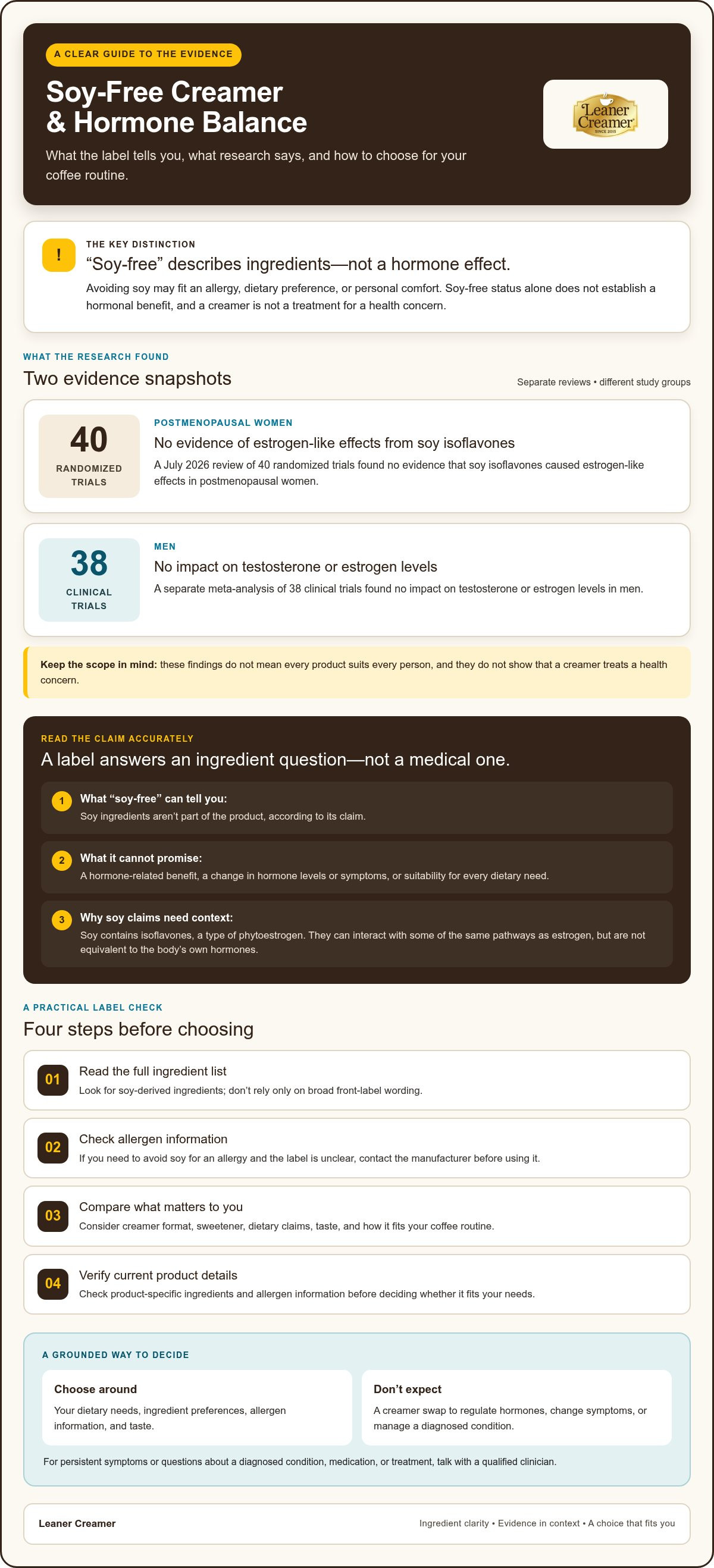
Current evidence offers a more reassuring picture than some online claims suggest. A July 2026 review of 40 randomized trials found no evidence that soy isoflavones caused estrogen-like effects in postmenopausal women. A separate meta-analysis of 38 clinical trials found no impact on testosterone or estrogen levels in men. These findings don’t mean every product suits every person, or that a creamer treats a health concern.
In this guide, you’ll learn what “soy-free” can tell you, how to check ingredient and allergen information, and what research does and doesn’t say about soy and hormones. Then you can choose a creamer that suits your preferences and coffee routine, without expecting it to do more than it can.
Key Takeaways
- “Soy-free” describes a product’s ingredients, not a promise about hormone effects.
- Check ingredient lists and allergen statements for soy-derived ingredients, even when the front label makes a broad claim.
- When comparing a soy free creamer for hormone balance, focus on dietary needs and product fit rather than expecting a creamer to treat a health concern.
- Compare creamer format, sweetener, dietary claims, and taste before choosing an option for your coffee routine.
- Check current product-specific ingredient and allergen information before deciding whether a creamer fits your needs.
Soy-Free Creamer and Hormone Balance: What the Label Can, and Cannot, Tell You
If you’re considering a soy-free creamer because you’ve heard soy affects hormones, it’s reasonable to want a clearer answer. Start by separating two questions: What ingredients are in the creamer, and what effect might a food have on health? A soy-free label speaks to the first. On its own, it doesn’t establish a hormonal benefit.
“Soy-free describes a product’s ingredients, not an effect on your hormones.” The phrase “hormone balance” can also be vague. Hormones naturally change with factors such as age and life stage, and there isn’t one universal state or single measure that a creamer can promise to achieve. Choosing food to fit your preferences is different from clinically managing a hormone-related condition.
For a general look at the term phytoestrogen and the plant compounds discussed in relation to soy, see this overview. It’s useful background, not a substitute for medical advice or evidence that a particular creamer changes hormone levels.
A dairy-free cream alternative may also be useful when comparing options for your coffee routine. This video discusses that broader topic, though it isn’t evidence about hormone effects:
What does soy-free creamer mean?
The claim indicates that soy ingredients aren’t part of the product, but check the current ingredient list and allergen statement rather than relying only on front-of-package wording. If you need to avoid soy because of an allergy and the label doesn’t answer your questions, contact the manufacturer before using the product. Soy-free also doesn’t automatically mean healthier, more nutritious, or suitable for every dietary need. Compare the full ingredient panel and other details that matter to you.
Does avoiding soy automatically support hormone balance?
No. Soy-free status alone doesn’t demonstrate a hormone-related benefit, and a creamer swap shouldn’t be expected to change hormone levels or symptoms. If symptoms persist or you have questions about a diagnosed condition, medication, or treatment, talk with a qualified clinician. Dietary preferences can still guide your choice, but keep them separate from medical management.
For instance, assess a flavored option such as salted caramel coffee creamer by its current product-specific ingredient and allergen information, not its flavor or name. The label is the practical starting point.
Soy, Isoflavones, and Hormones: How to Read the Evidence Carefully
Claims that soy “acts like estrogen” can sound alarming, but that phrase leaves out important context. Soy contains compounds studied for possible interactions with hormone pathways. That doesn’t mean eating soy has the same effect as taking a hormone, or that everyone responds in the same way. To assess claims about a soy free creamer for hormone balance, it helps to understand what researchers mean by soy isoflavones and what human studies can show.
What are soy isoflavones?
Isoflavones are naturally occurring compounds found in soy foods. They’re one type of phytoestrogen, a broad term for plant compounds that can interact with some of the same pathways as estrogen. Harvard T.H. Chan School of Public Health describes soy isoflavones as similar in function to human estrogen, but that doesn’t make them equivalent to the body’s own hormones. Their effects can depend on biological context, so the phrase “estrogen-like” alone doesn’t predict a specific outcome.
Why hormone claims need context
Hormones work within interconnected systems. A single ingredient in a creamer can’t explain a person’s overall hormone status, symptoms, or diagnosis. Research findings describe outcomes in groups under particular study conditions; they can’t confirm the cause of an individual’s experience. Personal symptoms matter, but they don’t prove soy caused them. Social-media anecdotes and hypotheses may raise questions, yet they aren’t the same as established clinical evidence.
Some human research offers useful context. A July 2026 review of 40 randomized trials, reported by the Center for Science in the Public Interest, found no evidence that soy isoflavones caused estrogen-like effects such as uterine-lining thickening in postmenopausal women. A separate meta-analysis of 38 clinical trials, published in 2025 and indexed by the National Library of Medicine, found no impact on testosterone or estrogen levels in men. These findings address specific groups and outcomes. They don’t establish what will happen for every person or answer every question about soy.
What someone eats overall, how much they consume, and their health context may all matter when interpreting evidence. A creamer choice is one small part of a broader dietary pattern, not a hormone assessment. If you’re pregnant, have a diagnosed hormone-related condition, or have questions about soy alongside medication, ask a qualified clinician for guidance rather than relying on a food label or online claim.
Keep the evidence and shopping decision separate: choose a creamer based on your dietary needs and preferences, not an assumption that soy-free status will change hormones. If you’re comparing options for your coffee routine, review Leaner Creamer’s product information and check current ingredient details.
How to Compare Soy-Free Creamer Labels Without Missing Other Ingredients
A front label can help narrow your choices, but it can’t tell the whole story. For a soy free creamer for hormone balance, treat “soy-free” as one ingredient-screening detail, not a measure of hormonal impact or overall nutrition. Compare the full product information with your needs, then choose what fits your coffee routine.
Which words and statements should shoppers check?
Review the current ingredient list and allergen statement for the exact product and package you’re considering. Formulas and packaging can change, so don’t rely on an older label, a general brand statement, or a front-of-pack claim alone. If you avoid soy because of an allergy and the information is unclear, contact the manufacturer before using the product.
For product-specific details, consult Leaner Creamer ingredient information and confirm the current package label as well. Broader explanations of how soy isoflavones affect hormones can help keep ingredient screening separate from medical conclusions. Neither a soy-free claim nor another nutrition statement establishes a hormone effect.
What else matters beyond soy-free status?
Consider the format you prefer, the sweetener, serving size, dietary requirements, and how the creamer tastes in your usual coffee. “Plant-based” doesn’t automatically mean soy-free, while “sugar-free” and “glucose-friendly” describe different product considerations, not hormonal outcomes. Check each claim against the ingredients and nutrition information rather than assuming one label tells you everything.
Use this simple comparison as you shop:
| What to compare | What to check |
|---|---|
| Ingredients and allergens | Does the current product panel fit your soy-avoidance needs? |
| Format | Is it powdered or liquid, and does that suit how you make coffee? |
| Sweetener and serving | What sweetener is listed, and what serving size is shown? |
| Dietary claims | Are claims such as vegan or gluten-free relevant to your needs and supported by product information? |
| Taste and routine | Does the flavor work in the coffee or latte you typically prepare? |
For a broader ingredient-selection perspective, use the same practical checks found in a healthy coffee creamers guide: look beyond the headline claim and compare the details that matter to you. A careful label review makes it easier to find a creamer that fits your preferences, without treating any single ingredient claim as a hormone-health promise.
A Practical Checklist for Choosing a Soy-Free Coffee Creamer
A clear process can make the choice simpler. Start with why you’re avoiding soy, check the product details, decide whether the format suits your routine, and consider taste. The goal is a creamer that fits your needs, not one expected to affect hormone levels.
- 1. Identify your reason for avoiding soy. An allergy-related need calls for careful ingredient and allergen review. If soy-free is a personal preference, use it as one shopping filter alongside taste, sweetness, and other dietary needs. Follow clinician guidance if you have an allergy or related medical concern.
- 2. Read the current product information. Check the complete ingredient statement and allergen declaration on the package. Don’t assume every flavor in a range has the same formula. If the label doesn’t resolve a safety question, contact the manufacturer. Don’t infer cross-contact controls unless the product information confirms them.
- 3. Compare format and serving details. If you’re considering powdered creamer, check the package’s serving instructions and decide whether they fit how you prepare coffee. Compare the stated serving size and sweetness with your preferences.
- 4. Consider taste in your usual routine. Flavor and how a creamer works in your regular coffee matter. Use current product information to guide your choice, then see whether the taste suits you.
How can I confirm a creamer is soy-free?
Look at the full ingredient list and any allergen statement for the specific product, not just a front-label claim or a description of the brand’s range. Labels can change, so review the information each time you choose or repurchase a product. If you need to avoid soy because of an allergy and aren’t sure how to interpret the label, ask the manufacturer or follow your clinician’s advice.
How do I decide whether a powdered creamer fits?
Consider whether measuring and adding powder works with your coffee-making routine. Check the product’s serving directions and sweetness information, then think about the flavor you enjoy in your usual cup. For broader context, a healthy coffee creamers guide can help you compare formats and ingredient priorities, but use each product’s current label to make your decision.
Leaner Creamer offers powdered creamers and describes its products as soy-free. Because product listings may include different ingredient and allergen details, check the specific product information and current package before choosing.
Where Leaner Creamer Fits: A Soy-Free Option, Not a Hormone Treatment
After sorting through the evidence and label details, the practical question is whether a creamer fits your routine. Leaner Creamer describes its creamers as powdered, soy-free, dairy-free, gluten-free, vegan, and sugar-free. Those are dietary and product attributes, not evidence that a creamer balances hormones, treats symptoms, or changes hormone levels. Check the current details for the specific product you’re considering.
So if you’re looking for a soy free creamer for hormone balance, keep the goal clear: choosing a soy-free product may suit an allergy-related need or personal preference, but it shouldn’t be treated as hormone therapy or a replacement for medical advice.
What can readers verify about Leaner Creamer?
The powdered format may suit people who prefer to measure creamer into coffee rather than use a liquid product. To check whether a specific option fits your needs, review its ingredient information alongside the current product package. Confirm the ingredient list and allergen details for the flavor you’re considering instead of assuming every product has identical details.
You can also explore the available creamer range and compare options by flavor and the dietary attributes that matter to you. Use product information to make that comparison, not to infer a health outcome.
What is a sensible next step?
Match your needs to the current label. If you avoid soy because of an allergy, ask the manufacturer about any unresolved ingredient or safety question, and follow advice from your healthcare professional. If you’re experiencing hormone-related symptoms or have questions about a diagnosed condition, discuss them with a qualified healthcare professional. A creamer can suit a preferred coffee routine, but it can’t diagnose or manage a health concern.
Choose what fits your ingredients, dietary preferences, and daily cup. No extra health promises needed.
Choose a Creamer for Your Needs, Not a Hormone Promise
A soy-free label describes ingredients; it doesn’t show that a creamer will balance hormones or ease symptoms. Research on soy and hormones needs context, and a coffee swap isn’t a substitute for care from a qualified clinician. Use your dietary needs, the current ingredient list, and the allergen statement to guide your choice.
If you’re considering a soy free creamer for hormone balance, verify the specific product before buying. Leaner Creamer describes its creamers as powdered, dairy-free, gluten-free, vegan, and sugar-free. However, available product listings report soy lecithin and a soy allergen warning, so don’t assume its products are soy-free. Check the latest package information, especially if you avoid soy because of an allergy.
Let ingredient transparency support a coffee routine that feels right for you, without expecting a creamer to deliver a medical outcome.
A thoughtful label check is a small, practical step toward a choice that fits your needs.
Frequently Asked Questions
Does soy-free creamer help balance hormones?
No, soy-free status alone doesn’t show that a creamer affects hormone levels or symptoms. It describes an ingredient choice, which may matter for an allergy or personal preference. Research findings about soy and hormones depend on the population and outcome studied, so they don’t establish that choosing a soy free creamer for hormone balance will produce a health benefit. For persistent symptoms or treatment questions, speak with a qualified healthcare professional.
Is soy bad for hormone balance?
Soy isn’t automatically bad for hormones. Soy contains isoflavones, plant compounds that can interact with hormone-related pathways, but that doesn’t mean they act exactly like human estrogen in every person or situation. Human research has not shown a simple, universal hormone-disrupting effect. Individual symptoms deserve attention, but an experience after eating soy doesn’t by itself prove soy caused it. Ask a clinician about concerns related to your health.
Can a soy-free coffee creamer contain hidden soy ingredients?
Check the full ingredient list and allergen statement rather than relying only on the front label. Soy-derived ingredients, such as soy lecithin, may be listed by name, and food allergen labeling rules require intentional soy ingredients to be declared. If you have an allergy, don’t guess about unclear ingredients or possible cross-contact. Contact the manufacturer for product-specific information, and follow your clinician’s advice about safe food choices.
What should I look for in a soy-free creamer?
Read the current ingredient list and allergen statement for the specific product and flavor. Then compare serving size, sweetener, dietary claims, and whether the format suits your coffee routine. Claims such as “plant-based” or “sugar-free” don’t tell you every ingredient or prove a hormone effect. If you’re avoiding soy because of an allergy and product details are unclear, ask the manufacturer before using it.
Are plant-based creamers always soy-free?
No. “Plant-based” describes a broad category, and products in it can use different plant ingredients, including soy. A plant-based claim alone doesn’t confirm that a creamer is soy-free or suitable for someone with a soy allergy. Review the package’s full ingredient list and allergen statement. Check each flavor separately, since ingredients can differ across products, even within the same brand.
Is powdered creamer a good option if I avoid soy?
It can be an option if the specific powdered product fits your dietary needs and coffee routine. Powdered describes the format, not whether soy is present. Check that product’s current ingredients and allergen information, and follow the serving directions to assess sweetness and taste. If you’re avoiding soy for an allergy, contact the manufacturer when the label doesn’t answer a safety question.
Should I ask a doctor before changing my diet for hormone concerns?
Yes, talk with a qualified healthcare professional if you have persistent symptoms, a diagnosed hormone-related condition, or questions about diet alongside medication or pregnancy. A clinician can consider your personal health context; a creamer label can’t assess hormone status or guide treatment. You can still choose foods based on preference or dietary needs, but don’t rely on a soy-free swap to diagnose or manage a health concern.


