


Does a best-by date mean your powdered creamer has gone bad? Not necessarily. If you’re wondering how to tell if powdered creamer is bad, the date is only one clue. It’s reasonable to avoid throwing away a usable pantry staple, while also being careful about what you add to your coffee.
A careful check can help you make a more informed choice. Start with the date and packaging, then look for changes in smell, color, and texture. Consider how the powder was stored, too. A few loose clumps may mean something different from hard, widespread lumps, while visible mold or an unusual odor calls for caution. No single clue tells the whole story, and you don’t need to taste questionable powder to decide what to do.
Key Takeaways
- To judge how to tell if powdered creamer is bad, consider the date, package condition, powder, smell, and storage history together.
- A best-by date is a quality clue, not a verdict. Read the label and follow the manufacturer’s guidance.
- Clumping can indicate moisture exposure. Check for other changes before deciding what to do.
- Use a clean, dry utensil and close the package promptly after each use to limit moisture and air exposure.
- If you notice concerning changes, set the powder aside rather than tasting it, and follow the package or manufacturer’s instructions.
How to Tell If Powdered Creamer Is Bad: Start With These Clues
An old date on the package or powder that looks different from what you remember can make a simple coffee routine feel uncertain. To judge how to tell if powdered creamer is bad, assess several clues together rather than relying on one detail. Start with this checklist:
- Date: Read the date and any instructions printed nearby.
- Package condition: Look for a broken seal, puncture, or container that no longer closes securely.
- Appearance: Check for unexpected color changes, dampness, clumps, or visible contamination.
- Smell: Notice whether the aroma seems unusual for that product.
- Storage history: Consider whether the powder may have been exposed to moisture, heat, or air.
These details help you decide what needs closer attention, but no single observation can confirm whether a product is suitable to use. An older date doesn’t tell you whether the package stayed sealed, and a texture change should be considered alongside storage and other signs. General information about Food spoilage describes changes in odor, color, and texture, as well as the role of packaging and storage. For a specific creamer, follow the directions on its label.
What changes should make you pause?
Pause if the powder has unexpected discoloration, an unusual odor, visible contamination, or a damaged seal. Dampness or a package that appears compromised also deserves caution. These are warning signs to investigate, not proof of one particular cause. Compare the powder with its usual appearance and follow any product-specific instructions. Don’t taste powder that appears contaminated, damp, or noticeably changed.
Look at the powder in good light and check the package before stirring or transferring anything. If something seems concerning, set it aside rather than trying to hide the change by mixing it into coffee. A familiar appearance or smell can provide useful context, but it isn’t a guarantee. Sensory checks can guide your next step; they don’t replace the product’s own guidance.
Is a best-by date enough to decide?
No single date answers every question. Date-label wording and its meaning can vary by product and manufacturer, so don’t assume the date alone confirms either spoilage or suitability. Read the full label, including storage directions, and follow the manufacturer’s guidance if the date has passed or the package has been opened or damaged.
A date check tells you what the label says; a complete condition check also considers the package, powder, smell, and storage history. This keeps your decision grounded in the evidence you can assess. If the label’s advice and the powder’s condition leave you unsure, choose caution rather than taste-testing it.
Why Powdered Creamer Changes: Moisture, Air, Heat, and Time
Powdered creamer is a dry food, but its condition can still change. Ingredients, packaging, and storage all matter. A sealed container helps shield the powder from the surrounding environment. Once opened, each use creates another opportunity for air or moisture to get inside. The storage history can therefore add important context to what you find in the container.
Powdered foods generally have little available moisture for many microorganisms to grow, but they aren’t automatically protected from every quality or safety concern. The article Food safety for powdered products discusses low water activity and the possibility of contamination. In practical terms, moisture can change the powder’s texture, while air, heat, light, and prolonged storage are additional reasons to assess it rather than assume it stayed unchanged. Follow the product label for storage directions and specific guidance.
Storage conditions shape what you find, so inspect the powder in the context of how it was packaged and kept. This is especially useful when considering how to tell if powdered creamer is bad and the texture looks different than expected.
Why moisture can cause clumping
A few loose clumps aren’t the same as powder that feels damp or has formed persistent, widespread lumps. Clumping can be a reason to investigate possible moisture exposure, but it doesn’t by itself confirm spoilage or establish that the powder is suitable to use. Consider whether the package was damaged or left open, where it was stored, and whether you notice changes in smell or appearance.
How packaging and storage affect the powder
Check whether the container remained sealed and whether you stored it as the label directs. A loose lid, damaged inner seal, or repeated exposure to humid air can affect the contents. Close the container promptly after each use, and avoid storing it near heat, light, or moisture if the package advises keeping it in a cool, dry place.
Time matters, too, but there’s no single storage duration that applies to every recipe or package. Ingredients and packaging can differ, so don’t treat a general timeline as a guarantee. Use the date and storage instructions on the specific product, then weigh them alongside what you observe. If the powder is damp, extensively clumped, or noticeably changed, don’t try to fix it by breaking up the lumps or mixing it into a drink. Set it aside and follow the package or manufacturer’s guidance.
- Moisture: Consider whether the powder or container may have become wet or humid.
- Air: Think about how often the package was open and whether it sealed tightly afterward.
- Heat and light: Check whether it sat near a warm appliance or in a bright location.
- Time: Refer to the product’s own date and storage directions instead of assuming a universal shelf life.
If you’re choosing a replacement for a future coffee routine, you can explore powdered coffee creamer options. Leaner Creamer’s current products are dairy-free and made with coconut-based ingredients.
Best-By Date vs. Spoilage Signs: How to Weigh the Evidence
A date can help you understand the manufacturer’s guidance, but it can’t tell you what happened to the package after it left the shelf. For a more useful decision, compare the label with the container’s condition, the powder itself, and how it was stored. A date provides context, while visible contamination or dampness calls for more caution.
Clue | What it may tell you | How to weigh it
Date label | The product’s stated date or guidance | Check the exact wording and follow the package instructions. A passed date alone doesn’t establish the powder’s condition.
Intact packaging | Whether the seal and container appear undamaged | A broken seal or puncture warrants caution, even if the date hasn’t passed.
Texture | Whether the powder appears dry and consistent | Dampness or pronounced, persistent clumping merits closer attention; texture alone doesn’t confirm spoilage.
Smell | Whether the aroma seems noticeably unusual | Treat an unexpected odor as a warning sign, not a definitive explanation of what changed.
Storage history | Whether the package was kept as directed | Exposure to moisture, heat, or air adds context to other signs. Follow product-specific storage guidance.
Use the table to organize what you know, not as a scoring system. One reassuring clue can’t cancel out a serious concern. An in-date product may still deserve caution if its seal is broken, the powder is damp, or you notice pronounced changes. Likewise, a date that has passed doesn’t reveal by itself whether the contents changed. To tell if powdered creamer is bad, weigh the label and physical condition together.
When the date has passed but the powder looks unchanged
Start by checking the exact date wording and the product’s storage and use instructions. Date terms can vary, so don’t treat every past-date product as automatically safe or automatically spoiled. If the label says to discard it after that date, follow that direction. Discard it as well if you notice concerning changes, even if the powder otherwise looks familiar.
When the date has not passed but something seems wrong
A future date isn’t a reason to ignore a broken seal, damp powder, visible contamination, or pronounced changes in smell or appearance. Set the product aside and follow its label or manufacturer guidance. Don’t taste-test powder when warning signs are present. An intact date doesn’t replace checking the package and product condition. If the instructions don’t resolve your concern, choosing not to use questionable powder is the more cautious decision.
In short, treat the date as one part of the picture. Let the package and powder’s condition guide how carefully you proceed, and follow product-specific directions whenever clues conflict.
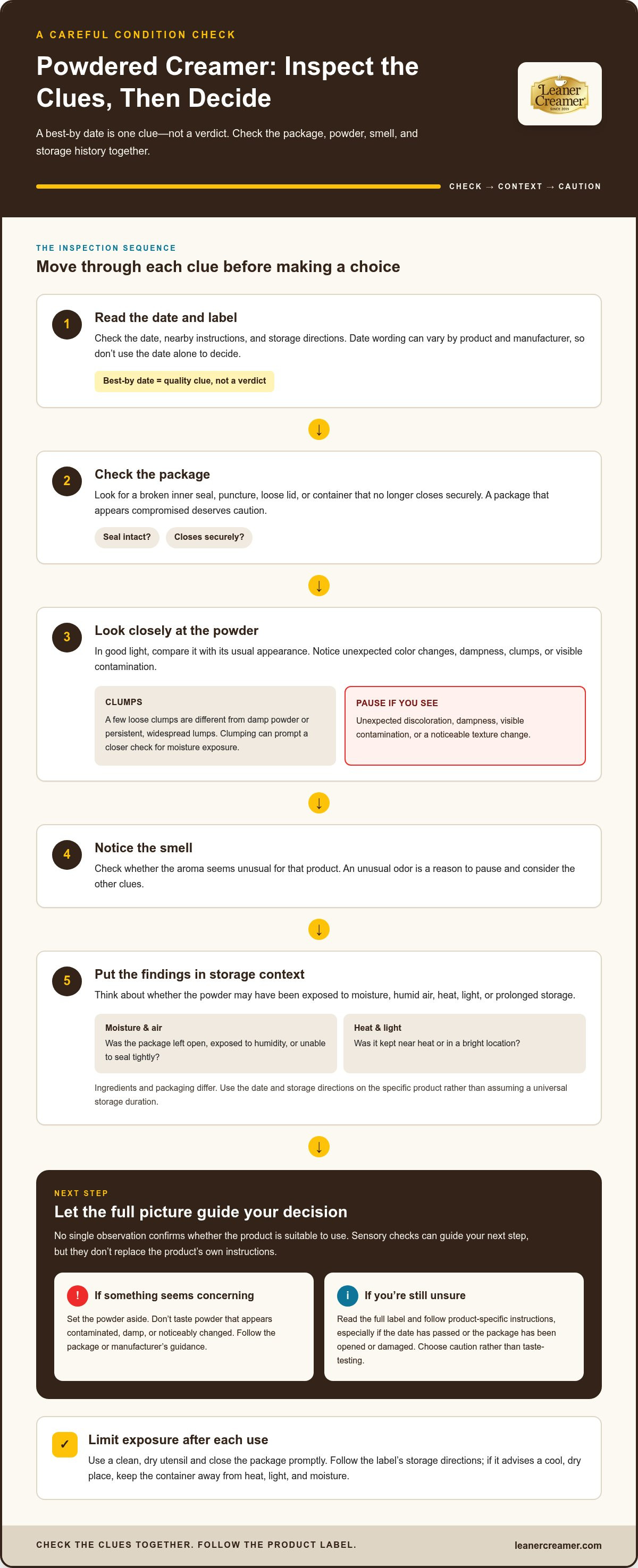
How to Inspect and Store Powdered Creamer: A Simple Step-by-Step Check
An orderly inspection can make the choice less uncertain. Before adding powder to coffee, check the label and container, then examine the contents. Don’t taste anything that seems unusual.
- Read the label. Confirm the product name and check the exact date wording, storage directions, and any instructions for use after opening. Follow this product’s guidance rather than relying on a general rule for all powdered creamers.
- Inspect the package. Look for a torn inner seal, puncture, damaged lid, or closure that won’t stay secure. If you see pests or signs of contamination, don’t handle the suspicious material or use the powder.
- Examine the powder. In good light, check for dampness, unexpected discoloration, unusual clumping, or visible growth. Avoid stirring it or breaking apart anything that looks suspicious.
- Smell cautiously. Without putting your face close to the powder, notice whether the aroma seems markedly different from what you expect. An unusual smell is a reason to pause, not a prompt to taste-test.
- Assess storage. Think about whether the container was left open, stored somewhere contrary to its label, or exposed to heat or moisture. This history can help put changes in context.
A quick inspection before adding powder to coffee
Keep the steps simple and don’t taste the powder to settle a concern. An intact package and familiar appearance provide useful context, but neither guarantees the product is suitable to use. If the seal is broken or you notice dampness, contamination, or pronounced changes, set the creamer aside and follow the label or manufacturer’s guidance.
Everyday habits that help keep powder in good condition
Once you’ve checked the product, small habits can help limit avoidable exposure. Store it as the label directs, keep the closure secure, and close the package promptly after each use. Use a clean, dry scoop. Don’t scoop with a damp utensil or hold the open container over steaming coffee, since steam can introduce moisture. If you’re comparing recipes, the brand’s ingredient information explains how ingredients vary between products.
There’s no need to transfer the powder or add extra storage steps unless the product’s instructions call for them. The package guidance is the best reference for that specific creamer.
Not sure? Don’t use powder that seems questionable. Set it aside and follow the product label or manufacturer’s guidance. If concerning changes are present, don’t taste it to check.
A mindful pause before your next cup can help you make a considered choice. If you’re looking for another powdered option for a future coffee routine, explore the product range:
Handling Suspect Powder and Choosing Your Next Creamer
If something about the powder gives you pause, don’t try to rescue it by stirring it into coffee or masking its smell with other ingredients. Set it aside and read the package directions. How to tell if powdered creamer is bad doesn’t have a single visual, smell, or date-based answer. Each clue can help you assess the product, but none guarantees its condition on its own.
When should you discard powdered creamer?
Don’t use powder with visible contamination, unexpected dampness, damaged packaging, or pronounced changes in appearance or smell. These signs don’t tell you exactly what caused a change, but they’re enough to stop and take a cautious approach. Follow the product’s label or manufacturer guidance for product-specific questions, especially if the instructions and what you observe seem to conflict.
If you can’t resolve the uncertainty, choose not to use it. Avoid tasting powder with warning signs, and don’t assume that an unchanged appearance or an unpassed date proves it’s suitable. A careful decision is better than taking a chance with a product you’re unsure about.
A mindful powdered option for a future coffee routine
If you’re choosing a replacement, consider the ingredients you prefer, how you like to prepare your coffee, and the flavor and texture you want in your cup. Leaner Creamer’s current powdered products are dairy-free, coconut-based, and contain no added sugar. Coconut milk powder provides creaminess and body, while functional ingredients are included for flavor, texture, or experience. These are everyday drinks, not supplements or replacements for supplements.
Recipes can differ between products, so looking at the ingredient list can help you make a choice that fits your preferences. You can explore the range of powdered coffee creamers as you plan your next coffee routine.
Make Your Next Coffee Choice With Confidence
A coffee routine is a small daily ritual, and choosing what goes into your cup can be part of caring for how you feel throughout the day. Knowing how to tell if powdered creamer is bad gives you a thoughtful starting point: use the product’s own guidance, and don’t use powder that leaves you concerned.
If you’re considering a different option for your next cup, compare the ingredients and preparation style with your preferences. Leaner Creamer’s current products are dairy-free, made with coconut-based ingredients, and contain no added sugar. Coconut milk powder brings creaminess and body, while functional ingredients are used for flavor, texture, or experience. These are everyday drinks, not supplements.
Choose an option that fits your routine and enjoy the moment.
Frequently Asked Questions
How can you tell if powdered creamer has gone bad?
Check the label and package first, then inspect for unexpected discoloration, moisture, contamination, or a noticeably changed smell. Clumping alone isn’t conclusive, but unusual or widespread clumps deserve caution, especially if the container was left open or stored somewhere humid. These clues can’t guarantee the powder’s condition. If you’re unsure how to tell if powdered creamer is bad, don’t taste-test it. Follow the product’s instructions or manufacturer guidance.
Can powdered creamer go bad after the best-by date?
Yes, its condition can change, but a passed date alone doesn’t establish whether it has. Date wording and guidance differ by product, so read the full label rather than treating every date the same way. Consider how the package was stored and whether its seal, appearance, or smell has changed. Don’t assume all past-date creamer is safe or unsafe. If you notice warning signs or remain uncertain, follow the manufacturer’s guidance.
Is clumpy powdered creamer bad?
Not necessarily. A few clumps don’t prove the creamer has spoiled, but dampness or widespread, stubborn clumping is a reason to pause. Think about whether the package was left open, damaged, or exposed to moisture, and check for other changes in color or smell. If the powder seems questionable, don’t taste it to investigate. Use the product’s storage instructions and manufacturer guidance to decide what to do next.
How long does powdered creamer last after opening?
There isn’t one opening-to-use timeframe that applies to every powdered creamer. Formulas, packaging, and manufacturer directions can differ, so look for an after-opening instruction or date on your package. Keep its closure secure and store it as directed. If the label doesn’t explain how long to use it after opening, seek manufacturer-specific information instead of borrowing a time estimate from another brand or product.
Should powdered creamer smell different when it goes bad?
A noticeably unexpected odor is a reason to pause, particularly if you also find dampness, discoloration, damaged packaging, or an unusual texture. Smell alone can’t identify exactly what changed, and a familiar aroma can’t guarantee the powder is suitable to use. Don’t taste it to investigate. Check the label and follow its directions or the manufacturer’s guidance, especially if the odor is new or you’re uncertain about the product.
Can you use powdered creamer if the package was left open?
It depends on how it was left open and the product’s instructions. Exposure may let moisture or other contaminants reach the powder, but an open container alone doesn’t establish its condition. Check whether the package is damaged and look for dampness, unexpected changes, or an unusual odor. If anything seems questionable, don’t use or taste it. Follow the label or manufacturer guidance rather than applying a universal time limit.


