


What if the best healthy coffee creamer for the office isn’t the one with the most wellness claims, but the one people can use comfortably every day? A shared coffee station has to serve different tastes and dietary preferences, while refrigerated cartons can take up space and need regular restocking. Simple labels matter, too.
You don’t need a long list of health promises to make a thoughtful choice. Look for clear ingredient information, consider added sugar and dietary needs, and match the format to your office routine. The right fit is practical, flavorful, and easy for coworkers to understand.
This guide compares refrigerated liquid, shelf-stable powdered, and single-serve creamers, with a closer look at storage, convenience, ingredients, and common dietary labels. It also explains where powdered options, including plant-based creamers like Leaner Creamer’s, may suit a shared coffee station, without suggesting one format works for every workplace.
Key Takeaways
- Choose a creamer format by weighing storage, serving convenience, cleanup, and waste against your office’s daily routine.
- Assess a healthy coffee creamer for the office by reading the ingredient label and checking dietary attributes that matter to your team.
- Compare powdered, single-serve, refrigerated, and shelf-stable options without assuming one format is right for every workplace.
- Make the coffee station easier to share by organizing supplies and displaying ingredient and dietary information clearly.
- Consider powdered, plant-based, sugar-free creamer as one practical option, then see how it fits your team’s preferences and routine.
Healthy Coffee Creamer for the Office: What Makes a Shared Option Practical?
A creamer that works beautifully in one person’s kitchen can become awkward in a busy breakroom. Coworkers may have different preferences, the refrigerator may be crowded, and a communal counter can quickly collect drips, lids, and spoons. A practical choice needs to fit the way people actually use the station, not just taste good in one cup.
Start with a short checklist. It keeps “healthy” grounded in choices people can verify and helps the team compare options without treating one creamer as right for everyone:
- Format: Will a shared container, individual portions, or a shelf-stable option suit the way employees serve themselves?
- Ingredients: Which ingredients and nutrition details matter to the people using it?
- Dietary needs: Are dairy-free, vegan, gluten-free, or other clearly labeled options important?
- Storage: Is refrigerator space available, and can opened products be stored as directed?
- Serving and cleanup: Can coworkers portion it easily without leaving spills or shared utensils behind?
What does “healthy” mean when choosing office coffee creamer?
“Healthy” isn’t one universal standard. One employee may focus on added sugar, while another checks for dairy, soy, or other ingredients they avoid. A label can help make those differences visible: look at the ingredient list, nutrition facts, serving information, and any specific dietary statements. Terms such as “natural” or “better for you” are broad, so they’re less useful on their own than details you can actually assess.
A creamer label can’t promise a particular health outcome. In particular, don’t assume a sugar-free or glucose-friendly statement means the product improves glucose levels or treats a condition. Read the current package and let each person decide what fits their needs. For general background on the product category and its different types, see this overview of coffee creamer.
Which office routines change the creamer decision?
Usage patterns matter. If only a few people make coffee occasionally, individual portions may be convenient and help limit shared handling. A frequently used station may work better with a clearly labeled communal format that’s easy to replenish and serve. Refrigerated choices also depend on available fridge space and someone remembering storage and restocking.
Consider who prepares drinks. A host serving coffee to guests may prefer a small, predictable set of clearly labeled choices. At a self-serve station, simple instructions and a dedicated scoop can make serving easier and help keep the counter tidy. Powdered creamers, including plant-based options, are one format to compare when refrigeration is a concern. Flavor can help make the choice inviting too; for example, salted caramel powdered coffee creamer offers a flavored alternative to a plain cup.
That’s the office difference: an individual at home can choose around personal taste and routine, while a shared station has to make choices understandable for several people. Aim for a format employees can use easily, with ingredient and dietary information visible beside it. A small, clear setup can make the morning cup feel more welcoming and leave less guesswork for the next person.
How to Compare Office Creamers by Ingredients, Format, and Dietary Needs
A shared creamer has to work beyond the first cup: it should be simple to serve, suit the station’s storage setup, and make ingredient choices clear. Compare formats on those practical details first, then check the label against the needs of the people who’ll use it. That makes it easier to choose a healthy coffee creamer for the office without relying on broad claims or assuming one option fits everyone.
Which creamer formats work in a shared coffee station?
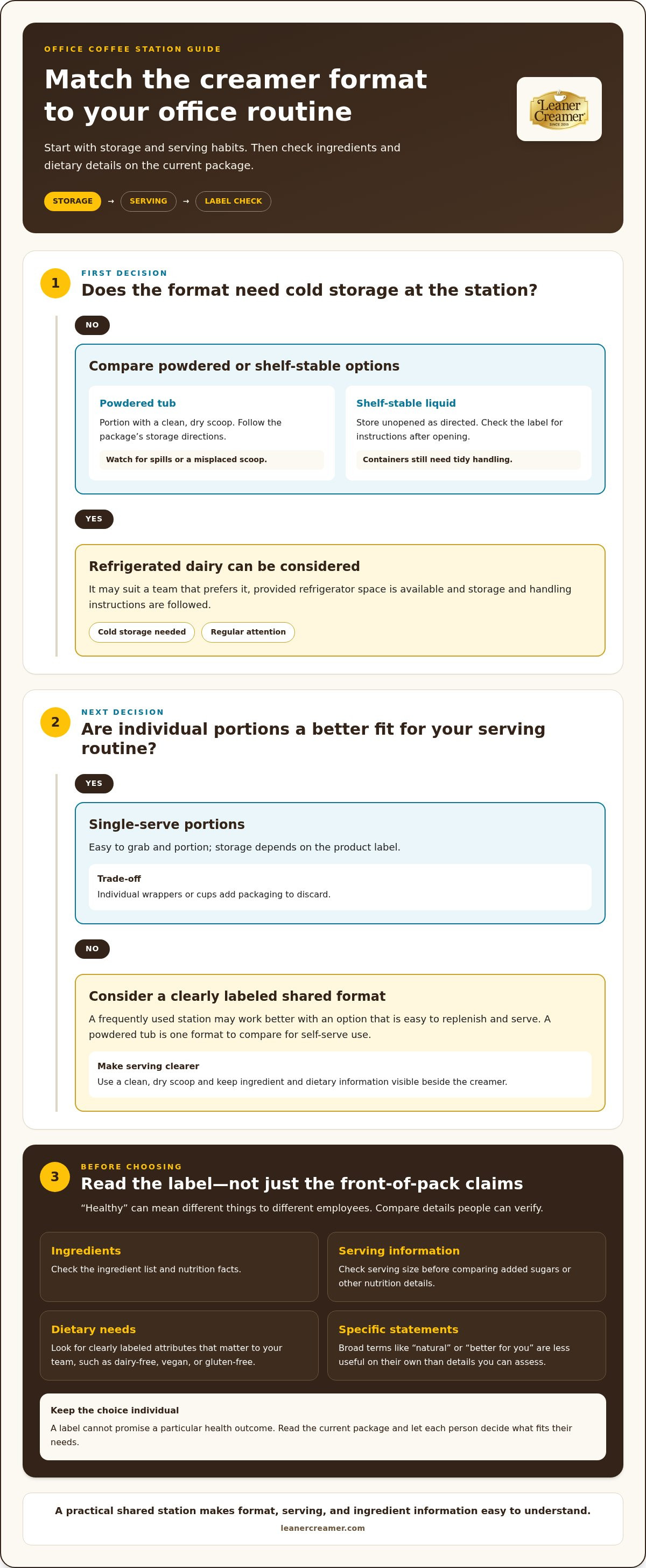
Each format has a different routine. Powder can be portioned from a shared container, though storage and handling instructions vary by product. Single-serve portions give each person an individual serving, but their wrappers or cups add packaging waste. Refrigerated dairy creamer needs cold storage and routine handling, while shelf-stable liquid formats can be stored unopened according to package directions. After opening, follow the label’s storage instructions.
| Format | Serving and storage | Shared-station trade-off |
|---|---|---|
| Powdered tub | Portion with a clean, dry scoop; follow package storage directions. | Can be convenient for self-serve use, but spills or a misplaced scoop may create mess. |
| Single-serve portions | Offer individual servings; storage depends on the product label. | Simple to grab and portion, with more individual packaging to discard. |
| Refrigerated dairy | Requires refrigerator space and handling as directed. | Can suit a team that prefers it, but needs cold storage and regular attention. |
| Shelf-stable liquid | Store unopened as directed; check label instructions after opening. | May avoid immediate refrigeration before opening, but containers still need tidy handling. |
The table is a starting point, not a health ranking. For more detail on ingredients in plant-based powdered options, review the coffee creamer ingredient information alongside each product’s current package.
How should employees read creamer labels?
Compare like with like. Serving size affects how the Nutrition Facts numbers relate to the amount someone actually pours or scoops, so check it before comparing added sugars or other listed nutrients. Then read the ingredient list and look for dietary statements relevant to your team, such as dairy-free, vegan, or gluten-free. Those statements are product-specific, so verify them on the current package.
On the Nutrition Facts label, compare the serving size, added sugars, and other nutrients that matter to your dietary priorities, using the same serving basis across options. “Sugar-free” is a label attribute, not a promise of a health outcome. For broader context on limiting added sugars and choosing foods, consult the American Heart Association healthy eating guidelines; use them as general guidance, not as a product endorsement.
Keep the comparison visible at the coffee station: note the format, storage instructions, ingredients, and relevant dietary attributes. A clear label helps coworkers make their own informed choice. If you’re considering plant-based powdered creamer for that routine, explore Leaner Creamer’s powdered options as one format to compare.
Office Coffee Creamer Options Compared: Match the Format to the Workplace
No single format suits every breakroom. A small team with occasional coffee drinkers may value individually portioned servings, while a busy self-serve station may need a format that’s quick to use and easy to keep tidy. Compare the options by how coworkers actually serve coffee, what storage is available, and which dietary preferences the station needs to accommodate. That’s a more useful way to choose a healthy coffee creamer for the office than looking for a universal winner.
- Shared powdered creamer: A scoop lets coworkers adjust the amount in each cup, and a shared container can keep serving supplies together. Spills are possible, so provide a clean, dry scoop and a designated place to set it. Check the package for storage directions, including how to keep the powder dry.
- Individual portions: Single-serve packs offer a measured serving and let employees choose their own portion without using a shared scoop. They can suit occasional use or a station where people prefer individually handled servings. The trade-off is extra packaging to collect and dispose of, and multiple options may be needed for different preferences.
- Refrigerated dairy creamer: This may feel familiar to employees who prefer chilled creamer, but it needs refrigerator space and routine attention. Keep it stored and handled according to its label, and plan who will return it to cold storage after use. A shared container can also mean managing spills and keeping its opening clean.
- Shelf-stable liquid creamer: An unopened product may be stored without refrigeration if its package directs, which can help when fridge space is tight. After opening, follow the label’s storage instructions. Pouring from a shared container may need more counter cleanup than individual portions or a carefully managed scoop.
When does powdered creamer make sense for an office?
Powder can be a practical fit for a self-serve counter where people want to portion their own cups without handling a shared liquid carton. Keep the scoop with the container, wipe spills promptly, and follow the package’s serving and storage directions; powders don’t all have identical requirements. Leaner Creamer’s powdered creamers are one candidate to compare, particularly for teams looking for plant-based options. The powdered creamer range is an option, not a best-for-every-office verdict.
When might chilled or individually portioned options suit better?
A team that prefers familiar chilled creamer may be comfortable making refrigerator space part of its breakroom routine. Individual portions may suit employees who want to control their serving or avoid a shared scoop, though they create more packaging to manage. Consider what coworkers already use, how often the station is busy, and which dietary preferences matter. Then choose a format people can serve neatly and consistently.
Whichever format you choose, make the routine part of the decision: where it’s stored, how it’s portioned, and how the counter stays clean. A clear setup can make any option easier to share. Review how it works in practice, then adjust the format if employees find serving, storage, or cleanup inconvenient.
Set Up a More Inclusive and Easier Office Coffee Station
A shared coffee station works best when people can make a quick choice without guessing what’s in a container or where to find a clean scoop. A little planning can make the routine clearer for employees with different tastes and dietary preferences, while helping the counter stay orderly. Treat the setup as a small system: learn what people need, make options easy to identify, and review how the station is actually used.
Use this sequence to build a routine that fits your workplace:
- Learn preferences: Ask which ingredients or dietary attributes employees need to consider, and whether they prefer shared or individual servings.
- Choose formats: Match the options to the available storage, expected use, and way coworkers serve themselves.
- Label clearly: List the product name, ingredients or key label details, and verified dietary attributes.
- Organize supplies: Keep each option with its own scoop or serving supplies, and place napkins and a waste bin within easy reach.
- Review use: Notice what gets used, what’s left untouched, and where spills or confusion happen before making changes.
How can an office make shared creamer choices clearer?
Keep labels concise and factual. For example, identify whether an option is powdered or refrigerated, then note dietary attributes only when they’re supported by the current package. Avoid broad claims like “good for everyone.” Employees have different needs, and a label should help them decide, not make the decision for them.
Place the original package beside the product when practical, so coworkers can read the full ingredient list and Nutrition Facts rather than relying on a short station label. If the packaging is too large to keep out, make the product name easy to find and display accurate label information nearby. For a closer look at ingredients in Leaner Creamer products, use the ingredient information page alongside the current package details.
Keep utensils separate. A scoop dedicated to powdered creamer helps prevent mix-ups with other ingredients, while separate serving tools for different products can reduce accidental cross-contact. Set a small tray beneath containers to catch loose powder or drips, and make wiping supplies easy to reach. Simple cues make the station more comfortable to use.
How should teams manage restocking and everyday use?
Assign a person or rotating team to check supplies as part of an existing breakroom routine. Restock based on what employees actually use, rather than guessing how much they consume. A brief check can note which format is running low, whether the station needs cleaning, and whether any option is repeatedly left unused.
Store every product according to its package instructions, including any directions that apply after opening. Keep containers closed when not in use, and place refrigerated products back in cold storage as directed. After trying a setup, gather simple feedback: Was the label clear? Was serving easy? Did the format fit the team’s routine? Those observations help refine the station without assuming that one format or creamer meets every need.
A well-organized station makes it easier to find a healthy coffee creamer for the office that suits the team’s preferences, with clear information and a tidy routine to support the choice.
Choose a Healthy Office Coffee Creamer That Fits Your Team
A good team choice isn’t about finding one creamer that suits every person. It’s about choosing a format coworkers can use easily and making its ingredients clear. Keep the decision simple: identify dietary needs, choose a format that fits the breakroom, compare product labels, then try the setup and see how it works in practice.
- Identify needs: Note relevant preferences, such as avoiding dairy or added sugar, without assuming everyone shares them.
- Choose a format: Consider serving habits, storage space, and how much cleanup the station can accommodate.
- Inspect labels: Compare serving size, Nutrition Facts, ingredients, and dietary statements on the current package.
- Test the routine: Observe whether coworkers can serve the option neatly and whether it gets used.
How does Leaner Creamer fit an office coffee routine?
Leaner Creamer makes powdered coffee creamers with plant-based ingredients. The creamer range is described as sugar-free and glucose-friendly, as well as dairy-free, gluten-free, soy-free, vegan, and kosher. These attributes may make it worth considering for teams looking for those qualities, but they aren’t health outcomes or a substitute for checking the package. Product labels can vary, so employees should review the information on the specific option they use.
Powdered creamer may suit a team looking for a shared format that doesn’t rely on a refrigerated carton before opening, provided the product’s storage directions fit the breakroom routine. It’s one option to weigh against your team’s preferences, not a universal answer. For broader context on healthy coffee creamers, hot chocolate, and lattes, explore how different instant beverage formats can fit everyday routines.
What is a low-pressure way to introduce a new creamer?
Try one flavor alongside the choices employees already use. Put it in a clearly marked spot, keep its package available for label checks, and invite voluntary feedback after people have had a chance to try it. Ask practical questions: Was it easy to portion? Did the flavor work in coffee? Was the serving area easy to keep clean? This small test can reveal more than guessing what coworkers might prefer.
For example, a team interested in a flavored powdered option could start with salted caramel powdered coffee creamer and review its current package details before setting it out. Browse the powdered coffee creamer flavors to compare options that may suit your office’s taste preferences. Keep the trial flexible: if another format or flavor better suits the team’s habits, adjust the station.
The best healthy coffee creamer for the office is a considered fit for your team’s preferences, labels, and daily routine. Clear information and a simple trial make the choice easier, without asking one product to work for everyone.
Make the Next Coffee Break a Thoughtful Test
Let the breakroom routine guide your next step. Choose a creamer format that fits the way coworkers serve themselves, place it where it’s easy to use, and invite voluntary feedback. A simple question such as “Was this easy to serve and right for your coffee?” can reveal whether the choice works in practice. That’s a grounded way to find a healthy coffee creamer for the office without expecting one option to suit everyone.
For teams considering a powdered, plant-based, sugar-free choice, Leaner Creamer describes its creamer range as dairy-free, gluten-free, soy-free, vegan, and kosher. Treat those as label details to review on the specific product, alongside your team’s preferences. Small, considered adjustments can make a shared coffee ritual feel more welcoming.
Start with what your coworkers need, then let the routine evolve. A more thoughtful coffee station is built one clear choice at a time.
Frequently Asked Questions
Is powdered coffee creamer a good option for the office?
Yes, powdered creamer can suit an office where employees serve themselves and refrigerator space is limited. It can be portioned directly into a cup, but a dry scoop and a container that closes securely help prevent spills and moisture exposure. Check storage directions on the package, and consider how often the station is used: a shared tub may be less convenient if only a few people drink coffee.
Can a coffee creamer be sugar-free and still taste sweet?
Yes. Some sugar-free creamers use other sweeteners, such as stevia or allulose, to provide sweetness. The exact taste and ingredients vary by product, so check the ingredient list and try a small serving before choosing it for a shared station. “Sugar-free” describes a product label attribute; it doesn’t mean a product is unsweetened or guarantee a particular health effect.
How should an office choose creamer for employees with different dietary needs?
Choose options by specific needs rather than assuming one label covers everyone. Ask employees to share relevant preferences voluntarily, then make the product packaging available so they can check ingredients and dietary statements themselves. A healthy coffee creamer for the office should be easy to identify, but employees should make their own choices based on the current label and their individual requirements.
Does powdered coffee creamer need refrigeration after opening?
Not necessarily. Whether a powdered creamer needs refrigeration after opening depends on its ingredients and package directions. Check the storage instructions before placing it in a cupboard or refrigerator, and keep the container closed between uses. If the label calls for a cool, dry place, avoid storing it beside a kettle or sink, where steam and splashes could affect the powder.
What should I check on a coffee creamer label?
Start with the serving size, added sugars, ingredient list, and any dietary statements that matter to you. Check allergens or ingredients you personally avoid, and compare products using the same serving amount. If a front label uses broad terms such as “natural,” look to the ingredient list for specifics. For a shared station, keep the package available so coworkers can review the full information.
Can powdered creamer be used in iced coffee?
Yes, though powder may dissolve less readily in a cold drink than in hot coffee. For a smoother result, stir it into a small amount of warm liquid first, then add that mixture to the iced coffee. Follow the package’s serving directions and adjust to taste. If warm liquid isn’t part of your routine, mix thoroughly and allow a little extra time for the powder to dissolve.
How much coffee creamer should I add to a cup?
Use the serving suggestion on the product package as your starting point, since scoop sizes and formulas differ. Stir that amount into your coffee, taste it, and add a little more only if you want a creamier or sweeter cup. At a shared station, keep the scoop with the container and return it clean and dry so the next person can portion consistently.


