


Could your morning coffee be affecting your hot flashes or sleep, or is it one of several possible triggers? If you’re wondering whether to keep your cup or change what goes into it, you’re not alone. The relationship between caffeine and menopause symptoms varies from person to person, so choosing a coffee creamer for menopause doesn’t mean expecting it to fix those symptoms.
You don’t necessarily need to give up coffee. Pay attention to how your body responds, while remembering that stress, sleep, meal timing, and other parts of your routine can affect how you feel. A few consistent observations can be more useful than following conflicting advice or changing everything at once.
In this guide, you’ll learn what’s known and what remains uncertain about coffee, caffeine, hot flashes, and sleep. You’ll also find a practical way to track patterns and compare creamers by serving size, sweeteners, and ingredients. A powdered, plant-based option can personalize your cup, but it’s a food choice, not a menopause treatment. Keep what feels right, and adjust what doesn’t.
Key Takeaways
- Menopause doesn’t automatically mean you need to stop drinking coffee; caffeine effects can vary from person to person.
- Notice whether coffee timing and amount seem related to sleep or hot flashes, while remembering that menopause can affect sleep, too.
- Compare regular coffee, decaf, tea, or a smaller serving as practical options. Caffeine varies by drink and preparation.
- Use a flexible two-week log of your drinks, timing, sleep, and symptoms to look for patterns, not to diagnose a cause.
- Choose a coffee creamer for menopause by checking serving size, sweeteners, and ingredients to match your preferences, not as a symptom treatment.
Is Coffee Bad for Menopause? What the Evidence Can, and Cannot, Tell You
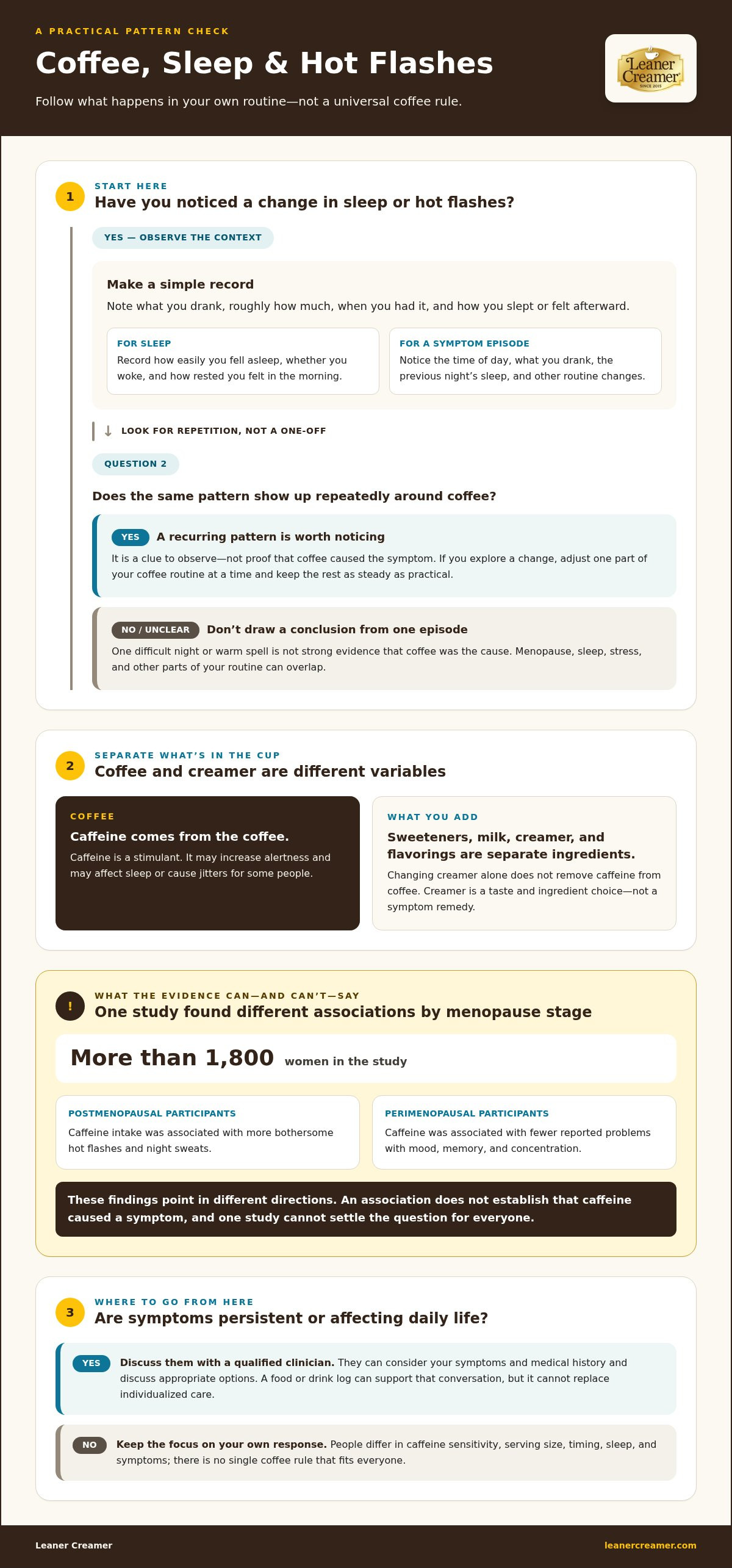
No. Menopause alone doesn’t mean you need to give up coffee. Caffeine is a stimulant, so it can make some people feel more alert and may affect sleep or cause sensations such as jitters. Coffee is only one part of the cup: caffeine comes from the coffee, while sweeteners, milk or creamer, and flavorings are separate ingredients. Keeping those factors distinct can help you work out what you’re responding to.
Menopause can involve changes in periods, sleep, mood, and body temperature, though experiences differ widely. The Menopause overview offers background on this life stage, but it can’t tell you how your own coffee habit will feel.
What research says about caffeine and menopause symptoms
A study of more than 1,800 women found an association between caffeine intake and more bothersome hot flashes and night sweats among postmenopausal participants. Among perimenopausal participants, caffeine was associated with fewer reported problems with mood, memory, and concentration. These findings point in different directions, not toward a universal rule.
An association doesn’t establish that caffeine caused a symptom. One study also can’t settle the question for everyone, since symptoms and coffee habits are difficult to separate from other influences. The evidence suggests there may be links worth noticing, not that coffee must be avoided during menopause.
Why menopause does not affect everyone’s coffee routine the same way
People differ in caffeine sensitivity, serving size, timing, sleep, and the symptoms they experience. A cup that feels comfortable for one person might leave another feeling wired or affect their rest. Menopause symptoms can also come and go, so one difficult night or warm spell is not strong evidence that coffee was the cause.
Your health history and medicines may matter, too. General information can’t account for those personal details, so discuss concerns or possible changes with a healthcare professional who knows your situation.
Your response matters more than a universal coffee rule. Rather than changing coffee, creamer, bedtime, and other habits all at once, start by noticing what happens around your usual routine. Record what you drank, roughly how much, when you had it, and how you slept or felt afterward. This can help you observe patterns, but it isn’t a diagnostic test or proof of cause.
It may also help to separate the drink from what you add. If caffeine seems relevant, changing the creamer alone won’t remove caffeine from coffee. If you’re exploring coffee creamer for menopause, treat it as a taste and ingredient choice, not a symptom remedy. For example, a salted caramel coffee creamer can personalize your cup’s flavor, but it doesn’t determine whether caffeine affects your sleep or hot flashes. Focus on how your coffee routine as a whole fits how you want to feel.
How Coffee May Interact With Sleep, Hot Flashes, and Daily Comfort
Coffee can shape how you feel through its caffeine, but it doesn’t explain every restless night or sudden wave of heat. Caffeine is a stimulant, so it may increase alertness and, for some people, make it harder to settle down. Menopause can also disrupt sleep, including through night sweats. When these factors overlap, it can be difficult to tell which one is contributing.
A possible trigger is a clue to observe, not proof of a universal cause. A pattern in your own routine can be useful, but it doesn’t establish a diagnosis or mean everyone should avoid coffee.
Coffee, caffeine, and sleep changes
The timing of a caffeinated drink may matter. A cup later in the day could leave some people feeling alert at bedtime, while someone else may notice little difference. Menopause-related sleep changes can happen independently, too, so waking at night doesn’t automatically point to coffee.
Note when you have coffee, how easily you fall asleep, whether you wake, and how rested you feel in the morning. Look for a repeated pattern rather than drawing a conclusion from one night. There’s no single cutoff time that suits everyone.
Hot flashes and other symptoms: avoid one-size-fits-all claims
Some people identify caffeine as a hot-flash trigger; others don’t notice a connection. The Mayo Clinic on hot flashes and caffeine includes caffeine among possible triggers. That guidance can help frame what to observe, but a possible trigger isn’t a guarantee that coffee will bring on symptoms for you.
Pay attention to the context around an episode: the time of day, what you drank, how you slept the night before, and other changes in your routine. One hot flash after coffee may be coincidence. A recurring pattern is worth noting, though it still doesn’t prove cause. Keep the coffee distinct from what you add to it. A coffee creamer for menopause can change flavor and ingredients in your cup, but it shouldn’t be treated as a way to prevent or manage symptoms.
If hot flashes, night sweats, or sleep disruption are persistent or affecting daily life, bring them up with a qualified clinician. They can consider your symptoms and medical history and discuss appropriate options. A food or drink log can support that conversation, but it can’t replace individualized care.
For a focused experiment, change one part of your coffee routine at a time and keep the rest as steady as practical. If you’d like to personalize the flavor while reviewing what goes into your cup, explore powdered plant-based coffee creamers. Choose based on ingredients and preference, not an expectation of symptom relief.
Coffee, Tea, or Decaf: Compare Your Options Without Guesswork
If you’re considering a change, you don’t have to overhaul your routine. Compare the drink, serving size, timing, and preparation separately. Caffeine varies with the type of drink and how it’s made, so labels or general estimates may not match every cup. Use the table as a starting point, not a ranking of what’s best for everyone.
| Option | Caffeine considerations | A practical way to try it |
|---|---|---|
| Regular coffee | Contains caffeine; the amount varies with serving size and preparation. | Keep your usual drink and note its size and timing. |
| Decaf coffee | Usually has less caffeine than regular coffee, but isn’t necessarily caffeine-free. | Try it in place of one regular serving while keeping other habits steady. |
| Tea | Caffeine depends on the tea type and preparation; some teas contain caffeine and some don’t. | Check the type and note how you prepare and serve it. |
| Smaller coffee serving | A smaller portion may mean less caffeine, though the amount also depends on how it’s prepared. | Reduce the portion while keeping the drink and timing similar. |
What to compare when changing your coffee routine
Try changing one variable at a time. For example, switch from regular to decaf but keep the serving size and time of day similar. Later, if you want, test a smaller portion or have coffee earlier. Changing several things together makes it harder to tell which adjustment may have affected your sleep or comfort.
Keep simple notes on drink type, approximate serving, preparation, timing, and how you feel. These observations aren’t a diagnosis, but they can help you decide whether an option suits your routine. A smaller or differently timed serving is one possible experiment, not a rule everyone needs to follow.
How coffee additions fit into the comparison
Creamer doesn’t remove or reduce the caffeine already in your coffee. It can change the flavor and nutritional content of the drink, depending on its ingredients and how much you use. Keep that distinction clear: changing from one creamer to another while keeping the coffee the same is a different experiment from switching to decaf.
If you’re considering a coffee creamer for menopause, focus on the serving size, sweeteners, and ingredients that fit your preferences. A powdered plant-based creamer can be one way to personalize a cup, but it isn’t a menopause treatment. For broader ingredient-selection context, explore this coffee creamer ingredient information. Check the current product label for specific ingredients and nutrition details.
A Gentle Two-Week Plan to Notice Your Own Coffee Patterns
A short log can help you see whether your coffee routine and how you feel seem to move together. This is a personal observation exercise, not a medically validated diagnostic protocol. It can’t prove that coffee causes a symptom, and you don’t need to track perfectly. The aim is to gather useful context without judging your choices.
What to record in a simple coffee-and-symptom log
For the first week, keep your routine as consistent as is comfortable and jot down a few details each day. Include the drink type, approximate serving, time you had it, and creamer choice. Note how you slept and any symptoms you want to follow, such as hot flashes or night sweats.
Use the same simple scale each time, such as 0 for none, 1 for mild, 2 for moderate, and 3 for strong. It’s a convenient way to describe your experience, not a clinical measurement. You can also add brief context, such as an unusually stressful day, a late bedtime, or another change in your routine.
How to make a small, safe routine adjustment
During the second week, consider changing just one coffee-related factor if you want to. For example, keep the drink and serving similar but have it earlier, or swap one regular coffee for decaf. Decaf can still contain some caffeine, so record it as its own drink choice rather than assuming it’s caffeine-free. If changing caffeine quickly feels uncomfortable, don’t force the experiment; consider a more gradual adjustment and seek clinician guidance if you’re unsure.
Keep other habits as steady as practical. If you also change your bedtime, exercise, and creamer, it will be harder to interpret what might be connected to how you feel. If you do change something else, note it rather than treating that day as unusable.
At the end of the two weeks, look for repeated patterns, not a perfect answer. Do symptoms or sleep seem different after a particular drink, serving, or timing? Did the same pattern occur on more than one occasion? A pattern can guide a conversation or a small preference-based adjustment, but it doesn’t diagnose a cause. The log is there to support curiosity, not to create stricter rules around your routine.
If symptoms are persistent, disruptive, or concerning, discuss them with a qualified healthcare professional. The same applies if you have a health condition, take medication, or have questions about changing caffeine intake. A clinician can consider your circumstances in a way a general coffee log can’t. Choosing a coffee creamer for menopause is a separate food preference: note the ingredients and serving you use, but don’t expect a creamer to treat symptoms or replace medical care.
Choosing a Coffee Creamer for Menopause: A Mindful Daily-Routine Choice
A creamer can make coffee taste the way you like it. It isn’t a menopause intervention, and no creamer should be expected to prevent hot flashes, improve sleep, or change hormone levels. Think of it as one part of your daily routine, separate from the coffee’s caffeine and any symptoms you’re observing.
What to look for on a creamer label
Start with the serving size, then compare it with the amount you actually use. Check the sugar information and sweeteners, and read the ingredient list for anything you prefer to include or avoid. If dairy, gluten, or soy matters for your dietary needs, look for the relevant details on the label. No single ingredient profile is right for everyone.
Labels can answer practical questions: Is the creamer sweetened? Does its flavor come from ingredients you recognize and want in your cup? Does the stated serving size match your usual pour? These are preference checks, not a test of whether a food is universally “good” or “bad.” For a closer look at ingredient details, review the coffee creamer ingredient information alongside the current package label.
How Leaner Creamer can fit a coffee routine
Leaner Creamer offers powdered, plant-based creamers that are sugar-free and glucose-friendly. Its offerings are also dairy-free, gluten-free, soy-free, vegan, and kosher. The powdered format gives you an option for personalizing the taste of your coffee. Check the specific product label for its ingredients and nutrition details.
If you want a plant-based option or prefer a sugar-free creamer, those attributes can help narrow your choices. A different flavor or ingredient profile may suit you better, too. The right fit is one you enjoy and feel comfortable including in your routine, not one that promises to address menopause symptoms.
Keep the distinction clear as you choose: adjusting creamer can change flavor, sweetness, and the ingredients in your cup, but it doesn’t change the caffeine in the coffee itself. If you’re tracking your response to coffee, note the creamer and serving alongside the drink type and timing. That gives you a clearer record without assuming the creamer caused or eased a symptom.
Choosing a coffee creamer for menopause can be a simple label-reading decision. Look for the attributes that align with your dietary needs and taste, then pay attention to how your whole routine feels. No strict rules are required. If you’d like to make your daily cup your own, explore the available creamer options and choose based on ingredients and preference.
Make Your Next Coffee Choice Feel Like Your Own
Your next step doesn’t need to be a strict new rule. Use what you’ve noticed to decide whether to keep your coffee routine as it is, adjust one small detail, or bring your observations to a healthcare professional. The goal is a routine that feels considered and comfortable, not a perfect answer to every symptom.
Choosing a coffee creamer for menopause is part of that personal choice, not a way to treat menopause. If you’re comparing options, consider whether a powdered, plant-based creamer that’s sugar-free and glucose-friendly fits your taste and preferences. Dairy-free, gluten-free, soy-free, vegan, and kosher options may also matter depending on your needs. Check the product label for the details that are relevant to your cup.
You can take this one morning at a time. Keep what you enjoy, make changes thoughtfully, and give yourself room to notice how your routine feels.
Frequently Asked Questions
Is coffee bad for menopause?
No, menopause alone doesn’t mean you need to stop drinking coffee. Research on caffeine and menopause symptoms is limited and doesn’t establish one rule for everyone. If you notice a recurring connection between your coffee routine and how you feel, that observation may be useful to discuss with a clinician, especially if you have health conditions or questions about how caffeine fits with your medications.
Can coffee make hot flashes worse during menopause?
It may be a trigger for some people, but coffee isn’t a proven universal cause of hot flashes. Notice whether episodes seem to follow coffee consistently, and consider other context, such as a warm room or a stressful day. A perceived pattern is worth noting, but it doesn’t confirm what caused the symptom. Seek professional advice if hot flashes are disruptive or changing.
Does caffeine affect sleep during menopause?
Caffeine may interfere with sleep for some people, while menopause itself can also bring sleep changes, including waking during the night. The effect can depend on personal sensitivity and when you drink coffee, so there’s no universal cutoff time that fits everyone. If sleep problems continue or affect your daytime functioning, talk with a healthcare professional rather than assuming caffeine is the only factor.
Should I switch to decaf during menopause?
You don’t have to switch to decaf because of menopause. It can be one option if you want to explore a lower-caffeine routine while keeping the familiar taste and ritual of coffee. Decaf isn’t necessarily caffeine-free, though. Try a manageable change, such as replacing one usual cup, and notice how it suits you. It’s an experiment in preference, not a treatment for symptoms.
How can I tell whether coffee is triggering my menopause symptoms?
Keep a brief record of the coffee you drink, its approximate serving and timing, your sleep, and symptoms you want to understand. If you choose to experiment, change one factor at a time, such as switching the drink but keeping your usual creamer. A recurring pattern can guide a conversation, but it can’t prove cause, since other parts of your routine may contribute. Discuss concerning symptoms with a clinician.
Can changing coffee creamer help menopause symptoms?
No creamer should be relied on to treat menopause symptoms. Changing it may alter a cup’s sweetness, flavor, or ingredients, but it won’t remove caffeine from the coffee. Choose according to your taste, ingredient preferences, and dietary needs. If you’re tracking how coffee affects you, remember that changing both the coffee and creamer together makes it harder to tell which part of the routine may be relevant.
What should I look for in a coffee creamer during menopause?
There’s no single menopause-specific standard for creamer. Check the serving size, sugar information, sweeteners, and ingredient list, then consider any dietary needs, such as avoiding dairy, gluten, or soy. A powdered, plant-based option is one possible format. Leaner Creamer offers powdered plant-based creamers that are sugar-free and glucose-friendly, as well as dairy-free, gluten-free, soy-free, vegan, and kosher options. Review the specific product label for ingredients and nutrition details.


