


What if the most reassuring-sounding creamer claim is the one that tells you the least? Choosing an allergen-free creamer for events takes more than spotting a broad label. Guests may have different needs, and a dairy-free or plant-based claim doesn’t automatically mean a product is free from other allergens or protected from cross-contact.
Offering coffee guests can personalize is thoughtful. So is being precise about what you’re serving and what the package says. The ingredient list, allergen information, and handling at the coffee station all matter.
This guide covers how to compare creamer formats, read product information, and set up a self-serve station with clear choices. Powdered creamers can simplify storage and serving, but their labels still need a careful review. Use the checklist to plan your coffee, creamer, utensils, and signage, then share product details so guests can make informed choices without relying on a blanket promise.
Key Takeaways
- Choose allergen-free creamer for events by comparing specific ingredient and allergen information, not relying on a broad claim alone.
- Dairy-free, gluten-free, and soy-free describe particular exclusions, not suitability for every guest.
- Compare powdered and liquid formats by storage, serving setup, portioning, and cleanup.
- Use a checklist to plan coffee, creamer, utensils, labels, and serving flow around guests’ stated needs.
- Consider powdered creamer as one convenient option, and share clear ingredient information so guests can make informed choices.
Why choose an allergen-aware creamer for events?
A coffee station can look simple until guests arrive with different needs. One person may avoid dairy by choice, another may follow a vegan diet, and someone else may need to avoid a specific ingredient because of an allergy. Choosing an allergen-free creamer for events without understanding those differences can leave guests guessing about what’s in their cup.
An allergen-aware approach starts with specific information, not a sweeping promise. Place the creamer’s packaging or an accurate ingredient summary beside it, and make the option easy to distinguish from other add-ins. Guests can then see the product’s stated attributes and decide whether it suits their needs.
Event suitability depends on each guest’s specific needs and the product details. Dietary preferences and diagnosed allergies aren’t interchangeable: a preference may guide someone’s food choices, while an allergy can involve a health risk. For general background on understanding food allergies, consult a reliable overview, and avoid making safety assurances on guests’ behalf.
Which guest needs should an event planner consider?
Plan around specific requirements rather than putting every request into one broad “special diet” category. Vegan, dairy-free, and gluten-free choices may reflect a preference, a dietary practice, or a health-related need. An allergy is different, and the ingredient a guest needs to avoid matters. A creamer described as dairy-free, for example, doesn’t automatically address other allergens.
Gather useful information through event registration or your hospitality process. A simple prompt about food or beverage needs can help you plan without asking guests to share a diagnosis or personal medical history. Keep responses discreet, then use them to guide your product review and station setup.
Why does a clear creamer choice improve the coffee station?
Good service brings practical details together: a creamer that’s easy to serve, a flavor that fits the menu, and product information guests can read before choosing. Keep the package or a matching ingredient note visible, and label the option clearly so it isn’t confused with other add-ins.
One choice can simplify the setup, but it can’t automatically meet every guest’s requirements. Ingredients, individual sensitivities, and handling all affect whether a particular option works for someone. Don’t label a station or product “safe for everyone.” Instead, describe the product’s stated attributes and let guests use that information to make an informed choice.
The sections ahead compare formats and selection criteria, then outline a practical way to organize coffee, labels, and serving flow. A little preparation can make the station more welcoming without asking one product to meet every need.
What does 'allergen-free creamer' really mean?
“Allergen-free” sounds definitive, but it’s a broad phrase that needs context. It doesn’t tell you which allergens a product excludes, how its ingredients are handled, or whether it suits a particular guest. When choosing an allergen-free creamer for events, start with specific product information rather than assuming a general claim covers every person or allergy.
A stated ingredient exclusion describes a product attribute; it isn’t a guarantee of allergy safety for every guest. Dairy-free, gluten-free, and soy-free each communicate something specific. None means that a creamer is free from every other allergen or suitable for every individual. Product details and guest needs both matter.
The distinction is worth taking seriously. Food Allergy Research & Education (FARE) provides food allergy statistics and prevalence for broader context. At an event, use product language carefully and don’t turn a specific label claim into a wider promise.
How should planners read allergen and ingredient information?
Read the full ingredient statement on the current package, not only shorthand on the front. Check any allergen statement and precautionary wording, too. The FDA’s packaged-food guidance covers the nine major U.S. food allergens: milk, eggs, fish, crustacean shellfish, tree nuts, peanuts, wheat, soybeans, and sesame. Label details can clarify a product’s ingredients, but don’t establish how it was handled at your event.
Review the package for the exact product and flavor you plan to serve. Ingredients and claims can vary by flavor or beverage format, so don’t assume information for one item applies to another. Keep the package available during service so guests can consult the same details you reviewed.
What can ‘dairy-free,’ ‘gluten-free,’ and ‘soy-free’ tell guests?
These terms identify particular dietary attributes, not universal allergy suitability. A dairy-free creamer may suit someone avoiding dairy by preference, but that label alone doesn’t answer whether it meets another guest’s needs. Gluten-free and soy-free claims work the same way: check the exact product details rather than extrapolating from one exclusion.
For example, if one flavor is described as soy-free, don’t assume every flavor or an instant latte mix carries the same claim. Verify each package and ingredient statement before placing it on the station. A sign can repeat the product’s stated attributes, but shouldn’t promise that it’s safe for everyone.
Leaner Creamer offers powdered creamers that are dairy-free, gluten-free, and soy-free. These attributes can help you compare options, but they don’t establish suitability for every allergy or guest. If a powdered format fits your setup, explore powdered coffee creamer options and review the details for the specific product you plan to serve.
How to compare creamers for a group event
A useful comparison looks beyond the label on the front of the package. For an allergen-free creamer for events, weigh ingredient transparency, stated dietary attributes, serving logistics, flavor, and guest choice together. No single feature tells the whole story. A convenient format still needs to fit the needs you’ve gathered.
Powdered or liquid creamer: which format fits the setup?
Powdered creamer can be easy to store and portion at a self-serve station. It may suit a setup where organizers can set out the package and provide a scoop or measured servings, following the package directions. Liquid creamers require a different serving arrangement, including space for containers and a plan for dispensing and cleanup. Compare each format with the space, staffing, and serving flow available at your event.
Which criteria belong in an event creamer comparison?
Review the exact ingredients, stated dietary attributes, flavor, and preparation directions for each product. Check the package before estimating servings or choosing serving tools. Leaner Creamer’s coffee creamers are powdered, and its range also includes instant beverages. Considering coffee, hot chocolate, and latte options together can help you plan a cohesive menu.
| What to compare | Questions to ask | Why it matters |
|---|---|---|
| Ingredient transparency | Can you review the current ingredient statement and allergen information for this exact product? | Clear details help you describe the option accurately. |
| Dietary attributes | Which specific attributes are stated, and do they match needs guests shared? | One exclusion does not indicate suitability for every dietary need or allergy. |
| Serving convenience | How will the format be stored, portioned, and served at your station? | Choose an arrangement that works with the available space and staff. |
| Flavor and guest choice | Does the flavor fit the coffee menu, and can guests choose whether to use it? | Preferences vary, so avoid presenting any one flavor as right for everyone. |
Flavor belongs in the decision, too. A familiar vanilla-style option may fit a straightforward coffee service, while a richer flavor could suit a more indulgent menu. These are menu considerations, not guarantees of universal appeal. Identify the creamer clearly and let guests decide whether it belongs in their cup.
Before choosing a product, match its package directions to your planned setup. Then decide how it will be labeled and served. Leaner Creamer’s powdered format is one option to consider for an event station. You can compare powdered creamer options as part of your planning.
How to plan an event coffee station with dietary needs in mind
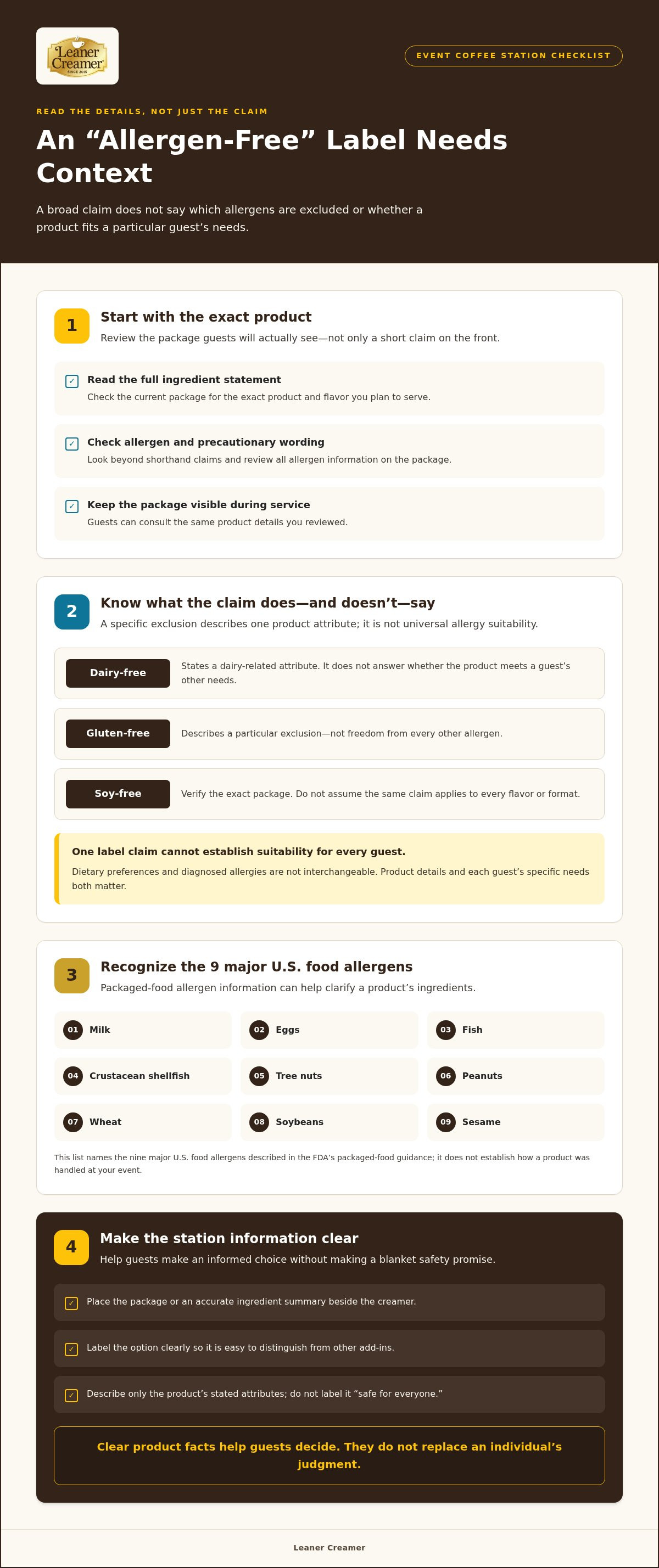
A considerate station is planned in sequence, from understanding guest needs to making product details easy to find. Use this checklist to organize the coffee, creamer, utensils, and serving flow. The goal isn’t to make a blanket safety promise. It’s to share accurate information and make options easier to assess.
What should be prepared before the event?
Start with the needs guests share and the actual products you’ll serve. Attendance and beverage preferences can help you plan quantities, while package directions should guide preparation and portions. Keep labels and ingredient details available to the people setting up the station and serving guests.
- Gather relevant needs. Use your registration or hospitality process to invite guests to share beverage or dietary requirements. Ask only for information needed to plan, and keep responses discreet.
- Review the exact products. Read the current package and ingredient statement for each creamer and beverage. Check flavors individually, since ingredients or stated attributes may differ across products.
- Plan the menu and serving flow. Decide which coffee and creamer options to offer, where each will sit, and how guests will move through the station. Leave room for people to read labels before choosing.
- Keep product information accessible. Retain package details for the service team and place the original packaging or an accurate ingredient summary where guests can consult it. Make sure the information matches the product being served.
- Prepare the station and staff. Set out clean serving tools and decide who will replenish items and answer questions. Brief the team to describe only verified product attributes, without guessing about a guest’s individual needs.
How can the self-serve station communicate choices clearly?
Label each beverage and creamer clearly. Include the product name or flavor and only the dietary attributes verified on its current package. Position labels where guests can read them before serving themselves. A dairy-free label, for example, should communicate that stated attribute, not imply that the item meets every dietary or allergy-related need.
Arrange items so guests can distinguish one option from another, and provide a clean serving tool for each. Separate scoops or dispensers can help reduce mix-ups, but they don’t establish that cross-contact is prevented. Keep packages nearby when possible, and make the route from cup to coffee to creamer easy to follow.
Clear labels help guests evaluate options, but they don’t replace each person’s assessment of their own needs. Avoid phrases such as “safe for everyone” or claims about cross-contact controls you can’t verify. When serving an allergen-free creamer for events, communicate the exact product details and let guests decide whether those details meet their requirements.
Choosing a transparent powdered creamer option for your event
Powdered creamer can be a practical option for an event coffee station. Leaner Creamer offers powdered coffee creamers that are dairy-free, gluten-free, and soy-free. These specific attributes can help you compare options with guests’ stated preferences, but they don’t establish that a product suits every allergy or individual. Review the current package and ingredient statement for the exact product you plan to serve.
When might a powdered, plant-based creamer fit an event?
Powder can be straightforward to store and set out for self-serve beverage preparation. It may suit a station where guests add creamer to their own cups, following the product’s package directions. Leaner Creamer’s range is plant-based, vegan, and kosher, with products formulated to be glucose-friendly, sugar-free, and keto-compatible. Review the specific product’s current information rather than assuming every attribute applies to every item.
Consider how the format fits the menu, setup, and guest preferences. Powdered creamer can add an alternative alongside coffee, while instant latte and hot chocolate mixes offer additional beverage choices. Each is a separate product, so review its ingredients and stated attributes before deciding how to serve it.
How can planners make a confident final choice?
Use a short review before settling on an option. This keeps product claims, menu fit, and the serving plan connected:
- Ingredient statement: Read the current package information for the exact product and flavor.
- Stated exclusions: Note only the dietary attributes shown for that product, and don’t treat one exclusion as proof of universal allergy suitability.
- Format: Check that powder works with the planned station setup and package directions.
- Flavor: Choose an option that complements the event menu, while leaving room for guests to prefer something else.
- Serving plan: Decide how the creamer will be presented, labeled, and portioned, with product information accessible to guests.
For a broader menu, Leaner Creamer offers coffee creamers, instant lattes, and hot chocolate. Treat them as distinct choices and review each product’s details before planning how it will be served.
There’s no single best choice for every gathering. The right fit depends on the event’s requirements, the preferences guests share, and the current information for the products you select. With those details in view, you can make a considered choice without making a broader promise than the label supports.
Make your next coffee service feel considered
When planning allergen-free creamer for events, make transparency part of the guest experience, not just a purchasing decision. A clearly arranged station gives people time to review what’s available and choose what fits their needs. Small details can make hospitality feel more thoughtful.
Keep product information with the station, and make sure the person setting it up knows where to find it. After the event, note what worked for the menu and serving flow. Those practical observations can make the next gathering easier to plan without asking guests to share more personal information than they wish.
A good choice isn’t about making one creamer work for everyone. It’s about serving with care, communicating accurately, and leaving room for individual needs. Review the product details and choose the format that fits your event.
Frequently Asked Questions
Is any creamer truly allergen-free?
Don’t assume a creamer is free from every allergen just because it’s described as “allergen-free.” The phrase needs context: check which ingredients or allergens the specific product’s label addresses, and look for precautionary statements. A package can help you understand what’s in the product, but it can’t guarantee that it will suit every person or situation.
Can dairy-free creamer still contain other allergens?
Yes. “Dairy-free” refers to dairy, not every other ingredient that may concern a guest. A dairy-free product could still contain or identify another allergen, such as soy, wheat, tree nuts, or sesame. For example, a guest avoiding dairy and soy needs more than a dairy-free claim. Review the exact product’s current ingredient and allergen information rather than relying on one label term.
How do I choose creamer for guests with food allergies?
Match the exact product information to the specific ingredient a guest needs to avoid. For an allergen-free creamer for events, review the current package, including the full ingredient list and precautionary statements. Don’t substitute information from another flavor, and keep the packaging available during service. If the label doesn’t answer a guest’s concern, don’t guess or promise that the product is suitable.
Are powdered creamers a good choice for events?
They can be, especially if a dry format suits your station’s storage and serving flow. Follow the package directions, provide an appropriate serving utensil, and consider whether guests can portion the creamer easily into their cups. Powder doesn’t remove the need to review ingredients or plan careful handling. Decide based on the venue setup, menu, and product details, rather than assuming one format works best for every event.
Can vegan creamer be suitable for guests with milk allergies?
Possibly, but “vegan” alone isn’t enough to make that decision. It describes an animal-product-related attribute, not every detail a guest with a milk allergy may need to assess. Review the exact creamer’s ingredient and allergen statements, and don’t infer handling practices from a vegan claim. Leaner Creamer products are dairy-free, but guests should assess the current information for the specific product being served.
How should I label creamer at a self-serve event?
Identify each creamer by its product name or flavor and list only dietary attributes verified for that exact item. Keep the original package or a matching ingredient statement beside the station so guests can inspect the details. Use a separate, clean utensil for each option and make labels visible before guests serve themselves. Avoid broad claims such as “allergen-free” or “safe for everyone” unless the product information supports that exact wording.


