


What if hormone friendly coffee isn’t a special blend that balances your hormones, but a daily cup chosen with your own needs in mind? Conflicting advice about caffeine, sugar, and creamers can make a familiar morning ritual feel surprisingly complicated. And “hormone-friendly” has no official food-label standard, so the phrase can mean different things from one brand to another.
It makes sense to look beyond a catchy claim. Coffee’s relationship with hormones is nuanced, and research doesn’t prove that a particular cup can regulate them. Your experience with caffeine may also differ from someone else’s. Still, practical choices can make a difference to how your coffee fits your day, from when you drink it to what you add.
This guide explains what hormone friendly coffee can reasonably mean and what it can’t promise. You’ll find ways to review your routine, compare sweeteners and creamer labels, and choose add-ins based on your preferences rather than promises of hormone balance. The goal isn’t to give up a comforting habit. It’s to shape a cup that feels right for you.
Key Takeaways
- Think of hormone friendly coffee as a personal routine, not a product or promise to change hormone levels.
- Consider how caffeine timing and your coffee habits fit with your sleep and daily routine.
- Compare coffee add-ins by their labels and how they fit your preferences, not by hormone-related claims.
- Adjust one part of your routine at a time, then reflect on how you feel without self-diagnosing.
- A powdered creamer can be an optional way to personalize taste and texture. Choose one based on its ingredients and how it fits your dietary needs.
What Does Hormone-Friendly Coffee Actually Mean?
Want a coffee ritual that feels comfortable without turning your morning cup into another wellness rulebook? That’s a reasonable place to start. The phrase hormone friendly coffee is informal lifestyle language, not a diagnosis, treatment, or guarantee that a drink will change hormone levels. People may use it to describe choices that suit their preferences, such as adjusting caffeine, choosing a less-sweet add-in, or paying attention to how coffee fits into their day.
There isn’t one ideal coffee routine for everyone. Caffeine sensitivity, sleep schedule, dietary needs, and personal preferences all shape what feels right. Even a thoughtful choice isn’t a hormone treatment. A mindful coffee choice can support a routine that feels comfortable, but it doesn’t promise to balance hormones.
Is “hormone-friendly” a medical or nutrition standard?
No. The phrase alone isn’t a formal certification or evidence that a product has clinical effectiveness. It may describe a brand’s approach or marketing, but it doesn’t tell you whether a specific ingredient has been studied for a particular health outcome. Look past the headline and consider the ingredient list and any specific, substantiated claims. If you have hormone-related concerns, a qualified health professional can offer guidance suited to your situation.
Why do people look at their coffee routine?
People often review their cup because they’re curious about caffeine sensitivity, sleep preferences, or the ingredients they consume each day. Someone might notice that coffee later in the day doesn’t suit their sleep routine, while another person may focus on added sugar or avoiding a particular ingredient. These are personal observations, not proof that coffee is causing a hormone problem. Coffee is one part of a broader routine that also includes sleep, meals, stress, and other individual factors.
It also helps to distinguish coffee itself from products marketed around it. Green coffee extract is a distinct ingredient, not a synonym for a hormone-conscious cup. The discussion of green coffee extract and decaffeination helps clarify why ingredient and processing claims deserve careful reading. A claim about an ingredient shouldn’t be treated as evidence that a finished drink delivers a hormonal effect.
For a practical starting point, take stock of what’s in your usual cup and how it fits your day. Are you choosing it for flavor, energy, or comfort? Does the timing suit your sleep preferences? Do the sweetener and creamer ingredients fit your needs? There’s no need to overhaul a familiar ritual all at once. A powdered creamer is one optional way to adjust taste and texture. For inspiration, see ideas for making barista-quality lattes at home. The aim is a cup that suits your routine, not a promise to alter your hormones.
How Caffeine, Sleep, and Hormones Intersect
Caffeine can feel like a gentle lift for one coffee drinker and an unwelcome buzz for another. That difference matters more than a rigid rule about the “right” cup. Caffeine is a stimulant, and its effects can linger, but people vary in their sensitivity and how quickly they process it. Sleep, daily schedule, serving size, and other sources of caffeine can all shape how a coffee habit feels.
What caffeine may mean for sleep and daily routines
Timing is personal. A cup that feels fine in the morning may feel different later in the day, especially for someone who notices that caffeine makes it harder to settle down at night. Rather than relying on a universal cut-off time or assuming caffeine always disrupts sleep, observe your own pattern. Note when you drink coffee, how much you have, and whether your sleep seems different on those days.
Caffeine timing matters because sensitivity varies, and the same cup can fit one person’s routine while feeling disruptive to another’s. To explore a change, adjust one factor, such as having your usual coffee earlier or choosing a smaller serving, then pay attention to how it fits your routine. This can help you reflect on your habits, but it isn’t a test for a hormone condition.
What cortisol claims do and do not establish
Cortisol is a hormone involved in the body’s response to stress, and its levels naturally shift throughout the day. A change in cortisol isn’t automatically harmful, and a short-term response to caffeine doesn’t by itself show that coffee has disrupted someone’s hormones. Claims that an ordinary coffee habit causes lasting hormone imbalance need stronger, specific evidence than a broad wellness label provides.
Research on coffee also examines outcomes beyond hormones. The Endocrine Society’s overview of moderate coffee intake and cardiometabolic health offers broader context, but it shouldn’t be read as proof that coffee balances hormones or produces the same effect for everyone. Evidence about one health outcome doesn’t establish a different one.
Be cautious with claims that you need to avoid coffee to “fix” cortisol or treat “adrenal fatigue.” That phrase shouldn’t be used to self-diagnose, and coffee avoidance isn’t a substitute for assessment of persistent symptoms. If sleep problems, caffeine reactions, or hormone-related concerns are affecting your well-being, individualized advice from a qualified clinician can help you consider the full picture.
A mindful routine can still include the comfort of a carefully chosen cup. If you’re considering what to add for taste, explore powdered coffee creamer options and compare the ingredients with your preferences. A creamer can personalize flavor and texture; it doesn’t treat sleep or hormone concerns.
Which Coffee Ingredients Matter When You Want a More Mindful Cup?
A more mindful cup starts with what’s actually in it, not what a wellness phrase suggests. Coffee, sweeteners, and creamers each contribute different ingredients, and the right choice depends on your taste, dietary preferences, and routine. A label can help you compare those details. It can’t prove that a product will affect your hormones.
| Part of your cup | What to compare | What it can tell you |
|---|---|---|
| Coffee | Type of coffee and caffeine information, when provided | Whether it suits your taste and caffeine preferences |
| Sweetener | Ingredient name and nutrition information | Whether the sweetness and listed nutrition details fit your needs |
| Creamer | Serving size, ingredient list, and dietary information | Whether its ingredients and stated attributes match your preferences |
How to read a coffee creamer label
Start with the serving size, then scan the full ingredient list and nutrition information on the current package. The serving size gives context for the nutrition details, while the ingredients show what the product contains. If you’re comparing sweeteners or avoiding particular ingredients, look for their names rather than relying on front-of-package language. For more on label transparency, explore the coffee creamer ingredient information.
For specific ingredients and nutrition details, use the current product label as your source. Formulas and package information can change, so don’t assume an older label or general product description tells the whole story. Terms such as “natural” and “clean” don’t, by themselves, explain how a product fits your diet or establish a hormone-related benefit.
Does a sugar-free or plant-based label make coffee hormone-friendly?
Those terms describe product attributes, not a guaranteed effect on hormones. A sugar-free label may matter when comparing sweetener choices, while plant-based can help identify a product’s dietary fit. Neither phrase proves a health outcome. Leaner Creamer offers powdered creamers described as sugar-free and plant-based, giving you options to consider based on ingredients and preferences, not as hormone treatment.
The same care applies to “glucose-friendly” positioning. It describes how a product is presented, but it shouldn’t be taken as a promise about an individual’s blood glucose or hormones. Check the package details and consider your own dietary needs. If you follow a specific eating plan or have questions about how an ingredient fits your health circumstances, a qualified clinician or dietitian can provide personalized guidance.
Use the comparison as a simple filter: identify what matters to you, then check whether the ingredient list and nutrition panel answer your questions. You might be checking for an ingredient you avoid, or choosing a flavor or sweetness level you enjoy. That’s a practical way to shape your hormone friendly coffee routine without asking a product label to make a hormone claim.
How to Build a Coffee Routine That Feels Right for You
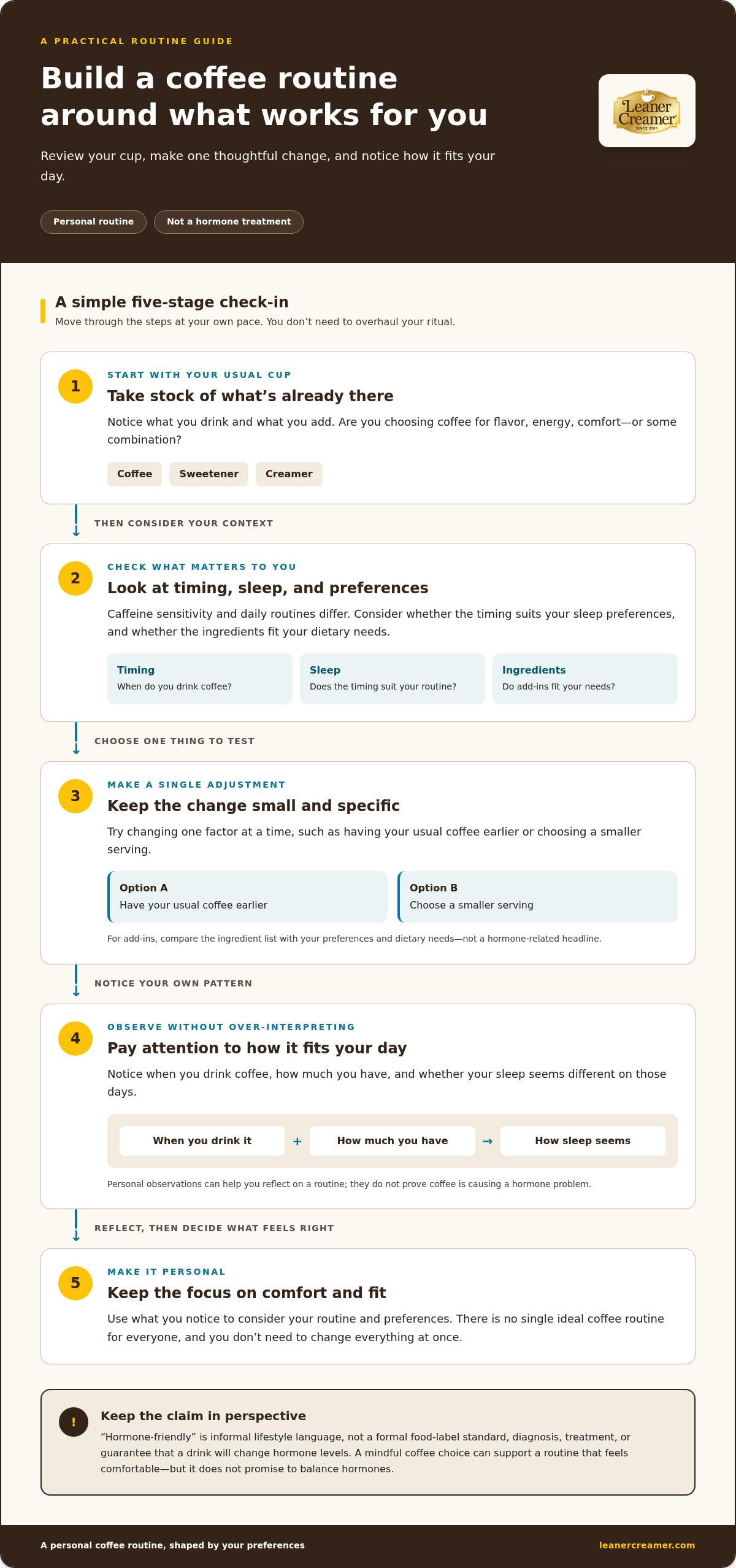
A comfortable coffee routine doesn’t require strict rules or a complete morning reset. Start with what you already do, then make small, deliberate choices that suit your preferences. This can help you understand your habits without treating a few observations as a diagnosis or proof of a hormone effect.
A simple, low-pressure coffee check-in
Keep the check-in simple. For a short period, note when you drink coffee, your usual serving, what you add, and how you feel afterward. Look for patterns, not verdicts. Sleep, stress, meals, and daily demands can also shape how you feel, so a brief record can’t establish the cause of a symptom. Keep what you enjoy and change only what you want to explore.
- Notice your current routine. Write down when you usually have coffee, how many servings you choose, and whether you add a sweetener or creamer. Include other caffeine sources if they’re part of your day.
- Review the ingredients. Check the current package for serving size, ingredient list, and nutrition information. Ask whether the ingredients fit your preferences, such as avoiding a particular ingredient or choosing a plant-based option.
- Adjust one variable. If you want to experiment, change just one thing, such as the timing, serving choice, or creamer. Keeping the rest of your routine familiar makes it easier to notice what you like, without turning the change into a health test.
- Reflect and decide. Note whether the new choice feels enjoyable and practical. Keep it, adapt it, or return to your usual cup. Your notes are for personal reflection, not for self-diagnosing or deciding that a particular ingredient changed your hormones.
This approach keeps hormone friendly coffee grounded in everyday choices: a routine you can adjust, rather than a promise attached to a special recipe. If you’re comparing creamers or other coffee add-ins, a range of powdered coffee creamer options gives you ingredients and flavors to consider as part of your own label review.
When to bring a clinician into the conversation
Personal notes can help you describe your routine, but persistent symptoms or a diagnosed endocrine condition deserve individualized clinical guidance. Speak with a qualified clinician about caffeine during pregnancy, possible medication interactions, or questions related to a health condition. Don’t use a coffee change or creamer as a substitute for medical care, and don’t rely on general online advice for a personal caffeine limit.
A useful check-in should leave room for pleasure, too. If your cup tastes good and fits your needs, there’s no requirement to make it more complicated. Keep the ritual flexible as your preferences and circumstances change.
Where a Powdered Creamer Can Fit Into a Hormone-Conscious Coffee Ritual
A creamer can make coffee taste richer, sweeter, or more like the cup you want to settle into. That’s a valid reason to choose one, but it isn’t a hormone solution. In a thoughtful hormone friendly coffee routine, a creamer is an optional way to personalize taste and texture. Caffeine timing and health concerns are separate considerations.
What a powdered creamer may offer in a daily ritual
Powdered creamer is one format to consider when you make coffee at home and want to customize your cup. Compare the flavor, serving information, ingredients, and nutrition details with what you prefer. If you want sweetness or creaminess, check the label rather than assuming a product name or front-label language tells the whole story.
Leaner Creamer specializes in powdered formats, including plant-based and sugar-free options. A creamer is a choice for flavor and texture, not a promise about energy, appetite, blood glucose, or hormone levels. Check the current package for the serving size, ingredient list, and nutrition facts, especially if you’re comparing products or have specific dietary needs. Labels can help you make an informed choice, but they don’t establish a medical benefit.
As you choose, ask yourself:
- Do I like the flavor and the way it changes my coffee?
- Do the listed ingredients fit my preferences or dietary needs?
- Does the serving information help me decide how it fits into my usual cup?
These questions keep the decision practical. You don’t need a special creamer to make a coffee ritual feel intentional. If you’re curious about a different flavor or format, explore powdered coffee creamer options to compare choices for your at-home routine.
Choose by ingredients and preferences, not promises
Leaner Creamer offerings are dairy-free, gluten-free, soy-free, vegan, and kosher, with keto-compatible options. These attributes can help you narrow choices according to your needs. Check the specific product’s current label for its ingredients and dietary information. These attributes don’t show that a creamer balances or regulates hormones.
That distinction matters. A product can suit your preferences without treating a condition or producing a particular health outcome. If you have a diagnosed condition or questions about how an ingredient fits your care, consult a qualified health professional. Keep the coffee ritual gentle: choose what tastes good, aligns with your ingredient priorities, and feels right as part of your day. No wellness promise required.
Make Your Next Cup a Choice That Feels Right
Your next coffee doesn’t need a new set of rules. Choose one small detail to be more intentional about, whether that’s the flavor you enjoy, what you add, or how your coffee fits into your day. Let your hormone friendly coffee routine be personal and flexible, shaped by your preferences rather than promises that a particular cup can change your hormones.
As your tastes and schedule shift, give yourself room to adjust. A coffee ritual can be familiar and comforting while still leaving space to try a different ingredient or format. Choose a next step that feels manageable and makes your daily cup more enjoyable, without turning it into another health measure.
If a powdered creamer feels like a fit for your coffee ritual, explore the options and choose according to your taste and ingredient preferences.
Explore powdered coffee creamers
Keep it simple. Your next cup can be a small, satisfying choice that feels like your own.
Frequently Asked Questions
Is decaf coffee a hormone-friendly choice?
Decaf can be a useful choice if you want to reduce caffeine, but it doesn’t automatically make a cup hormone-friendly or establish any hormone-related benefit. Decaffeinated coffee may still contain some caffeine, so check product information if you’re monitoring your intake closely. Consider decaf for its taste and how it fits your routine, not as a treatment or guarantee about hormone effects.
Can drinking coffee on an empty stomach affect how I feel?
It can feel different for some people, though there isn’t one response that applies to everyone. If coffee before breakfast seems to leave you uncomfortable or overly stimulated, try having it with food another day and notice whether that suits you better. Keep the serving and timing similar for a fair comparison. Repeated or concerning symptoms are a reason to seek individualized clinical advice.
Does adding creamer change how caffeine affects me?
Creamer changes a cup’s taste and ingredients, but it shouldn’t be treated as a way to cancel out caffeine. If a coffee feels too stimulating, adding creamer doesn’t remove the caffeine in the coffee. Check the creamer’s ingredient list if you’re tracking specific ingredients, and consider the coffee’s serving and timing separately. A creamer is a flavor choice, not a caffeine remedy.
Is hormone-friendly coffee safe during pregnancy?
There’s no special “hormone-friendly” coffee label that establishes safety during pregnancy. Ask your prenatal clinician for advice on caffeine that reflects your pregnancy and health circumstances, and include other caffeine sources in that conversation. Don’t rely on a coffee brand’s wellness language or a creamer choice to determine what’s appropriate. If you’re unsure, bring the product label and your usual routine to your next appointment.
Can I drink coffee if I have a diagnosed hormone condition?
A diagnosis doesn’t create one universal coffee rule. Your condition, symptoms, treatment plan, and other health factors may all matter, so ask your clinician whether coffee or caffeine is relevant to your care. A brief note of what you drink and when can make that conversation more useful. Don’t change prescribed treatment or use a coffee or creamer choice in place of medical advice.
Should I stop drinking coffee if I feel jittery or have trouble sleeping?
Not necessarily, but recurring jitters or disrupted sleep are good reasons to reassess your routine. You might try a smaller serving, an earlier cup, or decaf, changing one thing at a time and noting how you feel. Also consider caffeine from tea, energy drinks, or other sources. If symptoms persist, feel severe, or concern you, discuss them with a qualified healthcare professional.


