


Could a creamer made with coconut make your coffee feel like a better choice, or just sound that way? The coconut milk creamer benefits you may be looking for, such as a dairy-free option and a creamy texture, depend on the ingredients and how much you pour. Coconut milk, coconut beverage, coconut cream, and coconut oil are not interchangeable, and their nutrition can vary.
If you’re weighing saturated fat, added sugar, or whether a plant-based creamer fits your preferences, the label matters more than the promise on the front. This guide explains the potential benefits and trade-offs without treating coconut creamer as a health fix. Learn how coconut ingredients differ, what to check on nutrition and ingredient panels, and how serving size shapes your cup. Then you can decide whether coconut milk creamer suits your coffee routine or another option fits your needs better.
Key Takeaways
- Coconut milk creamer benefits depend on the specific ingredients and dietary fit, not simply on coconut in the name.
- Canned coconut milk, carton beverages, and formulated creamers can differ in ingredients and nutrition.
- Compare dairy, oat, almond, and coconut options by taste, texture, dietary needs, and label details.
- Use the same serving size when comparing nutrition labels, then taste-test to see what works in your coffee.
- Powdered plant-based creamers are a separate format. Check their labels to see whether they suit your routine.
What Are the Potential Benefits of Coconut Milk Creamer?
Coconut milk creamer may offer a dairy-free way to add creaminess and coconut flavor to coffee. Those are potential benefits of taste and dietary fit, not proof that the creamer provides a particular health benefit. If you’re considering coconut milk creamer benefits, start by checking what the product contains and whether those ingredients meet your needs.
A creamy texture or tropical note can make a morning cup more enjoyable, but those qualities don’t tell you how nutritious a creamer is. Coconut milk is also distinct from coconut cream, and products sold as creamers may differ from both. For broader background on the ingredient, see Coconut milk.
For an overview of claims about coconut milk, you can watch this video, then use the product label to assess a specific creamer:
What does coconut milk creamer mean?
The name doesn’t guarantee a standard recipe. A coffee creamer may use coconut milk, coconut cream, or another coconut-derived ingredient, alongside added oils, sweeteners, or stabilizers. Read the ingredient list instead of assuming coconut is the only base.
Canned coconut milk is generally sold as a cooking ingredient, while carton coconut beverages are made for drinking. Creamers are formulated for coffee, and their ingredients and nutrition can vary by product. The format and label both matter.
Which potential benefits are most relevant to coffee drinkers?
If you avoid dairy, a plant-based creamer may be an option, provided its full ingredient list fits your dietary needs. Coconut flavor and a creamy feel may also suit your preferences. Neither quality, on its own, establishes a health advantage.
Ingredients and serving size shape a creamer’s nutritional profile: coconut-derived fat, added oils or sweeteners, and the amount you use all influence what goes into your cup. Compare nutrition information using the same serving size, and check for ingredients you need to avoid. If you’re exploring other flavor profiles, see this salted caramel coffee creamer option.
How Coconut Milk Creamer Ingredients Shape Its Nutrition
The word “coconut” on a package doesn’t tell you how much coconut is in the product or what else the recipe contains. Products can differ in concentration, added oils, sweeteners, and stabilizers. Compare the nutrition label and ingredient list rather than judging by the category name alone.
Coconut milk, coconut cream, and coconut beverage are not interchangeable
Coconut milk and coconut cream are related products, but their concentration and intended uses can differ. Carton coconut beverages are generally made for drinking, while canned coconut milk is commonly used in cooking. A formulated creamer is designed for coffee and may combine coconut ingredients with other components. For background on coconut milk and its nutritional profile, see nutritional profile of coconut milk.
| Format | How it may differ | What to check |
|---|---|---|
| Canned coconut milk | Usually sold as a cooking ingredient; concentration and consistency vary by product. | Serving size, calories, total fat, saturated fat, and any added ingredients. |
| Carton coconut beverage | Made as a drink, with a formula that can differ from canned coconut milk. | How much coconut it contains, added oils or sweeteners, and the Nutrition Facts panel. |
| Formulated coconut creamer | Designed for coffee and may include coconut ingredients alongside other oils, sweeteners, or stabilizers. | Ingredients and nutrition per labeled serving, then compare with the amount you actually use. |
A category name describes a product’s format, not a standardized recipe, so assess nutrition claims against the specific product’s current package label and serving size. That distinction matters when weighing coconut milk creamer benefits: one product’s nutrition cannot represent every product marketed as coconut creamer.
What to know about fat, calories, and added sugar
Check total fat, saturated fat, calories, and added sugars per serving. Coconut-derived ingredients can contribute fat, and additional oils may change the total. Sweeteners can add sugar. Amounts vary by product and serving size. USDA FoodData Central can provide reference information for foods, but the packaged creamer’s label is the better guide to that specific formulation.
For a useful comparison, note each product’s labeled serving, then compare the same amount across labels. If you pour more than the stated serving into your coffee, the nutrition in your cup will increase accordingly. You can also explore plant-based powdered coffee creamers as another format, and review their individual ingredients and nutrition information.
Coconut Milk Creamer vs. Other Creamers: Benefits and Trade-Offs
No creamer works best for every coffee drinker. Coconut, dairy, oat, almond, and other plant-based options can differ in flavor, texture, ingredients, and nutrition. Use those differences to narrow your choices, then check the package. Recipes within the same category can vary, and “plant-based” doesn’t tell you everything about dietary suitability.
- Coconut: May suit someone who enjoys coconut flavor and wants a non-dairy option. Check the ingredients and serving information for the specific creamer.
- Dairy: Often offers a familiar, creamy taste, but may not suit someone avoiding dairy. Lactose intolerance and dairy allergy are different considerations; follow your own dietary guidance and check labels.
- Oat: Can offer a mild flavor and creamy texture, though ingredients and nutrition vary by product.
- Almond and other plant-based options: May have distinct flavors and thinner or creamier textures, depending on the formulation. Check for relevant allergens and added ingredients.
Compare products by taste, texture, dietary fit, ingredient list, and nutrition per the same serving size. The coconut milk creamer benefits that matter most may be a flavor you enjoy or a fit with your dairy-free preferences, not a promised health effect.
When might coconut milk creamer be a good fit?
It may appeal if you like coconut in coffee or want to try a non-dairy creamer. Whether it suits you depends on your own needs, including allergies or other dietary restrictions, and the full label. Compare its ingredients and nutrition with your priorities. For more ideas on evaluating non-dairy options, read this dairy-free creamer guide.
How is coconut milk different from MCT oil?
They aren’t interchangeable terms. Coconut milk is a coconut-derived food ingredient; MCT oil is a separate oil ingredient. A product containing one doesn’t necessarily contain the other, so look for each by name in the ingredient list. Don’t assume either ingredient guarantees a particular effect on energy, focus, or metabolism.
Keep the choice personal: what tastes good, works with your dietary needs, and fits the way you take your coffee? If you’re considering powdered, plant-based options, browse plant-based coffee creamers and review each product’s details rather than assuming it contains coconut.
How to Choose and Use Coconut Milk Creamer Mindfully
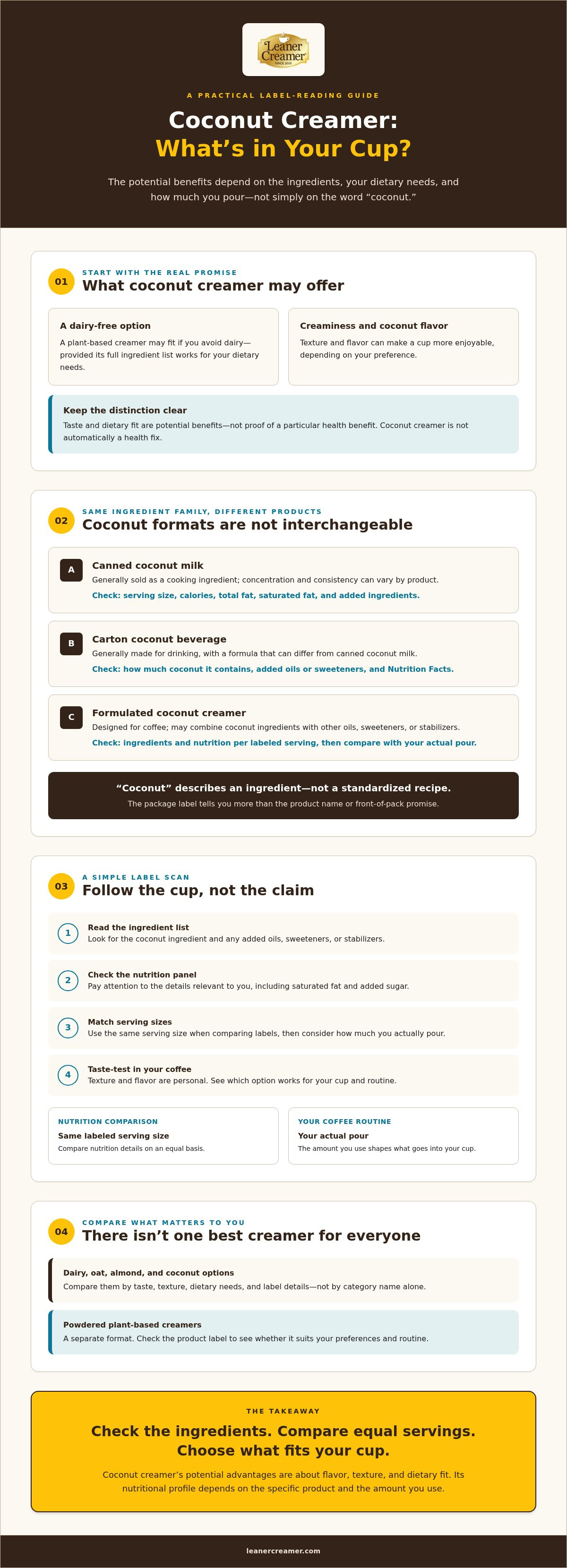
A consistent routine makes it easier to choose a creamer that suits your needs. Start with dietary requirements, read the ingredient list, compare nutrition using the same serving size, and then taste-test. No single front-label claim can answer all of those questions.
A simple label-reading checklist
- Identify dietary needs first. Check for coconut ingredients and any allergens or ingredients you personally avoid. “Plant-based” doesn’t automatically mean suitable for every diet.
- Read the full ingredient list. Look for added oils, sweeteners, and other ingredients that may matter to you. Consider the list alongside the Nutrition Facts panel.
- Compare like with like. Use the same labeled serving size across products, and compare calories, total fat, saturated fat, and added sugars. If you typically use more than the labeled serving, account for that when assessing your cup.
- Interpret claims in context. “Sugar-free” or “plant-based” describes one aspect of a product, not its complete nutrition profile or overall fit for you.
For another ingredient reference, review Leaner Creamer ingredient information. Check the specific product label as well, since ingredients can differ between formulations.
How to try it in your daily coffee
Begin with the serving listed on the package. Stir it into your usual coffee and notice the flavor, texture, and balance. Does the coconut taste stand out or blend in? Does the drink feel creamy enough for your preference? Adjusting the amount for taste is a practical choice, not medical advice.
Consider the whole cup, too. Sweeteners or flavored syrups can contribute ingredients and nutrition alongside the creamer. One ingredient doesn’t define the quality of your overall eating pattern; your broader choices matter. The possible coconut milk creamer benefits are best judged in the context of your dietary needs, the actual label, and how much you use.
For more ideas on choosing ingredients for a coffee routine, explore the clean coffee and latte guide.
Finding a Plant-Based Creamer That Fits Your Coffee Routine
The best creamer is one that fits your taste, dietary needs, and everyday habits. Coconut milk creamer benefits may include a flavor and texture you enjoy or a non-dairy option that suits your preferences, but the name alone can’t tell you how a product fits your needs. Check the exact ingredients and nutrition facts, and consider how much you typically add to your cup.
What to look for in a powdered plant-based creamer
Powdered creamers are another format to consider, but they aren’t automatically coconut milk products and don’t necessarily share the same nutritional profile. Ingredients and nutrition depend on the formulation. Read the ingredient list and Nutrition Facts panel, then compare the listed serving size and nutrients with your priorities.
Leaner Creamer describes its offerings as powdered and plant-based, and states that its products are dairy-free, gluten-free, soy-free, vegan, and kosher. These are brand-level attributes, not a substitute for checking an individual product’s label, especially if you need to avoid a particular ingredient or have specific dietary requirements. “Plant-based” describes a product characteristic, not its complete nutrition profile.
Make the coffee ritual your own
Try a creamer in the amount shown on its label, then notice how it tastes in your usual coffee. Does the flavor complement the coffee? Is the texture right for you? If you adjust the portion to suit your taste, remember that the nutrition you get changes with the amount used. Comparing options with the same serving size can make your choice clearer.
A creamer is one part of a larger dietary pattern, not a verdict on whether your routine is “healthy.” The right choice can simply be one that fits your preferences and dietary needs, with ingredients you understand and a serving size that works for you. You don’t have to make a perfect choice on the first try.
If you’d like to explore another format, take a look at Leaner Creamer’s powdered coffee creamers and review the details of any option you’re considering.
Choose a Creamer That Feels Right in Your Cup
The potential coconut milk creamer benefits depend on the specific product, its ingredients, serving size, and how it fits your dietary needs. Coconut milk, coconut cream, and formulated creamers aren’t interchangeable, so compare labels rather than relying on the name or front-of-package claims. Taste and texture matter, too. A creamer should work for your coffee routine, not promise more than it can deliver.
If coconut isn’t the right fit, powdered plant-based creamers offer another format to explore. Leaner Creamer describes its powdered offerings as plant-based, sugar-free, and glucose-friendly, and states that its products are dairy-free, gluten-free, soy-free, vegan, and kosher. Check individual product information to see what aligns with your preferences.
Compare the product details and choose a powdered plant-based creamer that fits your coffee routine.
Frequently Asked Questions
Is coconut milk creamer healthier than dairy creamer?
Not automatically; “healthier” depends on the products and your needs. Coconut milk creamer may suit someone avoiding dairy, while dairy creamers have different ingredients and nutrition profiles. Compare labels using the same serving size, including calories, total fat, saturated fat, and added sugars. Taste and dietary fit matter, too. No single creamer is the best choice for everyone, and coconut ingredients alone don’t establish a health benefit.
Can coconut milk creamer fit a dairy-free or vegan diet?
It may, but check the full ingredient list and any relevant label statements. A coconut-based name doesn’t guarantee that every ingredient meets your dietary requirements, and products can use different formulations. If you’re avoiding dairy due to an allergy, intolerance, or personal preference, consider your specific needs and seek professional guidance when appropriate. For a vegan diet, verify that the product’s ingredients and labeling align with your standards.
Does coconut milk creamer contain saturated fat?
It can, but the amount varies by product and serving size. Coconut-derived ingredients may contribute saturated fat, and a creamer can contain other fat sources as well. Check total fat and saturated fat on the Nutrition Facts panel for the specific product. Compare equal serving sizes, and account for how much you actually pour into coffee. Don’t assume every coconut creamer has the same fat content.
Does coconut milk creamer have added sugar?
Some products contain added sugar, while others may not. Flavors and formulations differ, so check both the ingredient list and the “Added Sugars” line on the Nutrition Facts panel. A “plain” or coconut-flavored name isn’t enough to determine sugar content. Compare products using the same serving size, and remember that the amount you add to coffee affects what’s in your cup.
Is coconut milk creamer the same as coconut milk or coconut cream?
No. Coconut milk, coconut cream, and coffee creamer refer to different product types, and their concentration, ingredients, and intended uses can vary. Canned coconut milk is often used in cooking; carton coconut beverages are made for drinking; formulated creamers are designed for coffee and may include additional ingredients. Check the package description, ingredient list, and nutrition panel rather than relying on the word “coconut.”
Is coconut milk creamer the same as MCT oil?
No. Coconut milk and MCT oil are different ingredients, and one shouldn’t be assumed to contain the other. A product may include coconut-derived ingredients, MCT oil, both, or neither, depending on its formula. Check the ingredient list for the exact terms. Their presence alone doesn’t prove that a creamer will improve energy, focus, or metabolism, so choose based on your preferences and verified product information.
How do I choose a coconut milk creamer for coffee?
Start with your dietary needs, then check the ingredients for coconut sources, added oils, sweeteners, and allergens. Compare calories, total fat, saturated fat, and added sugars using the same labeled serving size. Finally, taste-test for flavor and texture in your usual coffee. If you’re considering another format, Leaner Creamer offers powdered coffee creamers described as plant-based, sugar-free, and glucose-friendly; its products are stated to be dairy-free, gluten-free, soy-free, vegan, and kosher. Check individual product details.


