


What makes a creamy iced vanilla latte satisfying without relying on extra sweetness? The balance of coffee, vanilla, and creaminess matters just as much. This healthy iced vanilla latte recipe gives you a simple way to make coffee-shop-style flavor at home, with ingredients and proportions you can adjust to your taste.
You don’t need an espresso machine or complicated equipment. Use chilled strong coffee, your preferred milk, vanilla, and ice. Then adjust the sweetness, texture, and coffee strength to suit your cup, whether you prefer dairy or a plant-based option and a gentler or bolder coffee flavor.
Ingredient choices shape the finished drink. Vanilla extract adds aroma, while a powdered vanilla creamer can provide flavor and creaminess in one step. Check the label to see whether a creamer’s ingredients and dietary details suit your needs. A few practical choices make this everyday coffee ritual easier to tailor.
Key Takeaways
- Build a healthy iced vanilla latte recipe around balanced coffee, vanilla, and creaminess, then adjust the starting proportions to suit your glass and taste.
- Compare dairy milk, unsweetened plant-based milk, and creamer for texture and flavor. Check labels for ingredients and dietary details.
- Use vanilla extract for aroma, or try a powdered vanilla creamer when you want flavor and creaminess together.
- Fix a watery, weak, overly sweet, or unevenly mixed latte by changing one ingredient at a time.
- Make the drink easy to repeat with a simple brew, chill, mix, and pour routine.
What Makes an Iced Vanilla Latte a More Mindful Coffee Choice?
A cool, creamy coffee can be a small comfort in your day. Making it at home gives you more control over the coffee strength, milk, vanilla, and sweetness. A healthy iced vanilla latte recipe isn’t one strict formula. It’s a way to choose ingredients and proportions that fit your preferences and routine.
An iced vanilla latte combines coffee or espresso, milk or a milk alternative, vanilla, and ice. The classic caffè latte pairs coffee with milk. The iced version serves that combination cold, with vanilla for a fragrant, sweet-tasting note.
For a quick look at homemade vanilla flavor, watch this vanilla bean syrup tutorial:
What goes into a classic iced vanilla latte?
Coffee provides the roasted base, while milk softens its edge and adds body. Vanilla brings aroma, and ice makes the drink refreshing while gradually diluting it. Espresso is traditional, but concentrated brewed coffee is a practical substitute if you don’t have an espresso machine.
A latte is coffee or espresso mixed with milk, served over ice here. Sweetened bottled coffee is a ready-made drink whose ingredients and proportions you don’t control. Vanilla extract adds aroma, but not the creamy texture or built-in sweetness of a flavored creamer. A vanilla creamer can contribute both flavor and body, so check its label and taste the drink before adding extra sweetener.
What does “healthy” mean for this latte?
There’s no single definition that fits every cup. Consider your serving size, added sugar, preferred milk or alternative, and any dietary needs or ingredient preferences. Homemade preparation makes these choices easier to tailor. If you want less sweetness, start without sweetener, taste, and add only as much as you enjoy.
Labels can help you compare ingredients and dietary information, but terms such as “sugar-free” or “glucose-friendly” don’t guarantee a particular health outcome for everyone. If you have health concerns or specific dietary needs, ask a qualified medical professional for guidance. For optional powdered creamer or instant latte choices, explore new flavors, hot chocolate, and latte options, and check each product’s current label to see whether it suits your routine.
How to Make a Healthy Iced Vanilla Latte at Home
This healthy iced vanilla latte recipe is a starting point, not a rulebook. Adjust the coffee, milk, and vanilla to fit your glass and taste. Add sweetness only if you want it.
Ingredients and simple substitutions
For one serving, gather:
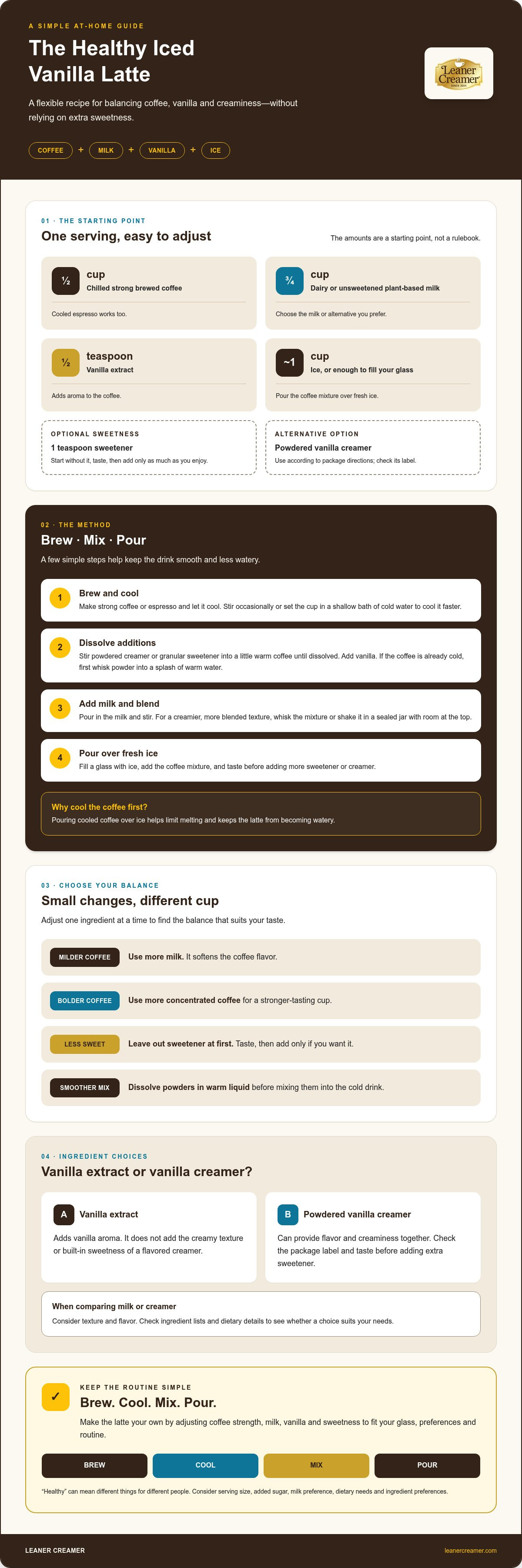
- ½ cup chilled strong brewed coffee, or espresso cooled after brewing
- ¾ cup dairy or unsweetened plant-based milk
- ½ teaspoon vanilla extract
- About 1 cup ice, or enough to fill your glass
- Optional: 1 teaspoon sweetener, or powdered vanilla creamer used according to its package directions
These proportions are flexible. Use more milk for a milder coffee flavor, or more concentrated coffee for a bolder cup. If you choose a flavored creamer or sweetener, check its label to see what it adds. A powdered vanilla creamer can be a convenient way to add flavor and creaminess, but it isn’t essential to the recipe.
The mixing method for a smooth, creamy drink
Powder can clump when it meets a cold drink. Dissolving it in a little warm coffee first helps create a smoother mixture before you add ice.
- Prepare the coffee. Brew strong coffee or espresso, then let it cool. To cool it faster, stir it occasionally in a heat-safe cup or set the cup in a shallow bath of cold water.
- Mix in the additions. If using powdered creamer or granular sweetener, stir it into a small amount of warm coffee until dissolved. Add the vanilla extract. If the coffee is already cold, whisk the powder into a splash of warm water first, then combine it with the coffee.
- Add the milk. Pour in the milk and stir. For a creamier, more blended texture, whisk the mixture or shake it in a sealed jar, leaving room at the top.
- Pour over fresh ice. Fill a glass with ice, add the coffee mixture, and taste before adding more sweetener or creamer.
Cooling the coffee before pouring it over ice helps limit melting and keeps the latte from becoming watery. The routine is simple: brew, cool, mix, and pour. Harvard T.H. Chan School of Public Health discusses the health benefits of coffee, while your additions and serving size shape the finished drink. To compare powdered creamer options, browse coffee creamer choices and check the product label for ingredients and dietary details.
Which Ingredients Make the Best Healthy Iced Vanilla Latte?
The best ingredients depend on the cup you want: light or velvety, gently vanilla-scented or noticeably sweet. For a healthy iced vanilla latte recipe that fits your preferences, compare flavor and texture along with ingredient and allergen information. Milk and vanilla extract make a simple base. A creamer is another option if you want added flavor and body.
Milk, plant-based drinks, and creamer: what changes?
Milk choice changes the latte’s body and taste. Dairy milk often provides a familiar creamy texture. Unsweetened plant-based drinks vary by type and brand, so check the label for ingredients and allergens rather than assuming they’re interchangeable. Powdered creamer can add creaminess and flavor, but its ingredients and dietary details vary too. You can make the recipe with or without a branded creamer.
| Ingredient | What it brings | What to check |
|---|---|---|
| Dairy milk | Familiar creamy body and mild flavor | Whether it suits your dietary needs |
| Unsweetened plant-based drink | Varies in creaminess and taste by type and brand | Ingredients, allergens, and any added sweeteners |
| Vanilla creamer | Vanilla flavor and added body; some options are sweetened | Ingredient list, sweetener, and dietary information |
| Vanilla extract | Aromatic vanilla without the creamy texture of creamer | Use a small amount and adjust to taste |
If you want to try a vanilla-flavored powdered option, look for one that fits your preferences and check its current label for ingredients and dietary information before adding it to your drink.
Vanilla and sweetener: how to adjust the flavor
Vanilla extract adds aroma, but it doesn’t provide the same sweetness or creaminess as flavored creamer. Start with a small amount, taste, and add more if you want a stronger vanilla flavor. If your creamer is already sweetened, extra sweetener may not be needed. Check its label before deciding.
Balance coffee strength with the amount of ice, too. Stronger coffee holds its flavor alongside milk, while melting ice gradually dilutes the drink. If the latte tastes flat, adjust the coffee strength or use fresh ice before adding more sweetener.
Ingredient choices shape the drink, but they don’t establish a health outcome. For broader context, the NHLBI discusses research on moderate coffee drinking. Consider your own needs, and don’t describe a latte as sugar-free unless every ingredient supports that description.
How to Customize and Troubleshoot Your Iced Vanilla Latte
A small adjustment can change the whole cup. If your latte isn’t quite right, avoid changing several ingredients at once. Adjust one thing, taste again, and you’ll know what made the difference. Coffee temperature and melting ice matter too, so starting with chilled coffee helps the flavor last as you sip.
Why does an iced latte taste watery or too strong?
Ice melts faster when warm coffee is poured over it, which dilutes the drink. Chill brewed coffee ahead, or freeze leftover coffee in ice cube trays and use those cubes instead of regular ice. The size of your glass and the amount of ice also affect the balance, so leave room to adjust.
If the coffee tastes weak, brew it stronger or use a little less milk. If it’s too intense, add milk gradually. Adding sweetener may mask the imbalance without correcting it. If the drink is too sweet, use less sweetened creamer or optional sweetener next time. Change one thing at a time.
How can powdered creamer mix smoothly into cold coffee?
Powder can clump when added straight to a cold drink. Stir it into a small splash of warm coffee first, then mix in the chilled coffee and milk. For a no-heat option, shake the powder with some coffee in a sealed container until blended, then pour it over ice. Follow the product’s directions if they differ from these general tips.
For a lighter-tasting variation, use more milk and less creamer. For a creamier cup, add a little more creamer or choose a milk alternative with a texture you enjoy. There’s no single right balance. If you’re reviewing specific product ingredients, check the ingredient information page and confirm dietary details on the product label.
Keep your healthy iced vanilla latte recipe flexible. Taste after each adjustment, especially if the ice will sit in the glass for a while. Once you find a balance you like, note the proportions so you can recreate it next time.
Make the Recipe Part of an Easier Coffee Routine
A little preparation makes an iced latte easier to fit into your day. Brew coffee ahead, chill it in a covered container in the refrigerator, and keep dry additions measured separately. When you’re ready, mix the ingredients, pour over fresh ice, and adjust to taste. Make one serving first, then note the proportions you enjoy.
A simple prep-ahead routine for busy mornings
Think of the routine in five steps: brew, chill, mix, pour over ice, adjust. Chilled coffee helps limit melting when it meets the ice. If you’re using powdered creamer, measure it separately and mix it into the coffee when you prepare your latte rather than storing it in the coffee ahead of time. This keeps the routine simple and makes it easy to change the flavor from one cup to the next.
Once you’ve found a balance you like, use it as a starting point rather than a fixed rule. A larger glass, different milk, or more ice can shift the taste, so taste before adding more vanilla, creamer, or sweetener. The best healthy iced vanilla latte recipe is one you can adapt to your preferences and the ingredients you have on hand.
Choosing an optional vanilla creamer with confidence
A powdered vanilla creamer is one optional way to bring vanilla flavor and creaminess to your latte. It isn’t necessary for the recipe, and products can differ. Before using one, check its current ingredient panel, serving guidance, and allergen information. Compare those details with your own dietary needs instead of assuming a product suits every preference. Follow the package directions if they differ from general recipe guidance.
For a broader look at ingredient choices, explore new latte and beverage options. You can also use the ingredient information provided for a product to make a more informed choice. A mindful coffee routine doesn’t need to be complicated: prepare the coffee, choose additions that work for you, and enjoy your cup.
Make Your Next Iced Latte Your Own
A satisfying latte comes down to balance, not a fixed formula. This healthy iced vanilla latte recipe gives you a simple base, while your choice of coffee, milk, vanilla, and optional sweetener shapes the flavor and texture. Chilling the coffee first helps keep the drink from becoming diluted, and adjusting one ingredient at a time makes it easier to find your preferred mix.
If you’d like an optional shortcut, Leaner Creamer offers powdered coffee creamers and instant beverages. Its creamer range is plant-based, sugar-free, and glucose-friendly, with dairy-free, gluten-free, and soy-free options. Check current ingredient information and the product label to see whether a particular option fits your preferences and dietary needs.
Small, thoughtful choices can make your coffee routine feel more personal. Start with one cup, adjust to taste, and enjoy the version that feels right for you.
Frequently Asked Questions
How do you make a healthy iced vanilla latte at home?
To make a healthy iced vanilla latte recipe at home, combine chilled strong coffee or espresso, milk, a little vanilla extract, and ice. Add sweetener or creamer only if you want it. Stir or shake until blended, then pour over fresh ice. Treat the proportions as a starting point and adjust for your glass and taste. Dissolve powdered additions in a splash of warm coffee before adding cold ingredients and ice. “Healthy” depends on your needs and choices, not a guaranteed nutrition or health claim.
Can you make an iced vanilla latte without espresso?
Yes. Chilled, strongly brewed coffee can stand in for espresso if you don’t have an espresso machine. Brew it a little stronger than you’d drink it on its own, then combine it with milk, vanilla, and ice. The flavor and concentration may differ from espresso, so adjust the coffee strength and milk gradually until the balance suits you. It may not taste exactly like a café latte, but it’s a simple home option.
What milk is best for a healthy iced vanilla latte?
The best milk depends on the creaminess, flavor, and dietary fit you prefer. Dairy milk and plant-based options can each work, but they may give the latte a different texture and taste. Try a small serving of your preferred option and adjust the amount to suit your cup. Check the product’s ingredient list and allergen information rather than assuming all plant-based drinks or dairy milks are alike.
How do you make an iced vanilla latte without added sugar?
Start with unsweetened milk and vanilla extract, which adds vanilla aroma without requiring a sweetener. Before adding creamer or any other flavored ingredient, check its product label, since vanilla-flavored options may contain sweeteners. You can leave out optional sweetener or add it only after tasting the drink. Ingredient labels help you understand what’s in your cup, but don’t establish a nutrition or blood-sugar outcome.
Can you use powdered creamer in an iced latte?
Yes, if the powder is intended for use in your drink and its label supports that preparation. For a smooth mix, stir it into a small splash of warm coffee until dissolved, then add chilled coffee and milk before pouring over ice. You can also shake the powder thoroughly with coffee in a sealed container. Follow the product’s serving instructions, and check its ingredient information and dietary details.
How do you keep an iced vanilla latte from tasting watery?
Melting ice can dilute coffee, especially if hot coffee is poured directly over it. Chill brewed coffee first, choose a brew strong enough to hold its flavor alongside milk, and adjust the amount of ice to suit your serving size. Coffee ice cubes are another option; as they melt, they add coffee rather than plain water. The final flavor still depends on your coffee, proportions, and glass size.
Can you make a dairy-free iced vanilla latte?
Yes. Replace dairy milk with a plant-based option you enjoy, then adjust the amount to get the texture you like. Taste can vary between products, so a small test serving can help you find a good balance with the coffee and vanilla. Check ingredient and allergen information for both the milk alternative and any creamer you use. A dairy-free recipe doesn’t automatically suit every dietary need.


