


Could a tiny ingredient on your creamer label be more concerning than its actual role? If you’ve wondered, “is soy lecithin in creamer bad for you,” you’re not alone. Ingredient names can sound alarming, especially when soy is also a major food allergen.
In many creamers, soy lecithin is used as a formulation aid to help ingredients blend more evenly. The FDA considers lecithin generally recognized as safe for use in food, but that doesn’t mean every person’s needs are the same. Soy lecithin can contain residual soy protein, so anyone with a soy allergy should seek personalized guidance rather than rely on general safety information.
This article explains why manufacturers add soy lecithin, what general safety information can tell you, and how to think about allergy concerns and personal preferences. You’ll also find practical steps for checking ingredient and allergen labels, plus questions to consider when choosing a creamer. The goal is to help you make an informed choice, not guess from an ingredient name.
Key Takeaways
- The answer to “is soy lecithin in creamer bad for you” depends on your individual needs, especially if you have a soy allergy.
- Soy lecithin, soy protein, and soy oil are different ingredients, with different roles in food.
- Check the full ingredient list and allergen information for the exact creamer you’re considering.
- A personal preference to avoid soy is different from the precautions needed for a diagnosed allergy.
- If you want to avoid soy, compare current product labels and allergen details instead of relying on a broad product description alone.
What Is Soy Lecithin in Creamer, and Why Is It Added?
An unfamiliar ingredient in something you use every morning can raise fair questions. Is soy lecithin there for flavor, nutrition, or simply to help the creamer come together? It is generally included for its role in a food’s formulation, not as a health benefit.
Soy lecithin is a soy-derived mixture of fats, including phospholipids, used in foods to help ingredients that don’t naturally mix stay more evenly combined. The Lecithin overview describes its food applications, including its use as an emulsifier. Seeing it on a label doesn’t tell you whether the whole creamer is nutritious or suitable for your needs.
For another perspective on soy lecithin, you can watch this video. Consider its claims alongside reliable ingredient and allergy information:
What does soy lecithin do in coffee creamer?
An emulsifier helps fat- and water-based ingredients mix more evenly instead of separating quickly. In a creamer, that function may affect how ingredients disperse in coffee and contribute to a consistent texture. The result depends on the recipe and product, so soy lecithin alone doesn’t guarantee a particular level of creaminess or ease of mixing. Its technical role also doesn’t determine the creamer’s overall nutritional value.
Why might a creamer label list soy lecithin?
A manufacturer may use soy lecithin to help the ingredients in a creamer combine. When an ingredient is used in a packaged food, it may appear on the ingredient list according to applicable labeling rules. Formulas differ between brands and can change over time, so the generic description “coffee creamer” can’t tell you what is in a particular cup.
If you’re asking, “is soy lecithin in creamer bad for you,” start by separating its purpose from your personal health considerations. Check the ingredient and allergen information for the exact product you buy, and don’t assume another flavor or format has the same formula. For example, a salted caramel creamer product page can help you identify an option, but check the package for current details before choosing.
Is Soy Lecithin Bad for You? What Safety Evidence Can, and Cannot, Say
There isn’t a universal good-or-bad answer. For most people, soy lecithin in a creamer is a formulation detail, not evidence that the product is harmful. But general food-use safety information can’t determine whether an ingredient is appropriate for someone with a soy allergy or another personal medical concern.
U.S. regulations list lecithin as Generally Recognized as Safe (GRAS) for use in food under current good manufacturing practice. This status addresses its use as a food ingredient. It doesn’t promise that every person will tolerate every product or establish a specific health benefit. An ingredient’s function in a recipe and its effect on an individual are separate questions.
So, is soy lecithin in creamer bad for you? The ingredient’s name alone can’t answer that. Consider the full product and your circumstances rather than assuming that an ingredient is harmful simply because it comes from soy.
Is soy lecithin the same as soy protein?
No. Soy lecithin is a mixture of fats derived from soy, while soy protein is a different component of the soybean. Lecithin is not the same as a protein ingredient, but it shouldn’t automatically be considered completely protein-free. Processing can leave residual soy protein, and the amount may vary by product. For someone with a diagnosed soy allergy, that uncertainty matters: the difference between ingredients is not a guarantee of safety.
Soy is one of the major food allergens recognized by the FDA, and packaged-food labels can help identify its presence. A label can’t predict how a particular person will respond or replace advice from an allergy specialist.
Who should take extra care with soy lecithin?
If you’ve been diagnosed with a soy allergy or have a history of reactions to soy, ask your allergist or clinician how to assess products containing soy lecithin. Bring the exact package or ingredient information so you can discuss the product specifically. Don’t use a home taste test to find out whether you react. If you don’t have an allergy but prefer to avoid soy, choosing a different ingredient profile is a personal preference, not a medical conclusion.
Clear labels can make everyday choices easier. If you’re comparing products, you can review soy-free powdered creamer options and check the current ingredient and allergen information for each product. A soy-free description can help narrow your search, but the package is the practical final check.
Soy Lecithin vs. Soy Protein and Other Creamer Ingredients
Ingredients from the same source can play different roles in a recipe. Soy lecithin, soy protein, and soy oil aren’t interchangeable, and their names alone don’t establish how a person with an allergy will respond. Use the ingredient list and allergen information for the specific creamer you’re considering.
How does soy lecithin differ from soy protein and soy oil?
Soy lecithin is a mixture of fats used mainly as an emulsifier, while soy protein is protein from soybeans used as a protein ingredient. The University of Nebraska-Lincoln’s Food Allergy Research and Resource Program discusses trace levels of soy proteins in soy lecithin. That doesn’t mean every product has the same processing or that soy lecithin is appropriate for every person with a soy allergy. Soy oil is a fat ingredient, and its role and allergy-label implications can differ from those of lecithin or protein. Check current FDA labeling guidance and ask an allergy specialist about your own situation.
| Ingredient | Source and typical role | What to check |
|---|---|---|
| Soy lecithin | Soy-derived fats; often used to help ingredients mix. | Look for soy identification and allergen information. Don’t assume it is protein-free. |
| Soy protein | Soybean protein; may be included as a protein ingredient. | Check the ingredient list and allergen statement, especially with a soy allergy. |
| Soy oil | Oil from soybeans; can serve as a fat in a formulation. | Check the exact oil description and product allergen details. Don’t infer risk from the source alone. |
| Non-soy emulsifiers | May come from other plant or food sources and help ingredients combine. | Identify the specific ingredient and source; “non-soy” doesn’t mean universally safer. |
What should you compare on a creamer ingredient label?
Compare the complete ingredient list, any allergen statement, serving information, and the package’s current version. Formulas and labels can vary by manufacturer, flavor, and product format, and they may change over time. A “non-dairy” or “plant-based” description doesn’t tell you whether a particular product contains soy lecithin.
Separate allergy questions from general nutrition preferences, too. If you’re monitoring added sweeteners, fats, or serving size, review those details independently. An emulsifier’s role doesn’t explain the creamer’s overall nutritional profile. For a brand-specific reference, review Leaner Creamer ingredient information alongside the current package. If you’re still asking, “is soy lecithin in creamer bad for you,” the useful next step is to identify the ingredient and consider it in the context of your own needs, rather than treating all soy-derived ingredients as identical.
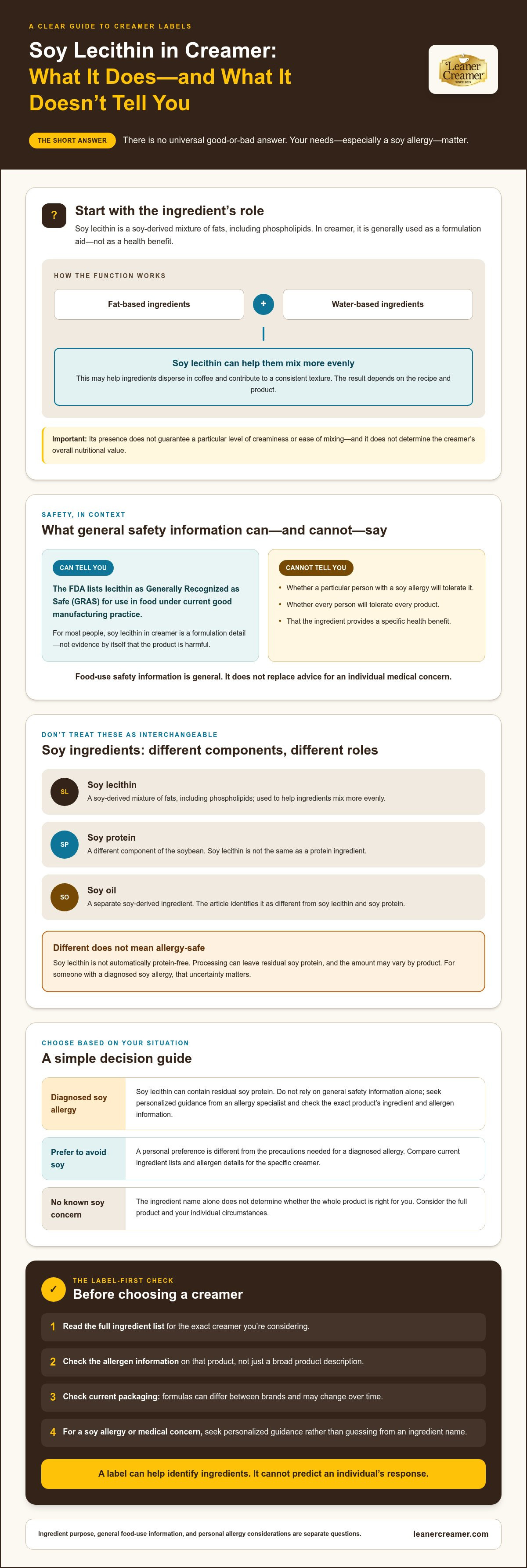
How to Decide Whether Soy Lecithin in Your Creamer Is Right for You
A clear decision starts with your needs, not a blanket verdict about one ingredient. If you’re asking, “is soy lecithin in creamer bad for you,” use this process to focus on what the label can tell you and when to seek personalized advice.
- Identify the ingredient. Check whether the label says soy lecithin, soy protein, or another soy-derived ingredient. They aren’t interchangeable.
- Check allergy details. Read the allergen statement and any other product-specific warnings. If you have a diagnosed soy allergy, follow your clinician’s guidance.
- Review the whole label. Look at serving size, the complete ingredient list, and nutrition information, not just the ingredient that caught your eye.
- Seek guidance if needed. Ask your allergist or another qualified healthcare professional about a medical concern. Contact the manufacturer if product or cross-contact details are unclear.
Quotable takeaway: “A label check is more useful than judging one ingredient in isolation because the full product and your personal needs both matter.”
What should you do if you have a soy allergy?
Follow the product-specific advice in your allergist’s plan. Don’t decide a creamer is safe based only on the ingredient name or a general description of soy lecithin. If the package doesn’t answer your questions, contact the manufacturer about ingredients and cross-contact information, then discuss the response with your clinician. Don’t try the product at home to test for a reaction.
How can you assess a creamer without an allergy diagnosis?
If you don’t have a diagnosed allergy, avoiding soy can still be a personal preference. Review the serving size, full ingredient list, and nutrition panel in light of what matters to you, such as sweeteners or fat content. If you notice recurring symptoms after consuming a product, discuss them with a qualified healthcare professional rather than trying to diagnose the cause yourself.
For a broader comparison, browse powdered coffee creamer options and check the current ingredient and allergen information for each product. Category descriptions can help narrow your choices, but the exact product label is what to verify.
Choosing a Soy-Free Coffee Creamer: A Label-First Next Step
Choosing a soy-free creamer is a valid preference, whether you’re avoiding soy for personal reasons or simply want to know what’s in your cup. That choice doesn’t mean soy lecithin is harmful for everyone. It’s a way to choose ingredients that suit your needs and routine.
What does “soy-free” mean when choosing creamer?
Start with the specific package and the manufacturer’s current ingredient and allergen information. Broad descriptions such as “plant-based” don’t necessarily tell you whether a particular product contains soy. A soy-free claim also doesn’t answer questions about manufacturing cross-contact or guarantee that a product is suitable for someone with a serious allergy. If you have a diagnosed soy allergy, follow your clinician’s individualized advice and contact the manufacturer if you need product-specific details.
How can you make a more informed everyday choice?
Check the full ingredient list, allergen statement, serving information, and nutrition panel. Then compare those details with your dietary needs and taste preferences. A creamer’s soy status is one consideration; sweeteners, fats, and other ingredients may matter to your overall choice as well.
Leaner Creamer’s powdered coffee creamers and instant beverages are soy-free. Use that as a starting point, not a substitute for checking the current label of the exact product you’re considering. Review the brand’s ingredient information and confirm details on the package. For allergy-related decisions, product descriptions aren’t medical guidance.
A thoughtful label check can bring more clarity to a daily habit. If you’re still weighing whether is soy lecithin in creamer bad for you applies to your situation, keep the distinction clear: general ingredient information can explain its role, but allergy concerns call for personalized guidance.
Make Your Next Creamer Choice With Clarity
Soy lecithin is commonly used to help ingredients blend, but that function alone doesn’t tell you whether a creamer is right for you. The answer to “is soy lecithin in creamer bad for you” depends on the full product and your circumstances, especially if you have a diagnosed soy allergy.
Keep two points in mind: soy lecithin and soy protein are different ingredients, but lecithin shouldn’t be assumed to be completely protein-free. General food-use safety information also isn’t a substitute for individualized allergy guidance. Check the specific package, including its ingredients and allergen information, and consult your clinician if you have allergy concerns.
If you prefer to avoid soy, Leaner Creamer offers soy-free powdered, plant-based coffee creamers and instant beverages. Product details can change, so review current information for the option you’re considering.
Small, informed choices can make your daily coffee routine feel more comfortable. Read the label, consider your needs, and explore Leaner Creamer’s soy-free powdered options to find a product that fits your routine.
Frequently Asked Questions
Is soy lecithin in coffee creamer safe for most people?
Soy lecithin is permitted for food use under FDA regulations, and most people can consume it without a known issue. Still, general information can’t guarantee how every individual will respond or determine whether a specific creamer suits your needs. If you have a soy allergy or medical concern, check the product’s allergen information and ask a qualified healthcare professional for guidance.
Can soy lecithin cause an allergic reaction?
It may be a concern for someone with a soy allergy because soy lecithin can contain residual soy protein, though the amount can vary. Don’t assume it’s safe based on the ingredient name alone. If you have a diagnosed allergy or a history of reactions, follow your allergist’s advice about specific products. Don’t taste-test a product at home to see whether you react.
Does soy lecithin contain soy protein?
Soy lecithin and soy protein are different components, but soy lecithin shouldn’t be assumed to be completely protein-free. Processing may leave residual amounts of soy protein, and products can differ. That distinction may matter if you have a soy allergy. Review the package’s ingredient and allergen statements, and ask your allergist how to interpret them for your individual situation.
Is soy lecithin the same as soy oil?
No. Soy lecithin is a mixture of fats separated from soybeans and commonly used to help ingredients blend. Soy oil is oil from soybeans, used as a fat in food formulations. They’re different ingredients with different roles, and their allergy implications shouldn’t be treated as identical. If you have a soy allergy, rely on your clinician’s advice and the specific product’s allergen information.
Why do manufacturers add soy lecithin to creamer?
Manufacturers may use soy lecithin as an emulsifier, which helps fat- and water-based ingredients mix more evenly. In creamer, this function may support consistency or dispersion when added to coffee. It’s a formulation aid, not proof of a health benefit. Recipes vary, so one creamer may contain soy lecithin while another uses a different emulsifier or none at all.
How can I tell whether a coffee creamer contains soy lecithin?
Read the ingredient list and allergen statement for the exact product. The ingredient may be listed as “soy lecithin” or “lecithin (soy),” but wording and formulas can vary. Check the package for the flavor and format you’re buying, since products from the same brand may differ. If details are unclear or you have an allergy, contact the manufacturer for product-specific information.
What should I do if I have a soy allergy and see lecithin on a label?
Don’t assume the product is safe or unsafe from the word “lecithin” alone. Check whether the label identifies soy, then follow the product-specific advice in your allergist’s plan. If the source or cross-contact information isn’t clear, contact the manufacturer and discuss the response with your clinician. Avoid testing the product yourself, and seek individualized guidance before making an allergy-related choice.


