


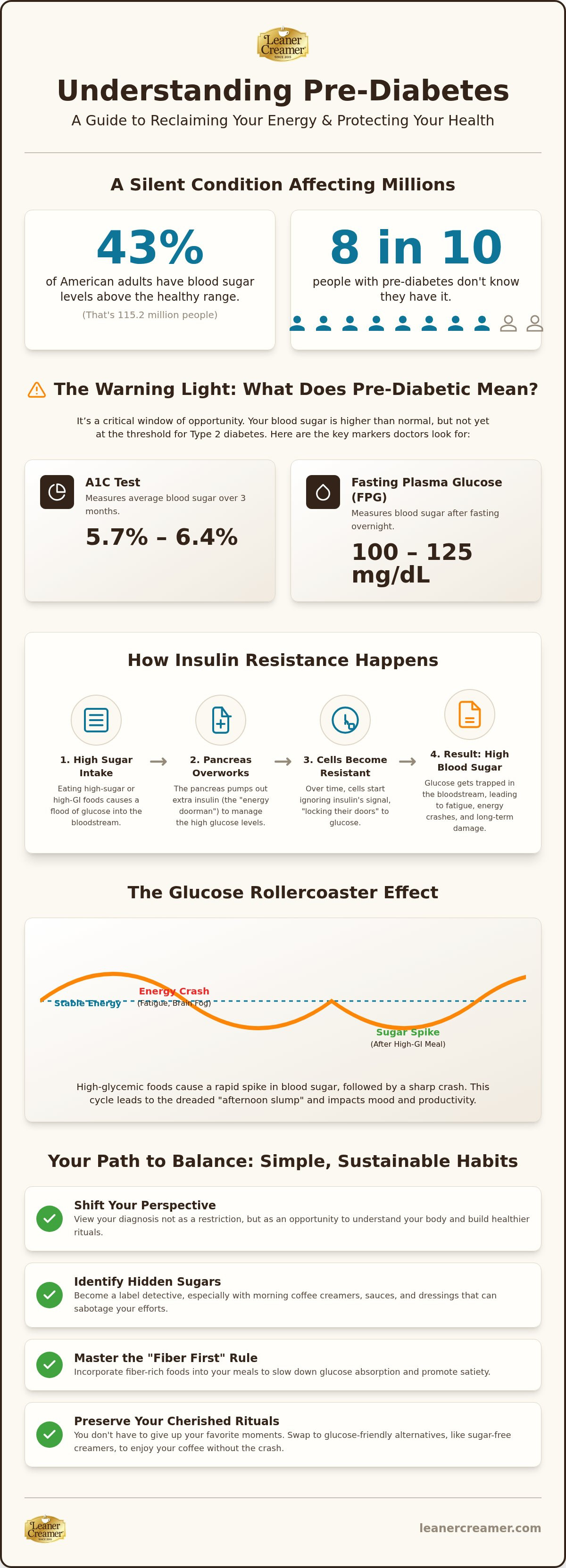
Did you know that 115.2 million American adults are currently living with blood sugar levels that sit just above the healthy range? That is 43% of the adult population. Even more striking is the fact that 8 in 10 people who are pre-diabetic don't even realize it yet. Finding yourself in this category can feel like standing at a daunting crossroads. It's natural to feel a rush of anxiety or fear that your favorite daily rituals, like that first comforting cup of coffee, are suddenly off-limits. You might worry that wellness now requires a life of clinical restriction and bland, joyless plates.
We understand that fear, but we also know there is a better way. You can protect your glucose levels and reclaim your steady energy without losing the moments that make your day special. It's about equilibrium, not deprivation. This guide will help you decode your diagnosis, uncover the hidden sugars lurking in everyday products, and master simple, mindful swaps. You will learn how to support your insulin health through manageable habits and delicious, sugar-free alternatives that leave you feeling nourished and whole.
Key Takeaways
- Shift your perspective from fear to opportunity by understanding what your A1C and fasting glucose numbers actually mean for your metabolic health.
- Discover how insulin acts as your body's energy doorman and why preventing "pancreas fatigue" is the secret to lasting, steady energy.
- Learn to identify the hidden sugars in your morning cup that can sabotage a pre-diabetic lifestyle and how to swap them for glucose-friendly alternatives.
- Master the "Fiber First" rule and other simple micro-rituals that slow down glucose absorption without requiring a restrictive or joyless diet.
- Find out how to preserve your cherished daily coffee ritual while ensuring you feel balanced and energized long after the last sip.
What Does Being Pre-diabetic Actually Mean?
Think of your body as a high-performance vehicle. A pre-diabetic diagnosis isn't a crash. It's the amber warning light on your dashboard. It flickers to let you know that your internal systems need a little extra care before the engine overheats. It is a signal. A message from your body asking for a shift in rhythm. Finding out you are pre-diabetic is not a final sentence. It is a critical window of opportunity to reclaim your health.
So, What is pre-diabetes? In simple terms, your blood sugar levels are higher than they should be, but they haven't yet reached the clinical threshold for Type 2 diabetes. Doctors typically use two main measurements to check this. The A1C test looks at your average blood sugar over the last three months; a range of 5.7% to 6.4% is the marker. Then there is the Fasting Plasma Glucose (FPG) test. A result between 100 mg/dL and 125 mg/dL indicates your body is working harder than usual to manage its energy.
The "Silent" Nature of High Blood Sugar
The trickiest part about this condition is its silence. You might feel completely normal while your pancreas is working overtime. This organ acts like a tireless engine, pumping out extra insulin to keep your glucose levels stable. Because of this internal effort, approximately 8 in 10 adults with the condition are unaware they have it. This makes proactive choices essential. If you are over 45, regular screenings should become a part of your wellness routine. While many feel "fine," some notice subtle signs. Increased thirst, frequent trips to the bathroom, or a lingering sense of fatigue after meals are all signals worth noting. Your body is talking. Are you listening?
The Silver Lining: Reversibility
The most empowering thing to remember is that this trajectory can be changed. You aren't stuck. By focusing on improving your "insulin sensitivity," you make it easier for your cells to use the sugar in your blood for energy. This reduces the load on your pancreas and brings your levels back into balance. Statistics from 2026 show that 43% of American adults have pre-diabetes, but intensive lifestyle modifications can cut the risk of progression in half. You have the power to shift your story. It doesn't require a total life overhaul. It starts with small, intentional adjustments to the habits you already love.
The Science of Insulin Resistance and Glucose Spikes
Imagine insulin as your body's energy doorman. Its job is simple: unlock the doors of your cells so glucose can enter and fuel your day. When you consume high-sugar foods, your blood sugar levels rise. Your pancreas responds by sending out more doormen to handle the influx. If these levels stay high constantly, your pancreas never gets a break. This leads to "pancreas fatigue." It's a state of internal exhaustion that makes it harder for your body to maintain its natural equilibrium. Your systems become overworked and under-rested.
How Your Cells Become Resistant
Over time, your cells can start "ignoring" the knock at the door. They become desensitized to the signals insulin is sending. This biological process is known as insulin resistance. Being pre-diabetic means this process has already begun. Factors like physical inactivity or excess weight can make your cells even less responsive to the doorman's call. When your cells resist insulin, glucose stays trapped in your bloodstream rather than being used for fuel. This is why you might feel drained even after a large meal. Stable blood sugar is the true secret to consistent, sharp focus. It allows your brain and body to communicate without interference.
The "Rollercoaster" Effect
Have you ever felt that sudden, heavy 2:00 PM crash? That is the glucose rollercoaster in action. When you eat high-Glycemic Index (GI) foods, your blood sugar spikes rapidly. The Glycemic Index is a scale that ranks how quickly foods impact your glucose. High-GI items are like a flash of lightning; they are intense but brief. What follows is an inevitable, sharp drop. Being pre-diabetic makes you more sensitive to this spike-and-crash cycle. It triggers the "afternoon slump" and that familiar, frustrating brain fog. These frequent spikes do more than just ruin your productivity. They cause long-term metabolic damage.
Mood regulation is also closely tied to these levels. A steady stream of energy keeps you feeling calm and capable. You can focus on Preventing Type 2 Diabetes by choosing ingredients that release energy slowly and mindfully. Opting for glucose friendly coffee creamers is a simple way to smooth out those morning spikes. It is about protecting your daily ritual while ensuring you feel balanced long after your cup is empty. Pure ingredients. Steady energy. No compromise.
The Coffee Trap: Hidden Sugars in Your Morning Ritual
For many, the morning doesn't truly begin until that first, comforting sip of coffee. It is more than a drink. It is a ritual of clarity and preparation. However, if you are pre-diabetic, this sacred moment might be the primary source of the glucose spikes that leave you feeling drained by noon. The problem often isn't the coffee itself. It is the additives we've been taught to view as standard. Many popular liquid creamers are designed for shelf-life and texture rather than metabolic harmony. They rely on a cocktail of sweeteners that trigger an immediate insulin response before your day has even started.
Deconstructing the Standard Creamer Label
Have you ever looked closely at the transparency of your creamer's ingredients? Standard liquid options frequently hide behind "fat-free" or "low-calorie" marketing. This is often a trap. When manufacturers remove fat, they typically replace it with cane sugar, corn syrup, or maltodextrin to maintain a creamy mouthfeel. Maltodextrin is particularly concerning because it has a higher glycemic index than table sugar. It causes your blood sugar to soar. Starting your day with such a significant spike creates a cycle of hunger and fatigue that is difficult to break. These liquid formats also require artificial stabilizers and fillers to keep their consistency. They offer taste, but at a high cost to your internal equilibrium.
Hidden sugars are ingredients that spike glucose levels without providing any functional or nutritional value to the body. Choosing a clean label alternative allows you to keep the flavor you love without the metabolic fallout. It is about making a small, manageable improvement to a habit you already cherish.
Why Your "Barista Style" Latte Might Be the Culprit
The allure of a coffee shop latte is hard to resist. The rich foam and sweet syrups feel like a treat, but the sugar content is often staggering. A single flavored latte can contain upwards of 40 grams of sugar. That is more than the total recommended daily intake for most adults. Even the milk alternatives used in these shops, like oat or almond milk, are frequently pre-sweetened with cane sugar. If you are pre-diabetic, this concentration of liquid sugar enters your bloodstream almost instantly. There is no fiber or protein to slow the absorption. You are left with a temporary high followed by a crushing physical slump. Reclaiming your ritual means looking for powdered, sugar-free options that provide the same decadence without the "liquid trap" of standard barista milks. You deserve a morning that serves your body as well as it serves your spirit.
Sustainable Lifestyle Swaps for Glucose Management
Managing a pre-diabetic diagnosis doesn't mean deleting your personality or your favorite habits. It is about identifying "Micro-Rituals." These are small, intentional changes that yield a high metabolic return on investment. You don't need a total life overhaul to see a difference in how you feel. Instead, focus on the sequence and quality of what you consume. How do you feel an hour after you eat? That physical sensation is your most honest guide. By choosing swaps that prioritize equilibrium, you can maintain your energy without the exhausting cycle of spikes and crashes.
One of the most effective micro-rituals is the "Fiber First" rule. The order in which you eat your food changes everything. By eating fiber-rich vegetables before carbohydrates or sugars, you create a biological buffer. Fiber slows down glucose absorption. It acts like a protective net. Adding healthy fats, such as MCTs, further supports this steady release of energy. These fats don't just provide fuel; they anchor your blood sugar. They ensure that the "steady" feeling you have in the morning lasts well into your afternoon. It is a mindful way to eat that respects your body's limits.
The Power of Mindful Movement
Movement doesn't have to be a chore. It can be a reward for your body. A simple 10-minute walk after a meal acts as a "glucose vacuum." Your muscles naturally pull sugar from your bloodstream to use as immediate energy. It is a quick, effective way to flatten a post-meal spike. When you combine this with light strength training, you improve your long-term insulin sensitivity. Your body becomes more efficient. You feel lighter. More focused. More in control. Small shifts. Lasting impact.
Upgrading Your Pantry
The "diet" aisle is often full of processed products that do more harm than good. Real wellness comes from transparency. When you are pre-diabetic, reading labels becomes a mindful practice rather than a clinical necessity. Look for clean-label ingredients that you actually recognize. Avoid hidden glucose-spiking agents like corn syrup or maltodextrin. Focus on low-GI whole foods that nourish your cells. Choosing better-for-you alternatives for your daily staples is the easiest way to protect your health without sacrificing your joy.
Mindful Rituals: Why Leaner Creamer Fits Your Glucose-Friendly Life
Why should managing your health mean losing your morning joy? It shouldn't. If you are pre-diabetic, your morning coffee is a sacred space that deserves protection. Leaner Creamer exists to bridge the gap between clinical necessity and daily delight. It is the mindful "ritual saver" designed for those who refuse to settle for bland or restrictive options. By choosing a sugar-free, plant-based powdered format, you avoid the "liquid trap" of hidden sugars and artificial stabilizers. You reclaim your morning. It is a simple, intentional choice that respects your body's new rhythm.
What does your morning feel like? It should feel like a fresh start, not a metabolic hurdle. Most creamers leave you feeling heavy or sluggish by mid-morning. Our focus is on the physical sensation that follows the last sip. We want you to feel light. Energized. Steady. This is the power of ingredient integrity. You can satisfy your cravings with decadent flavors like Salted Caramel or Decadent Mocha without the fear of a glucose spike. These aren't just flavors. They are tools for metabolic balance. Delicious. Mindful. Pure.
Function Meets Flavor
Why do we choose a powdered format? Transparency. Liquid alternatives often require heavy processing and synthetic thickeners to stay shelf-stable. Our powdered creamers offer a cleaner label and more honest origins. Each scoop is integrated with MCT oil, a functional fat that provides sustained energy and a natural sense of satiety. It is a Glucose-friendly ritual that fits seamlessly into a busy schedule. No mess. No hidden fillers. Just pure fuel that carries you through your day without the crash. It is an improvement over the status quo that you can actually feel.
A Commitment to Transparency
Our "No Junk" philosophy is the foundation of everything we create. Being pre-diabetic requires a supportive peer you can trust to read the labels for you. That is why our creamers are dairy-free, soy-free, and gluten-free. We believe intentional ingredients support a holistic, balanced lifestyle. Every choice we make is designed to serve your body well, not just in the moment, but in the hours that follow. It is a manageable improvement to an existing habit that changes your entire trajectory. Are you ready to experience a different kind of morning? We invite you to Join the Leaner Ritual and feel the difference for yourself. Equilibrium is possible. Start your cup with confidence.
Reclaim Your Rhythm and Your Health
Navigating life as someone who is pre-diabetic doesn't have to mean walking away from the daily rituals you cherish. It's about shifting your perspective. You've learned that your diagnosis is a powerful signal to choose ingredient integrity over hidden sugars and standard liquid fillers. By prioritizing fiber, mindful movement, and intentional swaps, you are actively protecting your long-term equilibrium. You are choosing a path of balance that respects your body's needs while keeping your joy intact.
True wellness is found in how you feel long after the last sip of your coffee. It's the physical sensation of staying steady and focused rather than falling into a heavy afternoon slump. Our sugar-free and Keto-certified blends are crafted with MCT-oil for sustained energy. They are entirely plant-based and dairy-free. This ensures your body feels nourished and supported throughout the day. You don't have to sacrifice flavor or decadence to maintain your glucose levels and support your metabolic health.
You have the power to change your trajectory. Take it one mindful sip at a time. Your body will thank you for the care and transparency you show it today.
Frequently Asked Questions
Can pre-diabetes be reversed through diet alone?
Yes, reversing this condition is often possible through intentional lifestyle changes. While diet is a primary pillar, the most successful outcomes usually combine mindful eating with consistent physical activity. By focusing on whole, low-GI foods and reducing processed sugars, you can improve your insulin sensitivity. It is about shifting your body's trajectory. Many people find that these sustainable habits bring their blood sugar levels back into a healthy range naturally.
Is black coffee better than coffee with sugar-free creamer for pre-diabetics?
Black coffee is a neutral choice, but it doesn't have to be your only option. A high-quality, sugar-free powdered creamer can actually provide functional benefits that black coffee lacks. For example, ingredients like MCT oil help slow the absorption of caffeine and provide a steady sense of satiety. This prevents the jitters and keeps your energy levels balanced. It is about choosing a ritual that supports your physical sensation of feeling good.
What are the best sugar-free sweeteners for glucose management?
Natural options like Stevia and Allulose are widely considered the gold standard for glucose management. Unlike traditional sugar or high-GI sweeteners like maltodextrin, these alternatives do not trigger a significant insulin response. This allows you to enjoy sweetness without the metabolic fallout. When you are pre-diabetic, choosing these clean-label sweeteners helps you maintain equilibrium. Always check the transparency of the ingredients list to ensure no hidden fillers are included.
How often should I check my blood sugar if I am pre-diabetic?
You should always follow the specific testing schedule recommended by your healthcare provider. Generally, many people find it helpful to check their levels once or twice a day to understand how different foods impact their glucose. Monitoring your response to a morning ritual or a post-walk state provides valuable data. This transparency helps you make more intentional choices. It turns abstract numbers into a clear guide for your daily wellness routine.
Can I still eat fruit if I have pre-diabetes?
Yes, fruit can certainly remain a part of a balanced, glucose-friendly life. The secret lies in choosing low-sugar varieties like berries, green apples, or citrus. It is also helpful to pair fruit with a source of healthy fat or protein to slow down sugar absorption. This "buffering" technique prevents sharp spikes. By being mindful of portions and sequencing, you can enjoy the natural benefits of fruit while protecting your energy levels.
What happens if I ignore my pre-diabetic diagnosis?
Ignoring the warning light of this diagnosis significantly increases the risk of progressing to Type 2 diabetes. Over time, consistently high blood sugar can lead to long-term complications affecting your heart, kidneys, and nerves. This is why being proactive is so essential. It is a critical window of opportunity. Taking small, manageable steps today protects your future well-being and ensures your internal systems continue to function with ease and harmony.
Are all "sugar-free" creamers safe for a pre-diabetic diet?
Not all sugar-free options are created equal. Many standard sugar-free liquid creamers contain hidden glucose-spiking agents like maltodextrin or corn syrup solids. These ingredients can sabotage your efforts to maintain stable blood sugar. For a pre-diabetic diet, it is safer to choose a powdered, clean-label creamer that avoids these fillers. Transparency is key. Look for products that prioritize natural origins and functional ingredients like MCT oil to ensure a steady physical sensation.
How long does it take to see improvements in glucose levels?
Many individuals begin to notice a difference in their daily energy and steady feeling within just a few weeks of making mindful swaps. However, clinical markers like your A1C reflect your average blood sugar over a three-month period. Consistency is your greatest ally. By sticking to your new micro-rituals and glucose-friendly habits, you will likely see meaningful improvements in your laboratory results during your next check-up. Patience and intention lead to lasting change.


