


What if your morning coffee ritual didn't have to be a source of blood sugar anxiety? For any Type 1 or 2 diabetic, that first sip of the day often comes with a side of hidden worry. With approximately 40.1 million people in the U.S. living with diabetes in 2026, you're certainly not alone in this daily struggle. It's common to feel like your favorite rituals are suddenly off-limits. You might feel caught between the need for stability and the desire for a comforting, flavorful routine. We understand that tension. It's exhausting.
You deserve to feel balanced, not restricted. We promise to clarify the differences between Type 1 and Type 2 diabetes while showing you how to maintain a joyful, glucose-friendly lifestyle without sacrifice. This article explores the best ways to stabilize your glucose through mindful habits and delicious, sugar-free swaps. You'll learn how to enjoy your coffee without the spikes, focusing on the lasting physical sensation of feeling good. Let's transform your morning into a mindful practice that serves your body well.
Key Takeaways
- Understand the vital physiological differences between insulin production and insulin resistance to better tailor your daily wellness strategy.
- Identify common "glucose traps" hidden in traditional liquid creamers and café rituals that often trigger unexpected blood sugar spikes.
- Discover how a Type 1 or 2 diabetic can reclaim their morning ritual using low-glycemic index swaps that provide delicious, sustained energy.
- Learn the benefits of transitioning to clean-label, powdered alternatives that prioritize ingredient integrity and metabolic equilibrium.
- Shift your focus from immediate sensory sweetness to the lasting physical sensation of feeling balanced and energized long after your last sip.
What Does it Mean to Be a Type 1 or 2 Diabetic?
Receiving a diagnosis can feel heavy. It's a moment that shifts your perspective on every meal and every ritual. But understanding What Does it Mean to Be a Type 1 or 2 Diabetic? is the first step toward reclaiming your balance. While the mechanics of these conditions differ, they share a central challenge: managing how your body processes energy. Whether you are a Type 1 or 2 diabetic, your journey is about more than just numbers on a screen. It's about how you feel when you wake up and how you sustain your spirit throughout the day. A diagnosis is the start of a more intentional lifestyle, not an end to the joy of eating and drinking.
The Biological Roots of Type 1
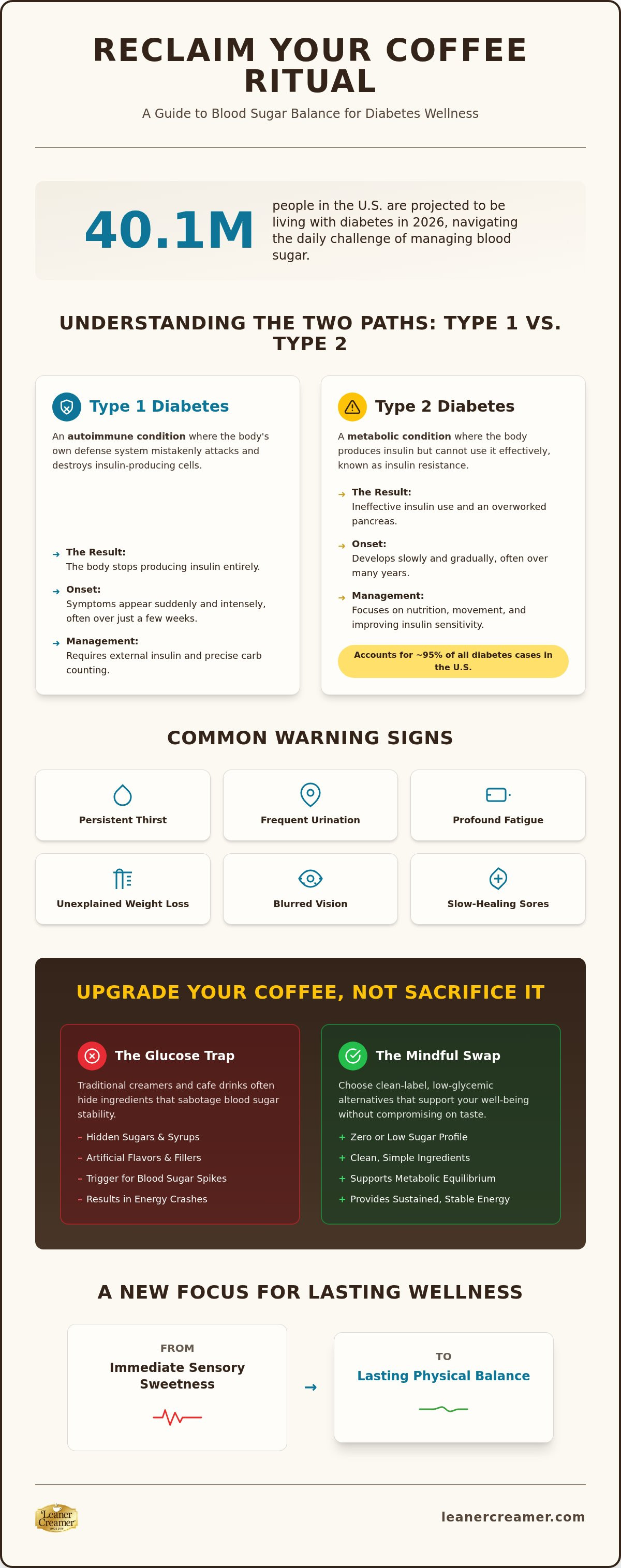
Type 1 diabetes is an autoimmune response. In this scenario, the body's defense system mistakenly attacks the insulin-producing cells in the pancreas. It's not a result of what you ate or how often you exercised. It's biological. Because the body stops producing insulin entirely, the onset of symptoms is often sudden and intense. Managing this condition requires a deep commitment to external insulin, but it doesn't mean you have to lose the flavors you love. It simply means your morning routine requires a bit more intention and a focus on how ingredients impact your system over time.
The Metabolic Journey of Type 2
Type 2 is a different story. It's a metabolic condition where your body still makes insulin but can't use it effectively. This is called insulin resistance. Your pancreas works overtime to keep up until it eventually struggles to maintain equilibrium. According to the American Diabetes Association, approximately 95% of all diabetes cases in the U.S. are Type 2. While genetics play a significant role, long-term lifestyle patterns also shape this journey. The good news? Type 2 is often responsive to small, mindful changes. By choosing ingredients that support stability rather than causing spikes, you can improve your metabolic health. It's about finding swaps that feel like an upgrade, not a sacrifice.
Both paths lead to elevated blood glucose if left unmanaged. However, living as a Type 1 or 2 diabetic is an invitation to become an expert on your own well-being. By understanding these roots, you can start making choices that prioritize your long-term physical sensation of vitality. Equilibrium is possible. You're capable of maintaining a joyful, glucose-friendly lifestyle that tastes as good as it feels.
Comparing Type 1 vs Type 2: Management and Symptoms
How does it feel when your blood sugar isn't quite right? For a Type 1 or 2 diabetic, the physical sensation of a "high" or a "low" is an unmistakable, often exhausting experience. While the underlying biology differs, the daily reality of management shares a common goal: equilibrium. The speed at which you reach this diagnosis often varies wildly. Type 1 symptoms typically arrive like a sudden storm, appearing over just a few weeks. Conversely, Type 2 is often a slow burn, with symptoms developing so gradually they might be overlooked for years.
Identifying the Warning Signs
Your body speaks in whispers before it shouts. Common signals include persistent thirst, frequent urination, and profound fatigue. In Type 1, these signs are usually impossible to ignore. In Type 2, the body often adapts to slowly rising glucose levels, meaning symptoms are often missed for years. This "silent" progression makes proactive screening vital. You aren't just looking for numbers. You're learning to feel your body's unique signals. Awareness is the first step toward control.
- Frequent, unquenchable thirst (polydipsia)
- Unexplained weight loss despite normal eating
- Blurred vision or recurring infections
- Slow-healing sores or bruises
Management Strategies for Daily Stability
Stability is a daily practice of small, intentional choices. For Type 1, this involves a careful dance of balancing insulin with carbohydrate intake. It requires precision. For Type 2, the focus shifts toward improving insulin sensitivity through nutrition and movement. Consistent, mindful movement, like a short walk after lunch, helps muscles use glucose more effectively. Integrating Actionable Swaps for a Glucose-Friendly Pantry can significantly reduce the cognitive load of daily management. It's about making the healthy choice the easy choice.
Regular glucose monitoring is the thread that connects both conditions. It provides the data you need to adjust your routine in real-time. Whether you use a traditional meter or a continuous monitor, this information empowers you to make decisions with confidence. Small adjustments lead to big results. Choosing a sugar-free, plant-based creamer for your morning coffee is a simple way to support this stability without sacrificing flavor. It's a manageable improvement for a lasting physical sensation of wellness.
The Coffee Ritual: Navigating Hidden Sugars
Your morning cup is more than just caffeine. It's a moment of peace. It's a grounding ritual that sets the tone for your entire day. But for a Type 1 or 2 diabetic, this quiet moment can easily turn into a "glucose trap." Many people don't realize that their favorite coffee additions are working against their stability. If you've ever felt a sudden surge of energy followed by a shaky, mid-morning crash, your coffee might be the culprit. Traditional liquid creamers are often designed for shelf-life and immediate sweetness rather than metabolic harmony. They prioritize flavor over how you'll feel two hours later.
Can you still enjoy your coffee? Absolutely. Managing your health doesn't mean mourning your morning routine. It means evolving it. By understanding what goes into your cup, you can build a ritual that supports equilibrium rather than disruption. It's about finding a balance that honors both your taste buds and your blood sugar. For any Type 1 or 2 diabetic, the goal is a morning that feels as good as it tastes.
The Danger of Hidden Fillers
Standard creamers frequently hide ingredients that are disastrous for glucose control. Additives like maltodextrin and corn syrup are common. These fillers have a high glycemic index, causing rapid glucose fluctuations that leave you feeling depleted. Even "sugar-free" options often rely on these bulking agents to mimic the texture of dairy. A truly clean label means the product is free from artificial fillers, maltodextrin, and casein, serving as the gold standard for diabetic-friendly pantry staples. When you choose ingredients with integrity, your body doesn't have to work as hard to maintain balance. You deserve transparency in every sip.
Reclaiming Your Morning Joy
Transitioning to sugar-free alternatives shouldn't mean losing the rich, creamy texture you love. It’s a shift toward plant-based fats and natural sweetness that doesn't trigger a spike. Imagine the physical sensation of a steady morning. No jitters. No sudden hunger. Just sustained, calm energy. This is the power of a mindful swap. We believe in total transparency, which is why we encourage you to check our Ingredients page to see exactly what supports your wellness. Moving away from the sugar-crash cycle allows you to focus on the day ahead rather than your next glucose reading. It’s a small, manageable improvement that transforms your daily practice into a source of vitality.
Actionable Swaps for a Glucose-Friendly Pantry
Living as a Type 1 or 2 diabetic doesn't mean your kitchen should feel like a restrictive space. It’s an invitation to curate a pantry that actively supports your vitality. The secret lies in the glycemic index (GI). By focusing on low-GI foods, you prevent the sharp spikes that lead to long-term fatigue. It’s about choosing ingredients that enter your bloodstream slowly, providing a steady stream of energy rather than a chaotic rush. This intentionality transforms your kitchen into a sanctuary of wellness.
Plant-based fats are your greatest allies in this journey. Ingredients like coconut oil offer a rich, satisfying mouthfeel while providing sustained energy. Unlike simple sugars, these fats don't trigger a massive insulin response. Swapping out traditional liquid dairy or heavy creamers for clean, powdered alternatives is a simple way to remove hidden fillers from your morning. Reading labels becomes the ultimate act of self-care. It’s how you protect your peace. It’s how you ensure your body feels good long after your meal is finished. Transparency matters.
Mindful Ingredient Choices
Small changes in your sweetener choice can make a profound difference. Natural options like Stevia or Allulose provide the sweetness you crave without the metabolic cost of refined sugar. They don't raise blood glucose levels, making them essential for a balanced pantry. We also lean into the benefits of MCT oil. This healthy fat supports mental focus and metabolic health, helping you stay sharp without the sugar crash. For more inspiration on transforming your daily habits, explore our guide to Healthy Coffee Creamers, Hot Chocolate, and Lattes. These swaps aren't just about health. They're about flavor.
Creating a Supportive Environment
Your environment dictates your habits. If you have to search for the healthy option, you’re less likely to choose it. Organize your kitchen so the glucose-friendly snacks and creamers are front and center. Use clear containers. Label your favorites. When your space is intentional, the healthy choice becomes the easy choice. This isn't about being perfect. It’s about being prepared. Approach these dietary changes with a nurturing, non-judgmental mindset. If a choice doesn't serve you today, simply choose better tomorrow. Your pantry should be a place of support, not stress. For any Type 1 or 2 diabetic, keeping your favorite sugar-free creamers within arm's reach ensures your morning ritual remains a source of joy.
Mindful Support with Leaner Creamer
Why settle for a morning that feels like a compromise? For a Type 1 or 2 diabetic, every ingredient matters. We believe your coffee ritual should be a source of strength, not a source of stress. Leaner Creamer was intentionally formulated with glucose-sensitivity at its core. By focusing on clean, plant-based ingredients, we’ve created a way for you to enjoy the rich, comforting flavors you love without the metabolic disruption. It’s about more than just avoiding sugar. It’s about choosing a partner in your wellness journey that understands your body’s need for equilibrium.
Our powdered format is a deliberate choice for clean energy. Liquid creamers often rely on heavy processing and hidden fillers to maintain their shelf life. In contrast, our blends prioritize ingredient integrity. By utilizing plant-based fats like coconut oil, we provide a steady fuel source that supports your focus and your blood sugar. You’re not just drinking coffee. You’re nurturing your body with dairy-free, sugar-free, and gluten-free choices that align with your lifestyle. You’re joining a community of mindful individuals who refuse to sacrifice their joy for their health. Together, we’re redefining what it means to live well.
A Ritual You Can Trust
Finding a creamer that feels truly indulgent without the guilt is rare. Our powdered blends offer that signature creaminess you crave, but they do so with transparency. You won’t find maltodextrin or artificial fillers here. Instead, you’ll find a lasting physical sensation of wellness that carries you through your morning. If you’re ready to start this new chapter, we invite you to explore our Welcome Set. It’s the perfect introduction to a ritual that respects your body’s unique needs. Experience the difference of a balanced cup.
Your Partner in Holistic Health
Transparency is our promise. We believe you should know exactly what you’re putting into your body, especially when managing a condition that requires such constant attention. Every ingredient we use is chosen for its quality and its ability to support a holistic life. Taking a small, manageable step toward better glucose health doesn't have to be overwhelming. It can be as simple as changing what you stir into your mug. For those looking for even more ways to align their routine with their goals, check out The Ultimate Guide to Keto Friendly Coffee Creamer. We’re here to support you in every mindful sip. Your journey to stable glucose starts with a single, intentional choice.
Your Path to Metabolic Equilibrium
Mastering your wellness starts with the choices you make during your most cherished routines. For any Type 1 or 2 diabetic, the transition from hidden sugars to clean, plant-based ingredients is a powerful act of self-care. You've learned how to identify hidden fillers and replace them with low-glycemic swaps that sustain your energy. This isn't about restriction. It's about finding a rhythm that honors your body's need for stability. You shift the focus from immediate sweetness to a long-term physical sensation of vitality.
Choosing a sugar-free, clean label creamer allows you to focus on the lasting feeling of wellness. You deserve a morning ritual that supports your health while tasting like a true indulgence. Our plant-based blends are trusted by health-conscious coffee lovers nationwide to provide a mindful experience without sacrifice.
Take this small, manageable step toward a more vibrant life. You're capable of maintaining a joyful lifestyle that serves your body well. Your balanced morning is waiting.
Frequently Asked Questions
Can I drink coffee if I have Type 1 or Type 2 diabetes?
Yes, you can enjoy coffee safely. Plain black coffee contains almost no carbohydrates or calories, making it a stable choice for most people. The difficulty for any Type 1 or 2 diabetic usually arises from what is added to the cup. Sugar, syrups, and traditional milk can trigger unwanted spikes. By choosing clean, glucose-friendly additions, you maintain your ritual without disrupting your metabolic equilibrium. It's about the quality of your ingredients.
What is the best coffee creamer for a diabetic?
The best choice is a sugar-free, clean-label powdered creamer that avoids hidden fillers. Look for options that use plant-based fats like coconut oil instead of dairy or soy. Many commercial creamers contain maltodextrin or corn syrup, which can cause rapid glucose fluctuations. A powdered format often ensures a purer ingredient list. Choosing a creamer with natural sweeteners like Stevia or Allulose helps you enjoy a creamy texture while prioritizing your long-term physical wellness.
Does caffeine affect blood sugar levels for Type 2 diabetics?
Caffeine impacts everyone differently. Some individuals with Type 2 diabetes may notice a temporary rise in blood sugar after consuming caffeine due to increased adrenaline or slight insulin resistance. However, for many, the effect is minimal compared to the impact of sugar and high-carb additives. It is helpful to monitor your levels after your morning cup to understand your body's unique response. Awareness allows you to adjust your ritual for maximum stability and peace of mind.
Is sugar-free creamer actually safe for people with diabetes?
Not all sugar-free options are created equal. Some brands use bulking agents like maltodextrin, which has a higher glycemic index than table sugar. This can lead to unexpected spikes for a Type 1 or 2 diabetic. To ensure safety, always read the label for total transparency. Look for creamers that are free from artificial fillers and casein. Truly safe choices focus on natural origins and plant-based ingredients that support a balanced, mindful lifestyle every day.
How many carbs should a diabetic have in their morning coffee?
Ideally, you should aim for your coffee additions to contain zero to two grams of carbohydrates per serving. Keeping carb counts low prevents the sharp glucose rise that often follows a typical breakfast. This approach helps maintain steady energy levels throughout the entire morning. By utilizing sugar-free, plant-based powdered creamers, you can achieve a rich flavor profile without the heavy carb load. Small, intentional choices in your morning routine lead to better metabolic control.
What are the best natural sweeteners for diabetics?
Stevia and Allulose are excellent natural choices because they provide sweetness without raising blood sugar levels. These plant-derived options are much easier on your system than refined sugar or high-fructose corn syrup. They allow you to enjoy your favorite beverages while maintaining metabolic equilibrium. Choosing creamers that already incorporate these natural sweeteners simplifies your daily routine. It ensures your morning ritual remains a source of joy rather than a source of hidden and unnecessary metabolic stress.
Can Type 2 diabetes be reversed through diet and ritual changes?
While "reversal" is a complex term, many people achieve remission or significant management through intentional lifestyle changes. Shifting to low-glycemic foods and incorporating mindful rituals can improve insulin sensitivity. Consistency is key. By replacing high-sugar habits with clean, plant-based alternatives, you give your body the space to find balance. These manageable improvements to your daily routine can lead to a lasting physical sensation of vitality and improved long-term health outcomes for many individuals.
Why should I choose powdered creamer over liquid if I am diabetic?
Powdered creamers often offer a cleaner ingredient profile than liquid versions. Liquid creamers frequently require stabilizers, oils, and thickeners like carrageenan or casein to maintain their texture and shelf life. These additives can sometimes interfere with your metabolic health or cause inflammation. A high-quality powdered creamer focuses on purity and natural origins. This format allows for a more transparent label, ensuring you are nurturing your body with healthy plant-based fats rather than artificial fillers.


