


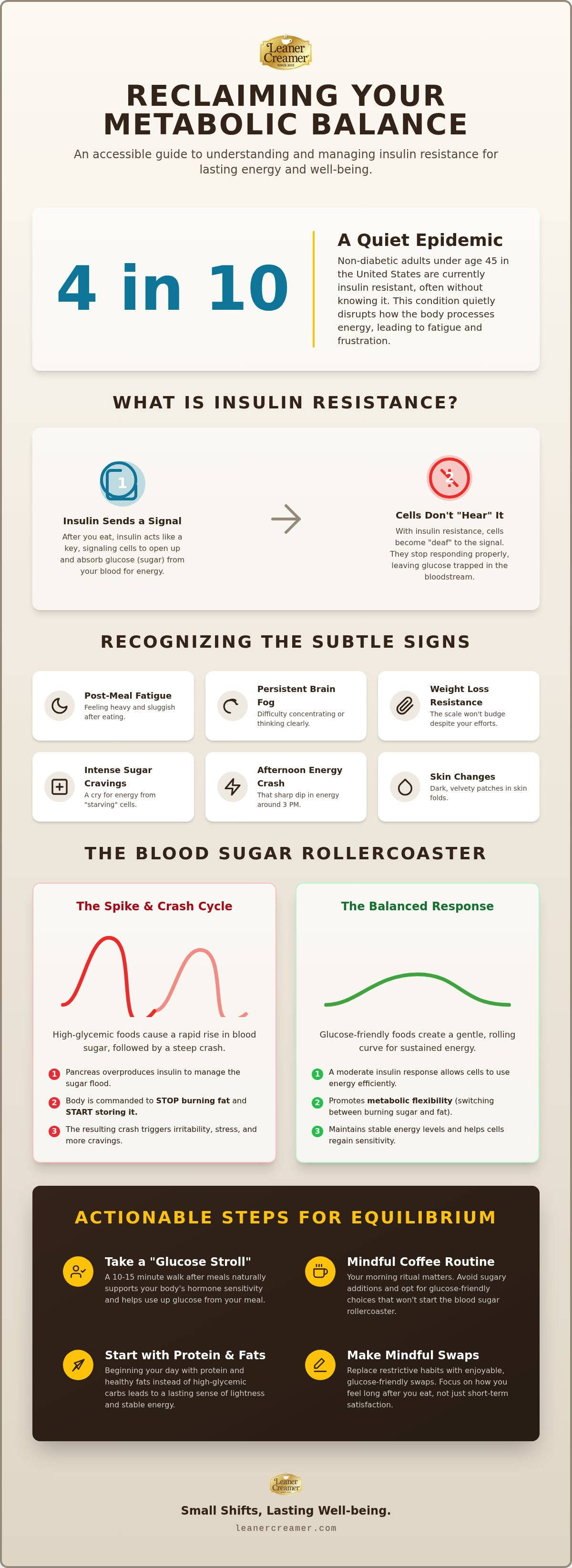
Did you know that approximately 4 in 10 non-diabetic adults under age 45 in the United States are currently insulin resistant? It's a quiet, often invisible shift in how your body processes energy. You might already recognize the symptoms. That heavy, persistent fatigue that settles in right after a meal. The frustration of watching the scale refuse to budge despite your best efforts. It's exhausting to feel like you're constantly fighting your own biology while squinting at confusing nutritional labels.
You aren't alone in this struggle. We understand that you want to feel light and energized, not weighed down by the very food meant to fuel you. This guide is here to show you that metabolic health doesn't require a clinical overhaul of your life. Discover how small, intentional shifts in your daily rituals can help manage insulin resistance and foster a lasting sense of physical well-being.
We'll provide a clear, accessible understanding of your metabolic health. You'll learn simple, mindful swaps for your daily rituals that restore your energy levels and help you feel your best long after your morning cup. Balance is possible. Let's begin.
Key Takeaways
- Understand the journey from sugar spikes to fat storage and how to reclaim your metabolic equilibrium.
- Incorporate the "glucose stroll" after meals to naturally support your body's hormone sensitivity.
- Learn how small adjustments to your coffee routine can help manage being insulin resistant while keeping your morning ritual sacred.
- Discover why starting your day with protein and healthy fats leads to a lasting sense of physical lightness.
- Replace restrictive habits with mindful, glucose-friendly swaps that prioritize how you feel long after the last sip.
What is Insulin Resistance? Beyond the Clinical Definition
Your cells are listening. Or at least, they should be. In a healthy state, your body maintains a beautiful internal conversation. But when you are insulin resistant, it's as if the cells have put on noise-canceling headphones. They become "deaf" to the very signals meant to keep you balanced. This isn't just a clinical state; it's a physical experience. You feel it in the heavy limbs after lunch. You feel it in the persistent brain fog that makes simple tasks feel like climbing a mountain. The result? Sluggishness. Disharmony.
True wellness relies on metabolic flexibility. This is your body's ability to switch between burning sugar and burning fat with ease. When this flexibility fades, disharmony takes over. Our goal isn't just a perfect lab result from a doctor's office. It's daily equilibrium. It's about how you feel from the moment you wake up until your head hits the pillow. It's a mindful practice of listening to what your body needs to stay in rhythm.
The Role of Insulin in Your Daily Equilibrium
Think of insulin as a master key. Its job is to unlock the doors to your cells so glucose can enter and provide fuel. Without this key, sugar stays trapped in your bloodstream, unable to reach the places that need it most. Your liver also plays a role, acting as a storage vault. It decides whether to tuck energy away for later or release it when you're active. Insulin is the body's primary energy conductor. When the locks get sticky, the whole system struggles to stay in tune, leading to a cycle of fatigue and storage.
Recognizing the Subtle Signs of Resistance
Understanding Insulin resistance often begins with recognizing the whispers of your body before they become shouts. Do you find yourself reaching for a second snack at 3 PM? That sharp energy crash is often a sign of a system that can't access its fuel properly. Intense sugar cravings are another signal. They aren't a lack of willpower; they're a cry for energy from cells that are effectively starving in a land of plenty.
Sometimes, the signs are visible on the skin. A condition called acanthosis nigricans causes dark, velvety patches in skin folds, such as the neck or underarms. This is a direct physical manifestation of high insulin levels. It's vital to distinguish between a temporary glucose spike after a treat and being chronically insulin resistant. A spike is a ripple; resistance is a tide that won't go out. Recognizing these signs early allows you to make small, mindful adjustments to your daily rituals.
The Biological Mechanism: Why Spikes Matter
The journey begins with the very first bite. When you consume high-glycemic carbohydrates, they break down quickly into glucose. This flood of sugar enters your bloodstream, signaling your pancreas to release a wave of insulin. For someone who is insulin resistant, the body often overreacts. It produces an excessive amount of insulin to overcome the "cellular deafness" mentioned earlier, a state known as hyperinsulinemia. This isn't just a chemical shift. It's a command to your body to stop burning fat and start storing it. Immediately.
This cycle creates a lingering sense of physical heaviness. When insulin levels remain chronically high, your body loses the ability to access its own stored energy. You're left feeling depleted even though you just ate. This metabolic instability is more than just a numbers game on a lab report. It's the root of systemic inflammation. Your body is incredibly resilient. It wants to find balance. However, it requires intentional ingredient integrity to find its way back to equilibrium.
The Science of the Blood Sugar Rollercoaster
Have you ever felt that shaky, urgent hunger just two hours after a large meal? That's the "crash." High-glycemic foods cause a rapid rise in glucose followed by a steep, sudden drop. This plummet triggers a stress response, leaving you irritable and craving more sugar. It's an exhausting loop. By choosing glucose-friendly ingredients, you can flatten this curve. Instead of a sharp mountain peak, you aim for a gentle, rolling hill. This steady state allows your cells to slowly regain their sensitivity without the frantic surges.
Inflammation and Metabolic Health
Chronic blood sugar instability is a primary driver of internal inflammation. When your system is constantly flooded with insulin, it triggers an immune-like response throughout the body. For some, common additives like soy or dairy can exacerbate this feeling of puffiness and lethargy. Understanding the link between Insulin Resistance & Prediabetes helps clarify why these inflammatory triggers matter. It's about more than just weight; it's about how your tissues respond to daily stress.
True metabolic health feels like "lightness." It's the absence of that post-meal bloat and the presence of steady, reliable energy that lasts. Achieving this state doesn't require a total life overhaul. It starts with a mindful approach to what you put in your cup. Choosing a sugar-free, plant-based alternative for your daily habits is a simple, sophisticated way to support your body's natural resilience. Small shifts. Lasting impact.
The Hidden Impact of Your Morning Coffee Ritual
Your morning coffee is more than a caffeine boost. It's a sacred ritual. But for those who are insulin resistant, it can also be a hidden source of metabolic disruption. Many people believe they are starting their day with a "clean" fast, only to unknowingly break it with coffee additives that trigger an immediate insulin surge. Typical store-bought creamers are often laden with corn syrup solids and maltodextrin. These fillers have a glycemic index higher than table sugar. They don't just add flavor. They add a significant metabolic burden before your day has truly begun. This disruption can set the tone for your entire afternoon.
We believe in the concept of Ritual Integrity. This means ensuring that your most cherished daily habits actually serve your body's long-term well-being rather than working against it. It's about being intentional with every ingredient. When you reach for your cup, you're looking for comfort and clarity. By choosing ingredients with integrity, you ensure that this comfort doesn't come at the cost of your metabolic health. You deserve a morning routine that leaves you feeling light and focused.
Standard vs. Glucose-Friendly Rituals
What does your cup look like? A standard high-sugar liquid creamer can contain several grams of sugar in just one tablespoon. Most of us use much more than that. This creates a spike-and-crash cycle that dictates your energy levels for the next several hours. In contrast, choosing a sugar-free powdered creamer allows you to enjoy the creaminess you love without the glucose penalty. Adding functional ingredients like MCT oils can actually provide a stable energy source that fuels your brain without the spike. Understanding Insulin Resistance: What It Is, Causes, Symptoms & Treatment highlights how these small, daily exposures to hidden sugars accumulate over time. A simple 50-calorie swap in your morning mug can stabilize your entire metabolic day.
Why Powdered Formats Offer Better Ingredient Control
Why choose a powder over a liquid? Liquid creamers often require artificial stabilizers and thickeners to remain shelf-stable and smooth. These additives can sometimes irritate a sensitive metabolism or contribute to the systemic inflammation often seen when managing an insulin resistant state. High-quality powdered formats offer a cleaner path. They allow for the exclusion of dairy and soy, which is essential for those seeking to minimize inflammatory triggers. At our core, we prioritize transparency and natural origins. You can learn more about our philosophy on our about us page. Clean labels. Simple ingredients. Pure ritual. It's a small, sophisticated improvement to a habit you already love.
Restoring Sensitivity: Actionable Steps for Equilibrium
Restoring balance isn't a race. It's a series of gentle, intentional choices. If you are insulin resistant, your body needs a clear signal that its environment is stable and supportive. Start by prioritizing protein and healthy fats in your first meal of the day. This combination provides a steady burn of energy, preventing the "hunger alarm" that often leads to mid-morning snacking. After you eat, consider the "glucose stroll." A simple ten-minute walk helps your muscles soak up glucose naturally, reducing the need for a massive insulin surge. It's a small act of kindness for your pancreas.
Sleep is another essential pillar of metabolic health. Poor rest spikes cortisol, a stress hormone that tells your body to release stored sugar into the blood. This makes managing an insulin resistant state much more difficult. Finally, practice mindful consumption. Before you take a bite, pause and ask yourself how this food will make you feel in two hours. If the answer is "shaky, tired, or foggy," it might be time to look for a more supportive alternative. True health is about the lasting physical sensation after the meal.
The Power of the Morning Fast
Extending your overnight fast gives your cells a much-needed break from the constant presence of insulin. This quiet window allows sensitivity to return naturally. You don't have to suffer through a bitter, black cup of coffee to maintain this state. Using a keto-friendly creamer with MCT oil provides satiety and focus without the glucose spike that breaks a fast. Try this 3-step morning routine for metabolic priming:
- Hydrate: Start with 16 ounces of water to wake up your system.
- Mindful Coffee: Enjoy your cup with a clean-label creamer that supports your goals.
- Delay: Wait at least 12 to 14 hours from your last meal before having breakfast.
Mindful Swaps for Long-Term Success
Ingredient integrity is the key to long-term metabolic success. Many "healthy" products hide sugars under names like dextrose, rice syrup, or agave. These sneak past your defenses and disrupt your internal equilibrium. Replace inflammatory seed oils with functional fats like coconut oil to support cellular health. For more guidance on choosing clean ingredients that align with your lifestyle, explore our Dairy Free Creamer guide. Every swap is an investment in your future self.
A Mindful Solution: Elevating Your Routine with Leaner Creamer
Managing an insulin resistant state shouldn't feel like a series of punishments. It's a practice of self-care. We view Leaner Creamer as a supportive peer in your wellness journey, helping you navigate the transition from restrictive habits to mindful rituals. Your coffee is no longer a "cheat" or a source of hidden metabolic stress. Instead, it becomes a functional tool that supports your energy and focus. The experience starts with that first, creamy sip, but the true value lies in the hours that follow. No crash. No brain fog. Just steady, reliable equilibrium.
Balance is a practice. Not a destination. By choosing ingredients that align with your body's natural rhythms, you're reclaiming your daily vitality. We believe that your morning cup should be a source of strength, providing the sensory delight you love without the physical toll of sugar spikes. It's about the lasting physical sensation of feeling good long after the mug is empty. This is the difference between a functional ritual and a mere habit.
Flavor Without Compromise
Why should your health goals require you to settle for a dull morning? You deserve the emotional comfort of a rich, satisfying latte. Sophisticated options like Salted Caramel and Decadent Mocha offer the indulgence you crave without the glucose penalty. We reach these flavor profiles through pure, intentional ingredients rather than artificial junk or hidden syrups. This is flavor without compromise. It's a way to honor your cravings while still honoring your body's need for stability. How would it feel to enjoy your favorite flavor and still feel light two hours later? That is the essence of a mindful ritual.
The Leaner Creamer Promise: Ingredient Integrity
Our philosophy is rooted in transparency and natural origins. We understand that for those who are insulin resistant, every ingredient matters. That's why we maintain a strict commitment to being dairy-free, gluten-free, and soy-free. We avoid the fillers that disrupt your fasting state or trigger inflammation. By integrating MCT oil, we provide a clean energy source that fuels your brain and keeps you satisfied.
If you are ready to begin this shift, our Welcome Set offers a curated introduction to our most loved flavors. It's a manageable step toward a more balanced life. You don't have to change your entire world overnight. You just have to improve one daily habit. The physical sensation of feeling good is within reach. It starts with a single, mindful choice.
Explore our glucose-friendly collection and start your mindful ritual today.
Reclaiming Your Daily Vitality
Your journey toward metabolic harmony doesn't require a radical life overhaul. It's built on the foundation of small, intentional choices that honor your body's natural rhythms. By understanding how to support an insulin resistant system through mindful swaps and gentle movement, you're choosing a path of lasting physical lightness. You've learned that true health is found in how you feel two hours after a meal. It's the absence of the crash and the presence of steady, reliable energy.
We've seen how ingredient integrity transforms a simple morning ritual into a functional practice. Since 2015, we've been trusted by health-conscious coffee lovers to provide a plant-based, dairy-free experience that never compromises on flavor. You deserve to feel energized and clear long after your last sip. Our sugar-free, Keto Certified formulations are designed to ensure your daily habits serve your well-being. This isn't about restriction. It's about elevation.
You have the power to redefine your relationship with food and energy. Start with one small change today. Your body will thank you for the balance. You're worth the investment.
Frequently Asked Questions
Can insulin resistance be reversed naturally?
Yes, insulin sensitivity can be restored through consistent, mindful lifestyle changes. Prioritizing whole foods and regular movement helps your cells listen to hormone signals again. Reducing chronic stress and optimizing sleep are equally vital. While clinical reversal is a common goal, focus on the daily physical sensation of improved energy. Your body is remarkably resilient. It responds well to the intentional ingredient integrity found in a balanced, glucose-friendly approach to nutrition.
What are the first signs that my insulin resistance is improving?
You'll likely notice a steady rise in your baseline energy levels first. That heavy, post-meal sluggishness begins to lift, replaced by a sense of lightness. Cravings for intense sweets often diminish as your blood sugar stabilizes. You might also find that your focus sharpens and your sleep becomes deeper and more restorative. These subtle shifts are powerful indicators that your system is finding its way back to a state of healthy equilibrium.
Is coffee bad for insulin resistance?
Coffee itself is typically helpful, but what you add to it makes the difference. Pure coffee contains antioxidants that may support metabolic health. However, many people who are insulin resistant struggle because of the hidden sugars in standard additives. By choosing a clean-label creamer, you keep the antioxidants while removing the glucose penalty. It's about preserving the sacred morning ritual without disrupting your body's delicate internal balance.
How do sugar-free creamers help with blood sugar management?
High-quality sugar-free creamers provide the creamy texture you love without the insulin-spiking corn syrup or maltodextrin found in traditional products. They allow you to enjoy a flavorful cup while keeping your glucose levels flat. This stability prevents the rollercoaster effect of energy spikes and crashes. Leaner Creamer uses ingredients like coconut oil and MCTs to offer satiety, ensuring your morning habit supports your long-term wellness goals rather than working against them.
What is the best time of day to drink coffee if I'm insulin resistant?
Many wellness experts suggest enjoying your coffee mid-morning, about 90 minutes after waking up. This timing avoids the peak of your natural cortisol surge, which already influences your blood sugar levels. If you are practicing an extended fast, a cup with a glucose-friendly creamer can provide focus without triggering a significant insulin response. It's a sophisticated way to bridge the gap until your first meal while maintaining your metabolic calm and clarity.
Can I still have flavored coffee if I'm watching my glucose levels?
You certainly can. You don't have to sacrifice flavor to stay insulin resistant friendly. Sophisticated options like Italian Sweet Cream or Vanilla Bliss are achieved using natural sweetness like Stevia or Allulose. These choices allow you to indulge in a coffee shop experience at home without the hidden syrups that cause inflammation. It's a mindful swap that prioritizes both your sensory delight and your physical state long after the last sip.
Does MCT oil break a fast or affect insulin?
Pure MCT oil is a functional fat that generally does not trigger an insulin response, making it an excellent companion for fasting windows. It provides your brain with a quick, stable energy source that promotes mental clarity and satiety. This helps you extend your fast comfortably without the irritability of a sugar crash. By including MCTs in your morning coffee, you support your body's ability to burn fat while keeping your metabolic system at rest.
How long does it take to see changes in insulin sensitivity?
While some people feel a shift in their energy and focus within just a few days of stabilizing their glucose, deeper cellular changes typically take two to four weeks. Improving insulin sensitivity is a gradual process of building trust with your body. Consistency with mindful swaps and regular movement is key. Over several months, these small, intentional rituals accumulate, leading to a lasting sense of physical well-being and a more resilient metabolic state.


