


What if choosing a creamer were less about chasing a wellness shortcut and more about understanding what’s in your cup? If ingredient labels feel crowded, you’re not alone. Coconut oil coffee creamer powder may sound straightforward, but the formula, serving size, and nutrition information all matter. Coconut oil also isn’t the same as MCT oil, even though the two are often mentioned together.
A thoughtful coffee routine starts with the whole cup. Coconut oil can be an ingredient in powdered creamer, but its presence alone doesn’t tell you whether the product fits your taste, preferences, or everyday habits. Check the ingredient list and nutrition panel to understand the specific product.
In this guide, you’ll learn what to look for in the ingredient list and nutrition panel, how to distinguish coconut oil from MCT oil, and how to decide whether a creamer suits your routine. You’ll also find practical ways to keep your coffee station simple and choose only the additions that make sense for you.
Key Takeaways
- Coconut oil coffee creamer powder can vary by formula, so read the ingredient list instead of relying on the product name alone.
- Compare products using their stated serving sizes and nutrition facts.
- Look beyond words like “natural” or “clean” and check the package for ingredients and allergen information.
- Follow the package directions, then add the powder gradually and adjust your cup to taste.
- Decide whether a shelf-friendly powdered creamer fits your routine without adding unnecessary extras to your coffee station.
What is coconut oil coffee creamer powder, and what belongs in a thoughtful coffee station?
A satisfying coffee routine doesn’t need a crowded counter or a complicated ingredient list. It starts with a cup you enjoy and a creamer you can understand. Powdered creamer can suit an everyday setup if you prefer a format that’s easy to keep with your coffee essentials.
Coconut oil coffee creamer powder is powdered coffee creamer made with coconut oil. The category name doesn’t tell you the full recipe, though. Check the package’s ingredient list to confirm whether it names coconut oil and what else the formula contains. For background on the ingredient itself, read this overview of coconut oil.
The video below demonstrates coconut milk powder in coffee. It offers a look at using a powdered coffee addition, though coconut milk powder and coconut oil are different ingredients. Check the product label to see which one a specific creamer contains.
What does coconut oil coffee creamer powder mean?
It refers to powdered creamer made with coconut oil, but the name alone doesn’t describe the full formula, nutrition information, or dietary suitability. Read the package rather than assuming every product in this category has the same ingredients. Compare the exact ingredient list and serving information, then consider whether the flavor and format suit the way you take your coffee.
Which coffee station essentials support an easy daily routine?
A healthy coffee station isn’t a medical standard or a fixed shopping list. It’s a practical setup shaped around your preferences. Start with the basics:
- Coffee and preparation tools: Keep the coffee you already enjoy and the tools you use to make it. Specialty equipment isn’t required.
- Your chosen creamer: Keep its serving directions easy to find. If you’re exploring powdered options, original flavor coffee creamer is one choice.
- Clean, dry storage: Store powdered products in their securely closed package or an airtight container, in a dry place. Follow any storage instructions on the package.
- Label awareness: Keep the ingredient list and serving information accessible so you can refer to them as you make your cup.
Simple is enough. Set up your station so the essentials are easy to reach, then choose ingredients with care. A few useful items can make your daily coffee feel more considered without turning the counter into a collection of extras.
Coconut oil and MCT oil in coffee creamer powder: understand the difference
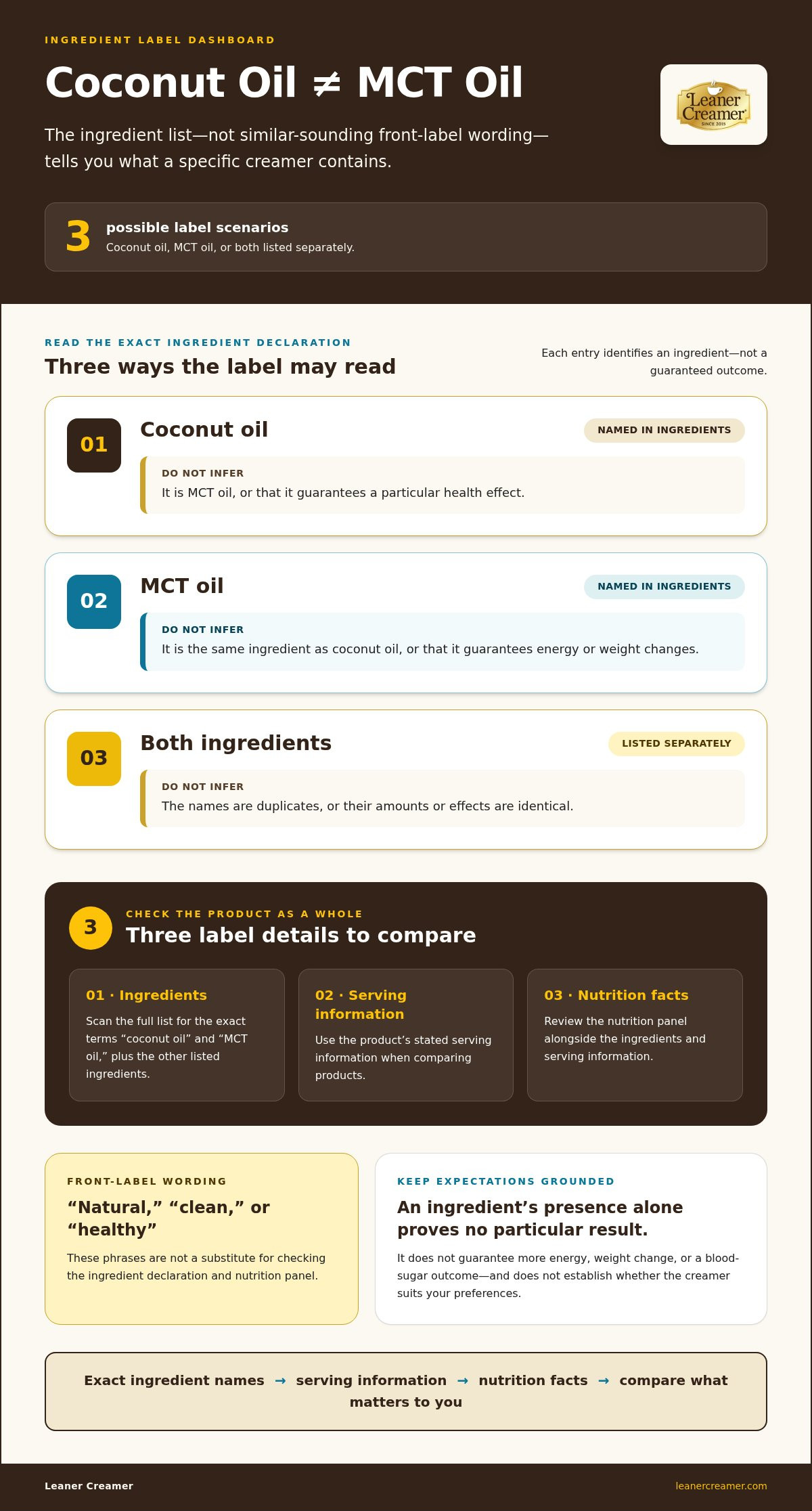
The words on the front of a package can sound similar, but they don’t necessarily describe the same ingredient. When comparing coconut oil coffee creamer powder, check the ingredient declaration to see whether the formula lists coconut oil, MCT oil, or both. This distinction helps you compare products without assuming an ingredient delivers a particular result.
Coconut oil and MCT oil are different ingredient descriptions, not interchangeable label terms. Harvard T.H. Chan School of Public Health discusses why claims about the health benefits of coconut oil shouldn’t automatically be applied to MCT oil, or vice versa. Neither ingredient’s presence alone guarantees more energy, weight change, or a blood-sugar outcome.
Is coconut oil the same as MCT oil?
No. The names refer to different ingredients. A label that names coconut oil identifies coconut oil; a label that names MCT oil identifies MCT oil. A product might list one or both, so don’t use broad marketing wording as a substitute for the ingredient declaration. The package tells you what the manufacturer lists in that specific formula.
Use this simple comparison when reading the label:
| Ingredient name | What the label states | What not to infer |
|---|---|---|
| Coconut oil | Coconut oil is named in the ingredient list. | Don’t assume it means MCT oil or guarantees a particular health effect. |
| MCT oil | MCT oil is named in the ingredient list. | Don’t assume it is the same ingredient as coconut oil, or that it guarantees energy or weight changes. |
| Both named | The formula lists coconut oil and MCT oil separately. | Don’t treat the two names as duplicates or assume their amounts or effects are identical. |
What can the ingredient list tell you?
Look beyond the front-of-pack wording. Find “Ingredients” and scan for the exact terms “coconut oil” and “MCT oil,” along with the other listed ingredients. Then review the serving information and nutrition facts to assess the product as a whole. The presence of one ingredient doesn’t establish the creamer’s overall health effect or whether it fits your preferences.
For ingredient-focused details, visit the Leaner Creamer ingredient information page. Compare the product label with what matters to you, such as taste, serving size, and dietary preferences. You can also browse Leaner Creamer’s powdered coffee offerings, including coconut oil coffee creamer powder.
How to evaluate coconut oil coffee creamer powder without relying on health hype
A product’s front label can help you spot an option, but it can’t tell the whole story. To evaluate coconut oil coffee creamer powder, look past phrases such as “natural,” “clean,” or “healthy.” Compare the ingredient list, serving size, and nutrition facts. These details help you decide whether a specific creamer suits your preferences and routine, without treating a wellness phrase as proof of an outcome.
Which label details should you check first?
Start with the full ingredient list and stated serving size. Use that serving as the basis for comparing nutrition facts between products. Then check allergen information and any dietary statements that matter to you. Labels can vary by formula, so don’t apply a claim from one creamer to another, even if both use similar wording or share an ingredient.
- Ingredients: Read the entire list, not just the highlighted ingredients on the front. Check which ingredients are present and whether the formula matches your expectations.
- Serving size: Note the serving shown on the package before comparing calories, sugars, or other nutrition details. A comparison is meaningful only when you’re looking at the stated servings.
- Nutrition facts: Review sugar and the other listed values in context. Don’t assume “unsweetened,” “sugar-free,” or a similar phrase tells you every detail about the product.
- Allergens and dietary statements: Read the package for allergen information and claims relevant to your needs. If you have an allergy or dietary restriction, rely on the specific product’s information.
- Preparation directions: Check the package directions to understand the intended serving and how to prepare the powder.
How can you assess wellness claims responsibly?
Separate checkable product facts, such as named ingredients and nutrition information, from broad promises about how you’ll feel. Words like “glucose-friendly” don’t establish a medical treatment or guarantee an individual response. Consider your dietary needs and taste preferences, and use the package details to guide your choice rather than assuming a label phrase predicts a health result.
The package label is the primary product-specific reference for its ingredients, nutrition information, serving size, and allergen statements. Ingredient order and nutrition details should come from the label for that exact product, not a general description of the category. This matters when comparing similar-sounding powdered creamers: formulas can differ, and the name alone can’t confirm what a particular package contains.
For another ingredient-focused resource, explore the ingredient information page. Then check the product label against what you want in your everyday cup. A considered choice doesn’t need a bold promise. It needs clear information that works for you.
A practical checklist for mixing, tasting, and storing powdered coffee creamer
A smooth coffee routine often comes down to small, repeatable steps. With coconut oil coffee creamer powder, begin with the package directions rather than guessing at a scoop size, water temperature, or mixing method. Powders can differ, and results may also vary with your coffee and preparation method.
How do you add powdered creamer to coffee?
Use the serving and preparation instructions on the specific package as your starting point. Then taste and adjust within the label guidance. Adding the powder gradually lets you fine-tune the flavor without assuming every powder dissolves or tastes the same.
- Read the directions. Check the recommended serving and any preparation notes on the package.
- Measure a serving. Follow the stated amount instead of estimating or borrowing directions from another product.
- Add gradually. If you want to fine-tune the taste, start with part of the stated serving and add more as desired, staying within the package guidance.
- Stir well. Mix according to the directions, then assess the cup. Don’t assume different formulas or preparation methods will produce the same texture.
- Adjust to taste. Consider how the creamer’s flavor and texture work with your coffee, using the label’s serving guidance as your reference.
There’s no universal mixing rule. The coffee itself, the powder’s formula, and your preparation method can all affect taste and texture. Let your own cup guide you while keeping the package directions close by.
How should you organize and store a coffee station?
Keep powdered creamer sealed and dry, and follow the storage instructions on its package. A clean spot that’s easy to reach and away from moisture and heat can simplify your morning routine. Store the product in its original packaging when the directions call for it, and keep the serving instructions visible or easy to find.
A tidy station doesn’t need extra equipment. Keep your coffee, preferred preparation tools, and chosen creamer together, with a clean, dry place for each. For more ideas for coffee and latte routines, explore this coffee and latte guide.
Make coconut oil coffee creamer powder a considered part of your routine
Powdered creamer may suit you if you want an option that’s easy to store and keep near your everyday coffee essentials. Whether coconut oil coffee creamer powder fits your routine depends on more than the category name. Consider the taste you enjoy, the ingredients you’re comfortable with, your dietary preferences, and how the product’s directions fit the way you prepare coffee.
How do you decide whether this creamer fits your coffee routine?
Make the choice personal and practical. Compare the label on the specific product you’re considering instead of assuming every powdered creamer uses the same formula. Check the ingredient list, nutrition information, serving directions, and any dietary statements that matter to you. Then consider whether you like the flavor and can see yourself using it as directed.
- Taste: Does the flavor work with the coffee you usually make?
- Ingredients: Does the specific product’s ingredient list align with your priorities?
- Dietary fit: Do its product-specific label statements suit your needs?
- Daily use: Are the serving directions manageable for your usual routine?
Leaner Creamer offers coconut oil coffee creamer powder alongside a range of powdered, plant-based coffee creamers. Its product line also includes sugar-free, glucose-friendly, and keto-compatible creamers, as well as instant lattes and hot chocolate mixes. The offerings are dairy-free, gluten-free, soy-free, vegan, and kosher. For the details that apply to a particular formula, use its product label. And remember, adding a new creamer is optional. Your usual cup may already be just right.
What makes a coffee station feel simple and intentional?
Keep the coffee tools and ingredients you use regularly, and give each a clean, accessible place. A repeatable routine might mean making coffee with your usual tools, adding creamer according to its package directions, and putting the powder away as instructed. No elaborate setup is required. A few useful essentials can make the morning feel easier and more enjoyable.
If you’d like to explore more options, browse the powdered creamer collection. Choose what suits your taste and routine, and let clear product information guide your decision.
Make Your Coffee Routine Work for You
A considered coffee station doesn’t need more products. It needs choices that suit your taste and habits. Before choosing coconut oil coffee creamer powder, check the package for its ingredients, serving information, dietary statements, and preparation directions. Coconut oil and MCT oil are distinct label terms, and neither one alone promises a particular health outcome.
Powdered creamer can be practical if you value an easy-to-store format. Keep your setup simple, follow the product directions, and adjust your cup to your preferences. Leaner Creamer specializes in powdered coffee creamers and instant beverages. Its range includes plant-based, sugar-free and glucose-friendly creamers, as well as keto-compatible instant latte and hot chocolate mixes. Check the specific product label for its ingredients and dietary information.
Your everyday coffee can be simple, satisfying, and thoughtfully chosen. Start with what works for you, and let the details guide the rest.
Frequently Asked Questions
Is coconut oil coffee creamer powder the same as MCT oil powder?
No. Coconut oil and MCT oil are different ingredient descriptions, so don’t treat the names as interchangeable. Coconut oil coffee creamer powder may list coconut oil, MCT oil, or another combination of ingredients. Check the specific product’s ingredient list to see what it contains. The ingredient name alone also doesn’t guarantee a particular effect on energy, weight, or blood sugar.
Can you put coconut oil coffee creamer powder in hot coffee?
Use it in hot coffee if the product’s package directions indicate that preparation. Start with the serving instructions, add the powder as directed, and stir. Powders can differ, so the final taste and texture may vary with the formula, coffee, and preparation method. If the package gives specific mixing guidance, follow it rather than assuming every creamer behaves the same way.
Is coconut oil coffee creamer powder healthy?
There isn’t a universal answer. Whether a creamer fits your preferences depends on its full ingredient list, serving size, nutrition facts, and how it fits into your overall eating pattern. Coconut oil’s presence doesn’t make a product automatically healthy or guarantee a health benefit. Read the product-specific label and consider your dietary needs. If you have health concerns, ask a qualified healthcare professional for personalized advice.
Does coconut oil coffee creamer powder contain sugar?
It depends on the specific formula. The phrase coconut oil coffee creamer powder doesn’t tell you whether sugar is present or how much a serving contains. Check the ingredient list and nutrition facts on the package, using its stated serving size when reviewing sugars. Don’t assume a product is sugar-free because it’s powdered, coconut-based, or described with general wellness language.
How do you use powdered coffee creamer in a coffee station?
Keep the creamer and its directions easy to find alongside the coffee and tools you already use. Measure the package’s stated serving, add it to your coffee as directed, stir, and adjust to taste within the label guidance. A simple setup is enough. You don’t need specialty equipment or extra ingredients if they don’t support the coffee routine you enjoy.
How should coconut oil coffee creamer powder be stored?
Follow the storage directions on the specific package. In general, keep powdered creamer sealed in its original packaging or another suitable airtight container, and store it in a clean, dry place away from moisture and heat. Use a dry utensil when measuring, and close the package after each use. If the label gives different storage instructions, follow those instead.


