


You're standing in your kitchen, mid-recipe, only to find the milk carton is bone dry. Frustrating. That sudden interruption to your creative flow can feel like a small defeat. But what if the solution is already sitting in your pantry? If you've ever wondered, can you bake with powdered coffee creamer, the answer is a resounding yes. It's more than just a backup plan. It's a secret flavor boost.
We believe baking should be a mindful practice that nourishes both your soul and your body. You deserve treats that are moist, decadent, and free from the heavy, sluggish feeling that often follows traditional dairy. Perhaps you're managing sensitivities or simply want a more vibrant taste in your cakes. Using a clean label, powdered creamer can transform the texture of your baked goods while keeping your glucose levels in mind. Equilibrium in every bite.
In this guide, we'll show you exactly how to master this pantry hack. You'll discover the precise ratios to replace milk or cream and tips for choosing better-for-you ingredients that align with a keto or vegan lifestyle. Let's elevate your daily routine. Better flavor. Better feeling. Pure joy.
Key Takeaways
- Master the simple substitution ratios that turn pantry staples into a reliable milk or heavy cream alternative mid-recipe.
- Understand the science behind why can you bake with powdered coffee creamer to achieve a more golden crust and a richer, tender texture.
- Enhance your flavor profiles effortlessly by using clean-label varieties like salted caramel to replace artificial extracts and additives.
- Learn to avoid common pitfalls like over-sweetening or improper mixing to keep your baked goods light and balanced.
- Choose glucose-friendly and dairy-free options to ensure your homemade treats are as kind to your body as they are to your taste buds.
The Science of Baking with Powdered Coffee Creamer
You’re standing in the kitchen, peering into an empty milk carton. It’s a familiar moment of frustration. But this isn't just a reason to run to the store. It’s an opportunity to experiment. If you’ve wondered, can you bake with powdered coffee creamer, the answer lies in the chemistry of your ingredients. Powdered creamer isn't just a backup. It’s a concentrated power-up for your dough.
Think of creamer as a dual-purpose tool. It acts as both a fat source and a sophisticated flavor carrier. When your oven heats up, the sugars and proteins in the creamer engage in the Maillard reaction. This is the scientific magic behind the golden-brown crust on your bread and the deep, toasted aroma of your cookies. Because powdered creamer is more concentrated than liquid milk, it can actually intensify this browning process. The result? A more professional, appetizing finish.
For the occasional baker, the powdered format is a game-changer. Fresh dairy is temperamental. It spoils quickly. Powdered creamer offers a long, shelf-stable life, ensuring you always have a reliable fat source ready. Many of these powders also contain emulsifiers. These molecules are essential for a smooth crumb. They help fats and liquids bond more effectively, creating a uniform texture in cakes that feels luxurious on the palate. No large, uneven air pockets. Just consistent, mindful quality.
Is Powdered Creamer Just a Milk Substitute?
Not exactly. While dairy milk provides specific proteins like casein, powdered creamer focuses on adding richness. It provides the density you crave without the excess water weight found in liquid milk. This concentration allows for a deeper flavor profile. However, the quality of your bake depends on what’s inside. By choosing options with clean ingredients, you avoid the chemical aftertaste that often haunts mass-market brands. Understanding The Science of Baking with Powdered Coffee Creamer reveals how these shelf-stable formulations can mimic the mouthfeel of traditional dairy while offering more stability in the oven.
Texture and Moisture Retention
Nobody wants a dry cake. It’s a letdown. The fats in powdered creamer play a vital role here by coating the gluten in your flour. This process limits gluten development, which prevents your baked goods from becoming tough or rubbery. Instead, you get a tender, soft bite. These fats also act as a moisture barrier. They lock hydration into the crumb, ensuring your cookies stay chewy for days rather than turning into crackers overnight. It’s a small adjustment that leads to a lasting physical sensation of satisfaction. Pure equilibrium.
How to Substitute Powdered Creamer for Milk or Cream
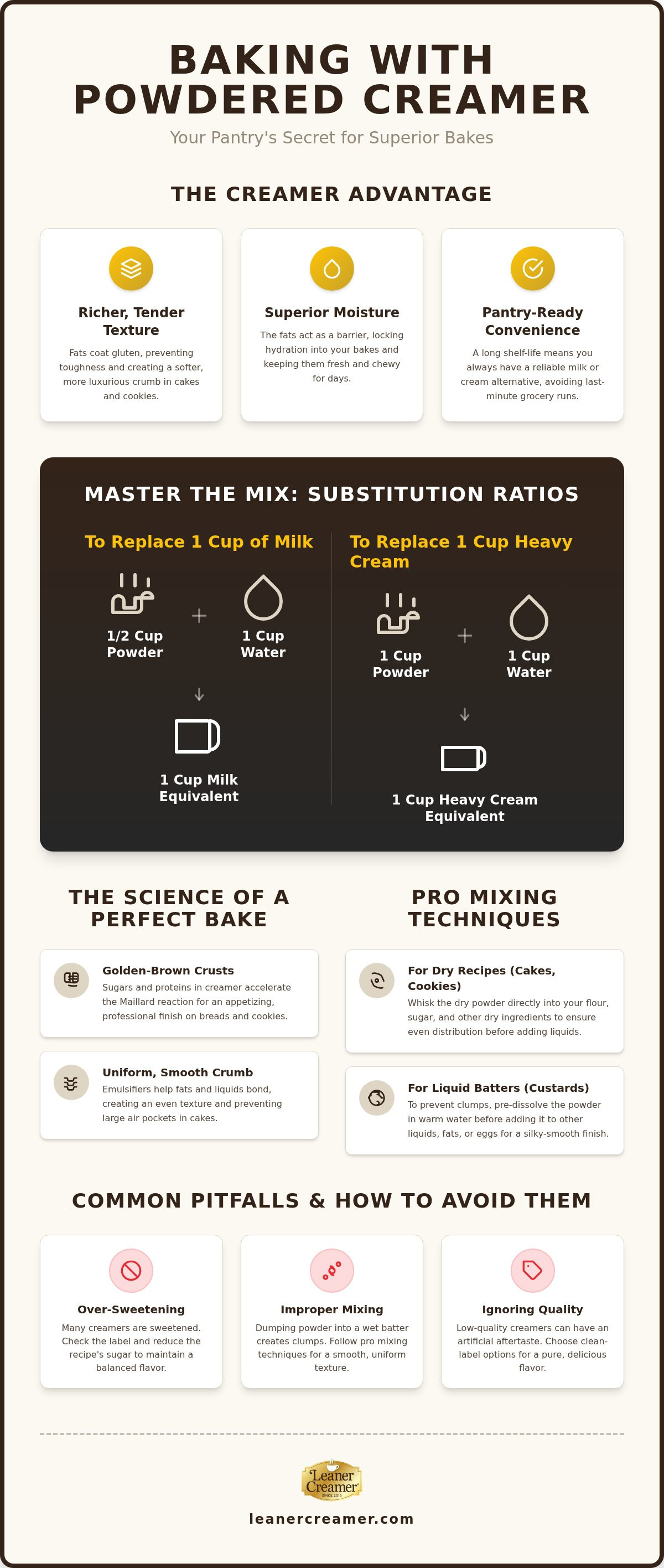
Precision is the heart of a successful bake. When you ask, can you bake with powdered coffee creamer, the secret to success lies in your ratios. For a standard milk replacement, whisk 1/2 cup of powder into 1 cup of water. This creates a liquid with the body and volume of whole milk. It’s a reliable, steady swap. It feels right because it maintains the equilibrium of your recipe without the stress of a last-minute grocery run.
Mixing technique is just as vital as the measurements. For many recipes, whisking the dry powder directly into your flour and sugar ensures even distribution. However, if your batter is primarily liquid, like a custard or a thin crepe mix, use warm water. Warmth helps the powder dissolve fully and quickly. Rehydrating the powder before adding it to fats like butter or oil prevents stubborn clumping. This small step ensures your final texture remains silky and professional. Understanding the labels on your ingredients also helps you navigate Common Mistakes to Avoid, ensuring your mindful choices lead to the physical sensation of a perfect bake.
Replacing Liquid Milk
If you're whipping up a batch of pancakes or waffles, rehydrating your creamer first is the best path. It ensures the leavening agents react properly with the moisture. For delicate recipes like soufflés, maintaining the liquid-to-dry ratio is non-negotiable. You want that airy, lifted structure. Using a rehydrated powder allows you to control the fat content precisely. It’s a manageable improvement to your routine that yields consistent results every time you preheat the oven.
Replacing Heavy Cream or Half-and-Half
Sometimes you need more than just milk. You need indulgence. To create a heavy cream alternative for ganaches or silky frostings, simply use less water. Try a 1:1 ratio of powder to water for a concentrated, velvety "cream." Using a Vanilla Bliss base adds a sophisticated layer of flavor to dessert toppings without needing extra extracts. This makes powdered creamer the ultimate emergency backup for holiday baking when the shops are closed. Having a clean-label powdered creamer in your pantry means you're never truly out of options. You're always prepared to create something beautiful.
Flavor Profiles: Elevating Recipes with Leaner Creamer
Flavor is the soul of every recipe. It’s the invisible thread that connects a simple snack to a cherished memory. When you consider the question, can you bake with powdered coffee creamer, you’re looking at a palette of possibilities. High-quality flavored creamers allow you to step away from expensive, alcohol-heavy extracts. They offer a more integrated, rounded taste that permeates every crumb. Pure intention.
Think about the specific notes you want to hit. Using Italian Sweet Cream provides a sophisticated, velvety depth to sugar cookies. It’s subtle. It adds a "je ne sais quoi" that makes people ask for your secret. For chocolate lovers, Decadent Mocha is a revelation. It bridges the gap between bitter cocoa and creamy sweetness, intensifying the richness of a devil's food cake. This isn't just about masking ingredients. It’s about enhancing them. The physical sensation of a perfectly balanced treat is a form of self-care. Equilibrium in every bite.
The "One-Bowl" Flavor Hack
Simplicity is a luxury in a busy life. Using Salted Caramel Creamer acts as a brilliant flavor shortcut for brownies or chocolate chip cookies. It combines your fat source, sweetness, and flavoring into one clean-label addition. Because these powders are glucose-friendly, you can often reduce the added sugar in your recipe. You get all the indulgence without the spike. It’s a manageable improvement to your daily routine that saves time and pantry space. Try mixing different powders to create your own signature blends. Vanilla and caramel. Mocha and spice. Your kitchen. Your rules.
Seasonal Baking Transformations
Your baking should reflect the rhythm of the seasons. You can easily turn a basic muffin recipe into a seasonal celebration by swapping your standard creamer for mocha or spiced notes. Powder provides a much more reliable flavor than liquid syrups, which often settle at the bottom or throw off the moisture balance of your batter. When you use a powdered mocha base for dairy-free chocolate frostings—perhaps incorporating professional-grade ingredients from Deliciu de Ciocolată—the result is stable and smooth. It holds its shape beautifully. It feels intentional. Most importantly, it ensures that your mindful choices never compromise on the sensory joy of a beautiful dessert. Professional quality. Home-baked warmth.
3 Common Mistakes to Avoid When Baking with Creamer
Precision matters. Even with a brilliant hack, small oversights can disrupt your flow. If you’ve asked, can you bake with powdered coffee creamer, you’re already on the path to better flavor. But you must be intentional about the chemistry. Mistakes aren't failures. They're just data points on your journey to a better bake. Reassuring, isn't it?
One major pitfall is ignoring the sugar content. Many powders come pre-sweetened. If you add a full cup of sugar on top of a sweetened creamer, the balance shifts. Your crust might brown too quickly or become sticky. Another error? Dumping powder into boiling water. It clumps. It’s frustrating. You must temper the powder with a small amount of liquid first to ensure a smooth transition. Finally, watch out for fillers like maltodextrin. These additives can interfere with the rise of your cakes, leaving them dense and unappealing. Clean ingredients lead to light, airy results.
If your batter feels too thick after adding the powder, don't panic. A simple splash of warm water can restore the equilibrium. Just a little at a time. Steady progress. Learning how can you bake with powdered coffee creamer effectively means mastering these small, manageable adjustments.
The Sugar Balance Issue
When using a flavored powder, you often need to dial back the dry sugar in your recipe. It’s about finding harmony. Choosing sugar-free options is often safer for precise baking. It gives you total control over the sweetness profile. Remember, sugar isn't just for taste. It affects how the crust caramelizes. Too much sugar can lead to a burnt exterior before the center is done. Balance is wellness. Pure and simple.
Clumping and Texture Troubleshooting
Texture defines the experience. Sifting powder with flour ensures even distribution. It’s a simple step for a smoother crumb. For liquid batters, use the "Sift and Whisk" method to prevent those tiny, dry pockets. If your frosting looks grainy, it usually means the powder didn't fully hydrate. Try whisking the creamer into your liquid base before folding it into the butter. This keeps the physical sensation of your dessert light and velvety. Mindful preparation leads to mindful consumption.
The Leaner Way: Why Clean-Label Powdered Creamer Wins the Oven
Baking is more than just following a recipe. It's a mindful practice. When people ask, can you bake with powdered coffee creamer, they are often looking for a solution to a missing ingredient. But the real answer lies in the quality of that solution. Traditional creamers are often filled with hydrogenated oils and maltodextrin. These fillers can leave you feeling sluggish. They cause a glucose spike that ends in a crash. Choosing a clean-label alternative changes the narrative. It focuses on the lasting physical sensation after the last bite is gone. Pure equilibrium.
Accessibility is the hallmark of a supportive host. By using plant-based, dairy-free options, you ensure that everyone at your table can participate in the joy of a homemade treat. No one is left out. This intentionality creates a sense of harmony. If you’re just starting this journey, the Welcome Set is a perfect way to explore these possibilities. It’s about small, manageable improvements to your existing habits. Intentional choices lead to a more balanced lifestyle.
Baking for Dietary Restrictions
Managing a keto lifestyle shouldn't mean sacrificing dessert. You can create rich, fudgy keto-friendly brownies by swapping liquid dairy for a high-quality powder. The presence of MCT oil in these creamers provides a steady source of energy. It’s functional baking. For more inspiration on integrating these choices into your daily life, explore the Ultimate Guide to Dairy Free Creamer. It’s a resource for those who want their rituals to serve their bodies well. You don't have to choose between health and indulgence.
Your New Pantry Staple
Versatility is the ultimate pantry win. From your morning cup to your evening cake, a clean-label powder simplifies your life. If you’ve been wondering can you bake with powdered coffee creamer to save time and space, the answer is a resounding yes. It removes the stress of expiration dates. By pairing it with fresh, high-quality flour from mlin-kolenko.si, you can add a layer of flavor to your bakes that feels sophisticated and pure. Embracing this mindful routine means you are prioritizing your well-being without losing the sensory delight of a warm muffin or a soft cookie. You deserve ingredients that work as hard as you do.
Elevate Your Baking Ritual
What if your next batch of cookies felt as good as it tasted? You’ve discovered that your pantry holds a secret tool for better flavor and texture. We’ve explored the chemistry behind the golden crust and the simple ratios that turn a dry powder into a velvety milk substitute. It’s clear that can you bake with powdered coffee creamer is a question with a versatile, indulgent answer. This isn't just a shortcut; it’s a way to infuse your recipes with mindful, clean ingredients that support your balanced lifestyle.
Choosing a creamer that is Sugar-free and Keto Certified ensures your treats are accessible to everyone. No artificial fillers. No maltodextrin. Just the lasting physical sensation of wellness. Equilibrium in every bite. Pure joy.
Your kitchen is a space for holistic care. Embrace these manageable improvements to your daily habits and watch your recipes transform. You deserve a baking experience that nourishes your body and your soul. Happy baking.
Frequently Asked Questions
Is it better to use liquid or powdered creamer for baking?
Powdered creamer is often better for baking because it provides a more concentrated flavor profile and a much longer shelf-life than liquid dairy. It allows you to control the hydration of your batter with precision. While liquid creamers are easy to use, the powdered format remains stable in your pantry for months. This consistency ensures your treats maintain a high quality. It’s a reliable choice for any mindful home baker.
Can I replace all the milk in a cake recipe with powdered creamer?
You can absolutely replace all the milk in a cake recipe by rehydrating the powder with water. Use a ratio of 1/2 cup of powder to 1 cup of water to match the consistency of whole milk. This swap adds a beautiful richness to the crumb while keeping the recipe dairy-free. It’s a manageable improvement that helps you navigate dietary restrictions with ease. Your cakes will stay moist and flavorful.
Does powdered coffee creamer make cookies spread more?
Powdered creamer generally does not cause cookies to spread more if the fat content is balanced correctly. In fact, it adds density without the excess water found in liquid milk. This can help your cookies maintain a thick, chewy structure. If you notice too much spread, it’s likely due to the sugar content in the creamer. Always account for the sweetness already present in the powder. Equilibrium is key.
How do I prevent powdered creamer from clumping in my batter?
Preventing clumps is easy if you sift the powder with your dry ingredients or dissolve it in warm water before adding it to the batter. Sifting ensures the creamer is distributed evenly through the flour. If you prefer to rehydrate, warm water helps the fats bond more quickly with the liquid. This simple step creates a smooth, professional texture. No more dry pockets. Just pure, velvety results.
Can I use flavored powdered creamer in savory recipes?
You should stick to unflavored varieties when using creamer in savory recipes to avoid unwanted sweetness. Flavored options like vanilla or caramel will clash with savory herbs and spices. While the question of can you bake with powdered coffee creamer in savory dishes is popular, unflavored versions are the best choice for balance. They add a creamy mouthfeel to soups or casseroles without the sugar crash. Pure satisfaction.
Is baking with powdered creamer keto-friendly?
Baking with powdered creamer is keto-friendly as long as you choose a sugar-free, keto-certified option. These creamers often utilize healthy fats that support sustained energy levels rather than causing a glucose spike. It’s an excellent way to keep your treats within your wellness goals. Always check the label for clean ingredients. Avoid fillers that might disrupt your progress. Mindful choices lead to a better feeling after you eat.
What happens if I add too much powdered creamer to my bread dough?
Adding too much powder to bread dough can result in a loaf that is overly dense or fails to rise properly. The concentrated fats can weaken the gluten network if the ratio is off. When you ask can you bake with powdered coffee creamer in bread, remember that moderation ensures success. Stick to the standard substitution ratios to keep your bread light and airy. Balance is everything in the kitchen.


