


Is your morning coffee as restorative as it should be, or is a clumping container of powder quietly disrupting your ritual? Knowing how to store powdered coffee creamer is the difference between a frustrating morning and a mindful start. It's a small moment that matters. When you reach for your favorite clean-label blend, you expect a smooth, effortless dissolve. Finding a hardened mass instead is more than a minor inconvenience. It's a waste of quality ingredients and a disruption to your equilibrium.
You deserve a creamy, delicious cup every single morning without worrying about staleness or food safety. We promise to reveal the essential storage secrets that keep your powder fresh, flavorful, and perfectly clump-free. By mastering a few simple habits, you can protect the integrity of your ingredients and extend the life of your bulk purchases. We'll explore the ideal environment for your powder, the best airtight containers to use, and how to maintain that signature flavor from the first scoop to the last. Let's ensure your morning cup remains a source of balance and nourishment. Pure joy. Every day.
Key Takeaways
- Don't let moisture or heat disrupt your morning. Learn to identify the three primary enemies of powder stability to protect your daily ritual.
- Discover exactly how to store powdered coffee creamer in airtight containers to maintain that perfect, clump-free texture you crave.
- Master simple, intentional habits like the dry-scoop method to protect the integrity of clean-label ingredients that lack artificial fillers.
- Gain confidence in food safety by understanding the difference between "Best By" dates and actual shelf life for dairy-free alternatives.
- Ensure every sip feels as restorative as the first by preserving the delicate oils and functional ingredients found in premium creamers.
Understanding Powdered Creamer Shelf Life and Stability
Powdered coffee creamer is more than just a convenience. It's a shelf-stable alternative to liquid dairy, designed specifically for longevity and ease. For those pursuing a mindful, low-waste lifestyle, the powdered format is an intentional choice. You only use exactly what you need. There's no more pouring half-empty cartons of spoiled liquid down the drain at the end of the week. Learning how to store powdered coffee creamer is the first step in protecting your investment and your daily ritual. This stability comes from the removal of moisture, which is the primary catalyst for bacterial growth in traditional dairy products.
Does Powdered Coffee Creamer Ever Expire?
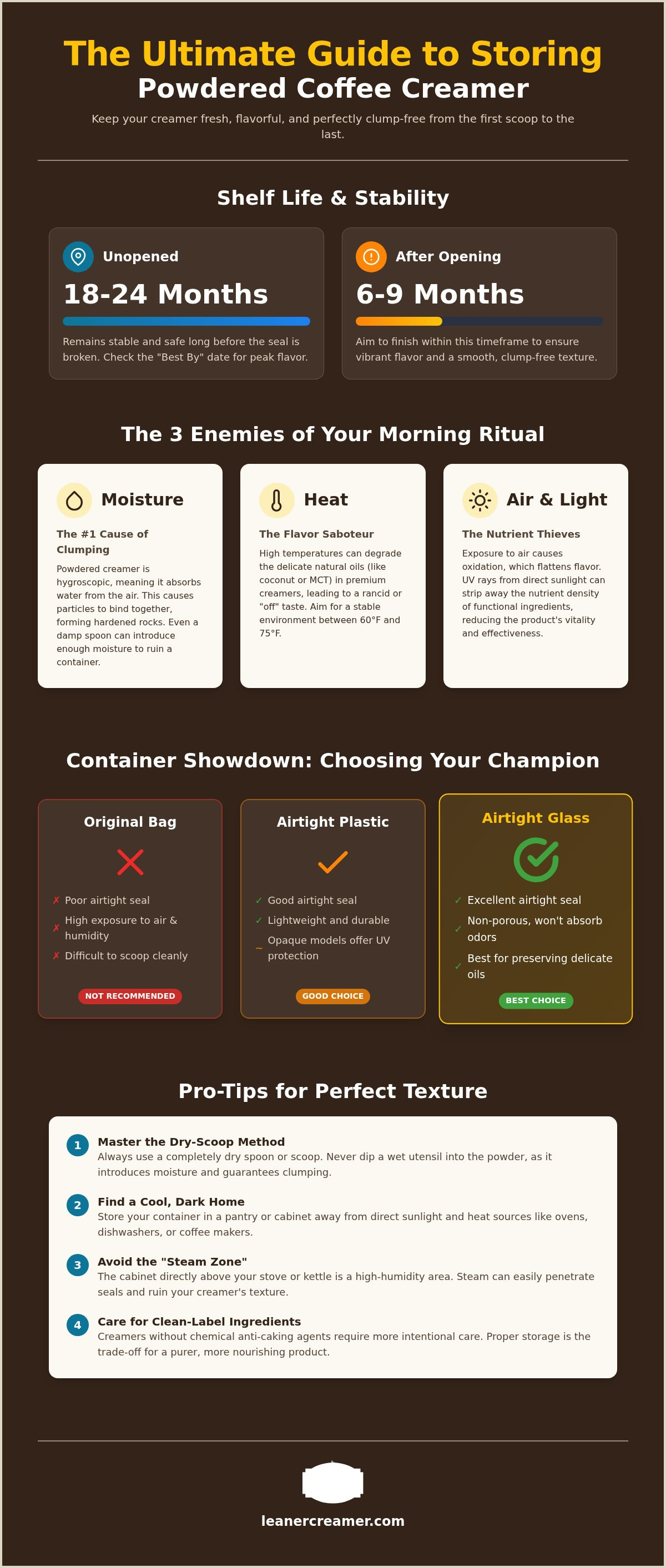
Is it safe? Usually. Most powdered creamers carry a "Best By" date rather than a hard expiration. This date reflects peak quality and flavor, not necessarily a hard deadline for food safety. While an unopened container might remain stable for 18 to 24 months, the clock starts ticking once the seal is broken. To maintain that restorative morning experience, you should aim to finish the product within six to nine months of opening. This timeframe ensures the flavor remains vibrant and the texture stays smooth.
How do you know if it's turned? Trust your senses. A rancid, sour smell or significant yellowed discoloration are clear signals that the powder has been compromised. If you see any signs of mold, discard it immediately. For a plant-based powder, the shelf life depends on the delicate balance between the natural stability of the ingredients and the environment in which they are kept. Consistent care is required.
The Role of Ingredients in Stability
The physical sensation of a creamy cup depends entirely on ingredient integrity. High-quality formulas often include natural oils like coconut oil or MCT oil. These functional fats are wonderful for your body, but they behave differently than synthetic fillers. They are sensitive. Without chemical anti-caking agents or maltodextrin, the powder requires more intentional care. It's a small trade-off for a cleaner experience.
Clean-label products are often more susceptible to oxidation when exposed to air. This is why understanding Leaner Creamer ingredients helps you appreciate the need for better storage practices. When you choose a product that prioritizes purity, you're making a conscious choice for your well-being. You lose the industrial-strength preservatives, but you gain a more nourishing habit. Knowing how to store powdered coffee creamer properly ensures these premium oils don't degrade, keeping your morning cup delicious and effective. Every sip matters.
The Three Enemies of Your Morning Coffee Ritual
Your kitchen is a sanctuary for your morning routine. Yet, it's also home to invisible forces that can compromise your ingredients. To master how to store powdered coffee creamer, you must first recognize the elements working against your equilibrium. Moisture, heat, and light are the primary antagonists. They don't just change the texture; they alter the very soul of your morning cup. It's a quiet battle for freshness.
Air is equally persistent. Oxidation is a slow, invisible process that makes premium oils taste "off" or flat over time. UV rays from direct sunlight can further strip away the nutrient density of functional ingredients, leaving you with a product that lacks its original vitality. Protecting your powder is about more than simple organization. It's about preserving a physical sensation that sets the tone for your entire day. Quality matters.
Humidity and the Clumping Crisis
Powdered creamer is hygroscopic. This means it literally "grabs" moisture from the air around it. When this happens, those smooth, fine particles bind together into stubborn, hardened rocks. This is the clumping crisis. It often starts with a small, unconscious mistake. Using a damp spoon is the fastest way to ruin a fresh container. Even a few microscopic drops of water introduce the risk of bacterial growth and spoilage.
Where you place the jar in your kitchen matters immensely. Storing your creamer in the cabinet directly above the stove is a common error. The rising steam from boiling water or simmering soups creates a localized humid zone that penetrates even decent seals. It's a recipe for hardened powder. Find a dry, neutral space instead.
Temperature Control for Oil-Based Powders
Heat is a quiet saboteur of flavor. For clean-label creamers that rely on nourishing fats like coconut oil or MCTs, temperature stability is non-negotiable. These ingredients are delicate. They thrive in a consistent environment, ideally kept between 60°F and 75°F. Significant fluctuations cause these healthy oils to degrade, leading to a stale aftertaste that lingers long after your last sip.
You might think the refrigerator is a safe haven for longevity. It isn't. Every time you take the container out of the cold, the immediate temperature shift creates condensation inside the jar. This trapped moisture is far more damaging than a slightly warm pantry. Keeping your powder in a dark, interior cupboard ensures a steady state of harmony. Choosing a cleaner creamer swap is only half the battle; protecting its integrity is the other. Consistency is key. Every scoop should be perfect.
Choosing the Right Container: Glass vs. Plastic vs. Original Bag
Your storage choice is an extension of your wellness journey. While most powders arrive in functional, resealable bags, these are rarely the long-term home your ingredients deserve. Once you break that initial seal, the race against oxidation begins. An airtight seal is the non-negotiable standard for anyone wondering how to store powdered coffee creamer effectively. It's about maintaining that specific physical sensation of a smooth, rich cup. Original bags often suffer from "zipper failure" where fine powder gets trapped in the plastic grooves, preventing a true seal and letting moisture creep in. It's a small leak that leads to a big disappointment.
Consider the "headspace" in your jar. As you use your creamer, the volume of air inside the container increases. This trapped air can slowly degrade the delicate MCT oils and natural flavors. Using a container that matches the volume of your powder minimizes this exposure. It's a small, intentional adjustment that makes a significant difference in flavor longevity. A glass jar that is half-full of air isn't as protective as a smaller one that is nearly full. Plus, a dedicated, beautiful jar turns a functional act into a meaningful ritual. It looks better on your counter and feels better in your hands.
The Case for Glass Mason Jars
Glass is a favorite for the mindful consumer who prioritizes purity. It is non-porous and chemical-free, ensuring that no unwanted scents or plastics leach into your clean-label powder. Cleaning is effortless, and you don't have to worry about lingering odors from previous contents. However, glass is transparent. If you choose this route, you must commit to dark storage. UV rays are a quiet enemy of freshness, breaking down the integrity of the powder. For a true airtight experience, ensure your jar uses a high-quality silicone gasket rather than a simple screw-top lid. This creates a reliable barrier that keeps moisture out and equilibrium in. Pure and simple.
Modern Airtight Plastic and Vacuum Containers
High-quality, BPA-free plastics offer a different set of benefits. Many are opaque or tinted, providing built-in protection against light damage without needing to hide the jar in a deep cupboard. They are lightweight, durable, and won't shatter if your morning hands are a bit clumsy. Are vacuum-seal containers overkill? Not necessarily. By actively removing air with a pump or button, you significantly slow down the oxidation process. This is especially useful when you want to shop our new creamers and keep them fresh for months. Mastering how to store powdered coffee creamer means choosing tools that support your lifestyle. Whether you prefer the classic feel of glass or the modern tech of vacuum seals, the goal remains the same: a consistent, restorative experience. Every morning. Without fail.
Pro-Tips for Preventing Clumps and Maintaining Texture
Texture is the silent hero of your morning. A smooth, effortless dissolve feels like a small victory. It's the physical sensation of quality. To preserve this equilibrium, you must go beyond simply knowing how to store powdered coffee creamer. You must adopt intentional habits. These small, mindful actions protect the integrity of your ingredients and ensure every cup is as restorative as the first. Consistency is everything.
- Step 1: The Dry Scoop Rule. Never use a spoon that has even a hint of moisture. Steam from your coffee mug can cling to a spoon, introducing microscopic droplets into your container. This is the most common cause of localized clumping.
- Step 2: Clean the Seal. Powder often settles in the threads of a jar or the tracks of a bag. Wipe the rim with a dry cloth before closing. A clean path ensures a truly airtight seal.
- Step 3: Use Desiccant Packets. If you live in a high-humidity climate, food-grade silica packets are essential. They are far superior to the old "rice in the jar" trick. Rice can introduce fine dust or become a choking hazard. Silica is clean and effective.
- Step 4: The Weekly Aeration. Give your container a gentle shake once a week. This prevents the powder from settling and compacting under its own weight, keeping the texture light and airy.
How to Fix Clumped Powdered Creamer
Found a few lumps? Don't panic. If the powder smells fresh and shows no discoloration, it's usually a simple fix. Use a fine-mesh sifter to gently break apart the clumps. This restorative act returns the powder to its original, silky state without compromising the flavor profile. It's a mindful way to reduce waste and honor your ingredients.
However, you must know when to let go. If the clumps are hard, sticky, or accompanied by a dull scent, the oils may have oxidized. Healthy, high-fat creamers like keto-friendly blends naturally want to bond because they lack chemical anti-caking agents like maltodextrin. This clumping is often a sign of purity. It means you're consuming real ingredients, not industrial fillers. Treat them with the care they deserve.
Daily Ritual Habits
Speed is your friend. Exposure to air should be as brief as possible. Open the jar, scoop your portion, and close the lid immediately. Don't leave the container sitting open while you froth your milk or wait for the brew. Every second of exposure invites moisture and oxygen to settle on the surface of your powder.
For those who buy in bulk, consider using a "working jar." Transfer a week's worth of powder into a smaller airtight container for daily use. This keeps the majority of your supply sealed and protected in a dark pantry, minimizing the number of times the main bulk is exposed to the kitchen environment. It's a sophisticated, manageable improvement to your existing habit. Protect your peace. Protect your powder.
Storing Clean-Label Creamers: The Leaner Creamer Standard
Leaner Creamer is different. It's an intentional choice for your body. Because we omit industrial fillers like maltodextrin, our powder requires a slightly higher standard of care. Knowing how to store powdered coffee creamer that is truly clean label is about protecting those functional ingredients. It's about ensuring your morning ritual remains a moment of pure equilibrium. Purity requires protection.
MCT oils and coconut oil are the heart of our formulas. They provide sustained energy and support healthy blood sugar management. However, these natural fats are sensitive to their environment. If exposed to too much air or warmth, their potency can diminish. You want to feel that steady, calm focus after your first sip. Proper storage ensures those healthy fats stay fresh and effective. Every scoop should be a promise of wellness kept. Our Original Flavor is remarkably stable, but it still thrives in a dark, cool pantry. Seasonal lattes, with their complex spice blends, are even more delicate. They deserve your most airtight jar.
Purity and Protection
Why do we avoid junk fillers? Transparency matters. Most commercial creamers use chemical anti-caking agents to make them stable in almost any environment. We choose purity instead. This means our powder is more responsive to humidity. It's a sign of real food. Mastering how to store powdered coffee creamer without these artificial stabilizers is a small price to pay for ingredient integrity. You're protecting more than just a flavor. You're protecting a lifestyle choice. For a deeper dive into these daily practices, explore Healthy Coffee Creamers, Hot Chocolate, and Lattes: The Ultimate Guide.
The Freshness Promise
We believe in small-batch quality. This ensures that the product reaching your door is at its peak. You'll know your Leaner Creamer is performing well when it dissolves into a silky, rich texture that leaves you feeling light and energized. No heavy, sluggish feeling. Just pure vitality. If you notice the powder becoming dense or the scent fading, it's a reminder to tighten that seal. Your body knows the difference when ingredients are kept at their best. Consistency is key.
Upgrade your morning with our New Brand Bundle
Mastering Your Mindful Morning Ritual
Your morning coffee is a sacred space for equilibrium and restoration. Protecting that experience means respecting the ingredients you choose. By mastering how to store powdered coffee creamer, you ensure every sip remains as nourishing as the first. Remember to keep your powder away from the stove's heat and the pantry's light. Use airtight glass or BPA-free containers to create a true barrier against moisture. These small, intentional habits preserve the delicate MCT oils and functional fats that fuel your day.
You've chosen a product that prioritizes purity. Our creamers are Keto-certified and Vegan; crafted without maltodextrin or casein. They are sugar-free and glucose-friendly, designed to support your body's natural balance. Because they lack artificial stabilizers, they deserve your most mindful care. This isn't just about kitchen organization. It's about maintaining the physical sensation of feeling good from your very first cup.
You deserve a morning that feels as good as it tastes. Every scoop is an opportunity to nourish your body and mind. Trust in the process of building better habits. Pure joy. Every cup.
Frequently Asked Questions
Should I refrigerate powdered coffee creamer to make it last longer?
No, refrigeration is not recommended for opened containers. The constant temperature shifts when you remove the jar from the cold create condensation inside. This trapped moisture leads to stubborn clumping and potential bacterial growth. For the best results, keep your powder in a cool, dark pantry where the environment remains stable and dry. Consistency is the key to freshness.
How can I tell if my powdered creamer has gone bad?
Trust your senses to guide you. A rancid, sour smell or significant yellowed discoloration are immediate red flags that the oils have oxidized. If the powder feels sticky or you see any signs of mold, discard it immediately. Fresh creamer should have a clean, inviting aroma and a fine, silky texture that dissolves effortlessly into your morning cup. Quality you can feel.
Why does my coffee creamer get hard and clumpy in the jar?
Moisture is the primary culprit behind the clumping crisis. Powdered creamer is hygroscopic, which means it actively pulls water from the air around it. This often happens if the lid is left off too long or if you accidentally use a damp spoon. Because clean-label formulas avoid artificial anti-caking agents, they are more sensitive to these environmental shifts. Pure ingredients require mindful handling.
Can I freeze powdered coffee creamer for long-term storage?
Freezing is not ideal for opened containers. While it might work for long-term storage of unopened bags, the risk of moisture during the thawing process is too high. Condensation will likely ruin the delicate texture and flavor profile of the powder. Stick to airtight containers in a room-temperature cupboard to maintain the integrity of the MCT oils and natural fats. Simplicity is best.
Is it safe to use powdered creamer after the expiration date?
Usually, yes. Most products carry a "Best By" date, which reflects peak flavor quality rather than a hard safety deadline. If the seal is intact and the powder has been kept in a cool place, it can remain stable for up to 24 months. Once opened, you should aim to finish the product within 6 to 12 months to ensure a restorative experience. Freshness matters.
What is the best airtight container for coffee creamer powder?
Glass mason jars with silicone gaskets are an excellent choice for purity and protection. They are non-porous and won't leach chemicals into your powder. If you prefer a lightweight option, choose opaque, BPA-free plastic to block out damaging UV rays. The most important feature is a true, airtight seal that prevents oxygen and humidity from disrupting the equilibrium of your favorite blend. Intentional storage works.
Does dairy-free powdered creamer spoil faster than regular creamer?
Not necessarily. Many plant-based powders are actually more stable because they lack the proteins found in dairy. However, learning how to store powdered coffee creamer is especially important for clean-label, dairy-free blends. Without synthetic stabilizers, ingredients like coconut oil need protection from heat and air. Proper care ensures your vegan or keto-friendly ritual remains delicious and effective every single morning. Balance is everything.
How do I prevent my keto creamer from clumping?
Always use a completely dry scoop and close the lid immediately after use. Keto creamers often contain healthy fats like MCT oil, which naturally want to bond together. A gentle weekly shake of the container helps keep the powder aerated and free-flowing. In high-humidity climates, adding a food-grade silica packet to the jar provides an extra layer of protection against the elements. Small habits lead to big results.


