


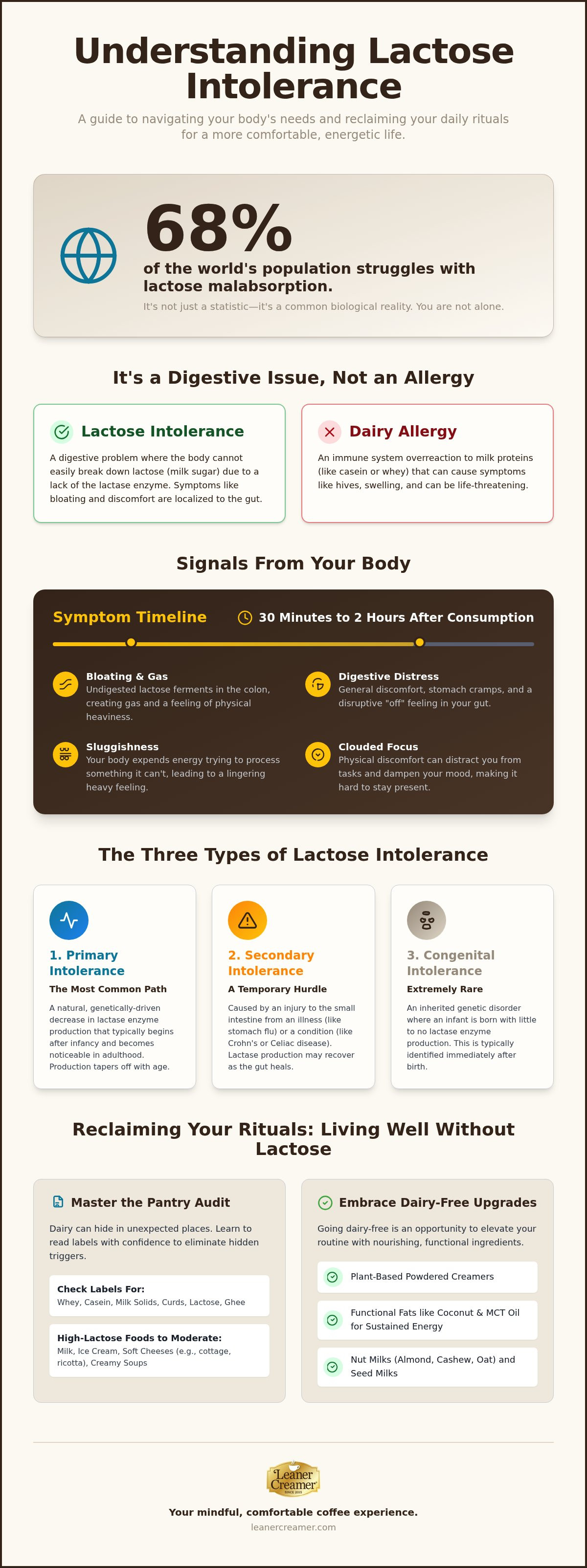
Did you know that nearly 68% of people worldwide struggle with lactose malabsorption? It is a staggering number. Yet, for you, it isn't just a statistic. It is the bloating that follows breakfast. It is that heavy, sluggish feeling that lingers long after your latte is gone. You shouldn't have to choose between your morning comfort and your physical well-being. Many people who are lactose intolerant feel a sense of loss when they think about giving up dairy. They worry about hidden ingredients and the end of the creamy rituals they love.
It doesn't have to be a sacrifice. This article will show you how to navigate your sensitivities while actually improving your daily habits. You will gain a clear understanding of your body's needs and the confidence to read every label with ease. We are going to explore how to build a dairy-free routine that feels like a true upgrade. From understanding diagnostic tests to finding the perfect plant-based powdered creamer, you are about to rediscover the joy of a mindful, comfortable coffee experience. Equilibrium is possible.
Key Takeaways
- Identify the physical signals your body sends when you are lactose intolerant to reclaim your daily comfort and equilibrium.
- Distinguish between primary and secondary sensitivities to understand your body's unique digestive timeline and long-term needs.
- Master the art of the pantry audit to eliminate hidden dairy triggers and high-lactose offenders from your kitchen.
- Explore how functional, plant-based fats like MCT oil can elevate your morning ritual while providing sustained energy.
- Learn why a casein-free lifestyle leads to a lasting sense of physical lightness and a more mindful coffee experience.
What Does It Mean to Be Lactose Intolerant?
Imagine finishing a beautiful cup of coffee only to feel a familiar, uncomfortable tightness in your stomach. It isn't just a minor inconvenience; it is a signal from your body. To understand What is lactose intolerance?, we must look at how we process milk sugar. Essentially, being lactose intolerant means your body lacks the ability to break down lactose, the natural sugar found in dairy. Instead of providing energy, that milk sugar sits in your digestive tract, causing a ripple effect of discomfort. Equilibrium matters.
It is vital to distinguish this from a dairy allergy. An allergy is an immune system overreaction that can be life-threatening. Intolerance is a digestive issue. While it might not be a medical emergency, the physical heaviness and sluggishness it creates are very real. You deserve to feel light and vibrant after every meal. Feeling "off" should never be your daily baseline. Total clarity.
Common Symptoms That Disrupt Your Day
The timeline of discomfort is often predictable. Most people notice symptoms peak between 30 minutes and 2 hours after consumption. This happens because undigested lactose travels through the small intestine and reaches the colon. There, bacteria begin to ferment the sugar. This process creates gas, leading to that unmistakable bloating and physical heaviness. It is a loud, distracting sensation.
These symptoms don't just stay in your stomach. Digestive distress can cloud your focus and dampen your mood. It's hard to stay present in a meeting or enjoy a conversation when you're preoccupied with how your body feels. Your morning ritual should ground you, not distract you. Mindful consumption starts with listening to these cues.
Why It Happens: The Science of Lactase
The root of the issue lies in your small intestine. This is where your body produces lactase, a specialized enzyme. Lactase is the molecular key that unlocks dairy sugars for absorption. Without enough of these keys, the lactose remains whole and unabsorbed, leading to the distress mentioned above.
For many, this is a natural progression. Genetics play a significant role, and it's common for lactase production to decrease as we age. It isn't a failure of your body; it's simply a shift in your biology. You are not alone in this experience. In fact, most adults find that their bodies become more lactose intolerant over time. Understanding this change is the first step toward reclaiming a routine that actually serves your well-being. Simple. Intentional. Nurturing.
The Three Types of Lactose Intolerance
Why does that morning latte suddenly feel different than it did five years ago? It isn't your imagination. Your body changes. Understanding the three distinct types of sensitivity allows you to build a long-term wellness strategy that feels like an upgrade, not a restriction. When diagnosing and treating lactose intolerance, identifying your specific type is the first step toward a more mindful routine. Clarity is the foundation of comfort.
Primary: The Most Common Path
Most adults who are lactose intolerant fall into this category. It is a natural progression. As infants, our bodies produce plenty of lactase to digest milk. However, as we move into our 20s or 30s, that production often begins to taper off. It is a biological shift. Genetics and cultural background play a massive role here. For instance, research shows that individuals of Asian, African American, or Hispanic descent often experience this decline more sharply. Accepting this change is powerful. It isn't a failure of your system; it is an invitation to refine your habits and choose ingredients that align with your current needs. Transitioning to a clean label coffee creamer can help you keep the ritual while respecting your body's new boundaries. Pure and simple.
Secondary: A Temporary Hurdle
This type is different. It isn't about aging. It is about impact. Secondary intolerance happens when the small intestine is injured or affected by an underlying condition. Common triggers include Celiac disease, Crohn's, or even a severe bout of the stomach flu. These issues can temporarily damage the cells that produce lactase. The focus here is on the healing phase. By supporting your gut health and removing triggers, you allow your system to recover its enzyme capacity. If you suspect an underlying issue is causing your distress, seeking a professional diagnosis is essential. It is about getting back to equilibrium. Supporting your body through the recovery process ensures you feel good in the time that follows.
Finally, there is congenital intolerance. This is an extremely rare genetic condition where an infant is born without any lactase enzymes. It is usually identified immediately after birth. Regardless of which path you are on, the goal remains the same. You deserve a life that feels light, energized, and free from digestive noise. Focus on the physical sensation of feeling good. It starts with one intentional choice at a time.
Navigating the Diagnosis: Testing and Hidden Triggers
How do you move from suspicion to certainty? If you suspect you are lactose intolerant, seeking a formal diagnosis provides a clear path forward. The most common method is the non-invasive hydrogen breath test. You drink a lactose-rich beverage and provide breath samples at regular intervals. High hydrogen levels indicate that your body isn't breaking down the sugars properly. This is a standard clinical ritual that offers definitive answers. Given the high prevalence of lactose intolerance across various demographics, knowing your status is simply the first step toward better health. Total clarity.
Hidden Sources of Lactose You Might Miss
Labels can be misleading. You might expect dairy in a latte, but would you expect it in a slice of rye bread or a serving of deli turkey? Many processed foods use lactose as a filler or stabilizer. These are the "hidden" triggers that can leave you feeling heavy and sluggish despite your best efforts. Common culprits include:
- Processed meats and deli slices
- Packaged breads and crackers
- Instant soups and sauces
- Certain prescription and over-the-counter medications
You must watch for terms like "whey," "curds," or "milk solids" on the back of the package. Spying these dairy derivatives in processed snacks is a skill that comes with time. Learning to decode these terms is essential for your well-being. In fact, reading every label is a form of self-care. It is about taking back control of your physical state and ensuring your ingredients align with your lifestyle. Pure integrity.
The Elimination Ritual
Sometimes, the best expert on your body is you. An elimination diet is a mindful way to listen to your system's feedback. Try removing all dairy for 14 days. This isn't about restriction; it's a reset. During this time, pay close attention to the sensation of your body. Do you feel lighter? Is your sleep deeper? Does your focus feel sharper? Journaling these changes helps you identify your personal baseline without the noise of digestive distress.
After two weeks, you can slowly reintroduce dairy to identify your specific threshold. Some people can handle a small amount of hard cheese, while others need to be strictly dairy-free. This process builds vital label literacy. It also reveals the crucial difference between "lactose-free" and "dairy-free." Many lactose-free products still contain casein or other milk proteins that can cause sensitivity. For a truly clean experience, look for plant-based solutions that remove the dairy protein entirely. Transparency is the only way to ensure your daily coffee routine remains a source of comfort. Real results.
Reclaiming Your Rituals: Living Well Without Lactose
Being lactose intolerant shouldn't feel like a life of restriction. It is an opportunity to curate a lifestyle that respects your digestion and boosts your energy. Reclaiming your day starts with five intentional steps. First, audit your pantry. Clear out the hidden offenders we identified earlier. Next, explore the power of plant-based fats like coconut oil and MCTs. These ingredients provide a cleaner source of fuel than heavy dairy. You can find more on this in our guide to clean rituals. Don't forget your minerals. Focus on calcium-rich alternatives like almonds, leafy greens, and fortified seeds. Finally, upgrade your coffee with a dairy-free, sugar-free functional creamer. Listen to your post-consumption signal. If you feel light and energized, you're on the right track. Real progress.
The Coffee Challenge: Finding the Perfect Creaminess
Why do most dairy-free milks fall flat in a hot cup? Many liquid alternatives are mostly water. They often separate or lack that satisfying mouthfeel. Achieving a rich, creamy texture without the lactose bloat requires the right fats. Transitioning from liquid milk to functional, powdered alternatives is a game changer. Powdered formats offer a more concentrated, velvety experience without the fillers found in cartons. It's a cleaner way to enjoy your cup. Total clarity.
Mindful Nutrition Beyond Dairy
Maintaining equilibrium is essential. You must ensure you are getting enough Vitamin D and Calcium from whole food sources. Choosing glucose-friendly options helps you avoid the energy crashes often associated with sugary dairy alternatives. A sugar-free, dairy-free lifestyle stabilizes your daily energy levels by preventing insulin spikes and digestive fatigue. You feel steady. You feel focused. It is about how you feel in the hours that follow, not just the moment of consumption. Mindful choices lead to a balanced life.
Explore clean label coffee creamers
The Leaner Creamer Solution: Dairy-Free Joy
You have identified the signals. You have audited your pantry. Now, it is time for the solution that feels like an upgrade rather than a compromise. Living as someone who is lactose intolerant shouldn't mean losing the creamy, comforting ritual of your morning coffee. Leaner Creamer exists to bridge that gap. We are more than just a dairy alternative. We are a mindful guide to a better daily habit. Pure and simple.
Most products focus only on removing lactose. We go further by ensuring a physical sensation of "Zero Casein." Why does this matter? Many people who struggle with dairy are sensitive to milk proteins like casein as much as the sugars. By removing these proteins entirely, we offer a level of lightness that liquid alternatives often miss. No heaviness. No lingering discomfort. Just the lasting physical sensation of feeling good. We believe in powdered integrity. Our creamers contain no maltodextrin and no artificial fillers. It is clean energy in every scoop. We are your supportive peer on this wellness journey, making healthy habits feel effortless and intentional.
Clean Labels, Clear Consciences
You can explore a world of diverse flavors without a hint of dairy guilt. Whether you prefer the richness of Salted Caramel or the soft notes of Vanilla Bliss, the experience remains sensory and grounded. We curate our ingredients for high impact. For example, we include MCT oil to support mental focus and satiety throughout your morning. It turns your coffee into a functional tool for a balanced life. Every blend is Kosher, Vegan, and Keto-certified to nurture your body with transparency. Ingredient integrity is our baseline. Real quality.
Start Your New Ritual Today
Creating a barista-quality experience at home is simple. You don't need complicated equipment. Simply whisk our powdered creamer into your hot coffee to achieve a rich, velvety texture that honors your daily ritual. It is a small, manageable improvement that serves your body well for hours to come. To ensure your wellness remains a consistent practice, the Subscribe and Save approach offers a seamless way to keep your pantry stocked with clean ingredients. Wellness is not a destination; it is a daily practice. Start with your next cup. Equilibrium is finally within reach.
Embrace a New Morning Ritual
You now have the clarity to move forward with confidence. Understanding the difference between primary and secondary sensitivities allows you to listen more closely to your body's unique signals. By identifying hidden triggers and opting for clean label ingredients, you ensure that your morning ritual remains a source of comfort rather than distress. Being lactose intolerant is simply an invitation to refine your habits with more intention. You don't have to sacrifice the rich, velvety texture of a great cup of coffee. It's about choosing better for your future self.
Opting for a dairy-free and casein-free solution means prioritizing your long-term physical state. Focus on the feeling of lightness and steady energy that comes from keto-certified and glucose-friendly ingredients. There are no fillers here. Just pure, mindful nutrition that supports your focus and satiety. Your daily routine is a practice of self-care. It's a choice that honors your body. It starts with what you put in your cup.
Redefine your morning. Embrace a routine that nurtures your system and leaves you feeling vibrant. You deserve to feel your best. One sip at a time. Equilibrium is finally yours.
Frequently Asked Questions
Can lactose intolerance suddenly appear in adulthood?
Yes, it is very common for lactase production to decline as you age. Many adults find they become sensitive to dairy in their 20s or 30s as their bodies naturally produce less of the necessary enzyme. This shift is often genetic rather than a sudden illness. It is a biological transition. Understanding this change helps you adjust your daily habits without feeling like you've lost your favorite rituals. It is a natural part of your wellness journey.
Is there a difference between a milk allergy and lactose intolerance?
A milk allergy involves your immune system and can be life-threatening, while intolerance is strictly a digestive issue. When you are lactose intolerant, your body simply lacks the enzyme to break down milk sugars. This leads to physical heaviness and bloating rather than an immune response like hives or respiratory distress. Knowing the difference ensures you seek the right level of care and choose ingredients that prioritize your long-term physical comfort and daily equilibrium.
What are the most common hidden sources of lactose in food?
Lactose is frequently used as a stabilizer or filler in products that don't look like dairy. You might find it in processed deli meats, packaged breads, and even certain prescription medications. Spying terms like "whey" or "milk solids" on a label is essential. These hidden triggers often cause that sluggish, heavy feeling even when you think you've avoided milk. Reading every label with intention is a vital form of self-care for your body's lasting comfort.
Can I still drink coffee if I am lactose intolerant?
You can absolutely keep your daily coffee ritual by switching to clean, plant-based alternatives. Coffee itself doesn't contain lactose; the discomfort comes from traditional milk or creamers. By choosing a powdered, dairy-free creamer, you maintain that rich, velvety texture without the digestive noise. It is about making a small, manageable improvement to your existing habit. This ensures you feel light and energized after your morning cup, rather than weighed down by physical distress and bloating.
Do lactase supplements actually work for everyone?
Lactase supplements can help some individuals digest small amounts of dairy, but they aren't a universal cure. Their effectiveness depends on your personal sensitivity levels and the amount of lactose consumed. Some people find that even with supplements, they still experience a heavy or "off" sensation. Transitioning to a strictly casein-free and dairy-free routine is often a more reliable way to ensure lasting physical equilibrium and a clear, focused mind throughout your busy day.
Are all non-dairy creamers healthy for people with lactose intolerance?
Many commercial non-dairy creamers are loaded with sugar, artificial fillers, and thickeners like maltodextrin. Some even contain sodium caseinate, a milk derivative that can trigger sensitivities in those who are lactose intolerant. To protect your well-being, look for clean-label, plant-based options that prioritize ingredient integrity. A truly healthy creamer should provide functional benefits, like MCT oil for focus, while remaining free from the junk that causes energy crashes and physical sluggishness in the hours following consumption.
Is lactose intolerance genetic or can it be cured?
Primary lactose intolerance is a genetic condition that cannot be cured, though its symptoms are easily managed through mindful nutrition. It is a permanent shift in how your body processes milk sugars. However, secondary intolerance caused by illness or injury to the gut can sometimes be reversed once the underlying issue is healed. For most adults, the goal isn't a cure but a lifestyle refinement. Choosing pure, natural origins for your ingredients helps maintain a balanced, vibrant life.
What happens if I keep eating dairy while being intolerant?
Repeatedly consuming dairy when your body can't process it leads to chronic digestive distress and inflammation. This constant irritation can interfere with how your small intestine absorbs other vital nutrients over time. You might experience persistent bloating, fatigue, and a general sense of physical heaviness that clouds your daily focus. Listening to your body's feedback is the first step toward reclaiming your energy. Prioritizing a dairy-free routine ensures your habits serve your body's long-term health and total equilibrium.


