


What if the secret to a rich, comforting morning mug has nothing to do with table sugar? If you are searching for how to sweeten coffee without sugar, you know the daily compromise all too well. Plain black coffee often feels watery and unfulfilling, while traditional syrups trigger sharp glucose spikes followed by sluggish mid-morning crashes. Worse yet, artificial packets frequently leave a lingering, chemical aftertaste that ruins an otherwise peaceful ritual.
True morning satisfaction comes from balancing gentle flavor notes with velvety mouthfeel, not dumping empty calories into your mug. You deserve a daily ritual that leaves your body feeling balanced, light, and energized. In this guide, you will discover clean, delicious ways to sweeten your coffee while keeping your energy steady throughout the day. We will explore how natural zero-calorie sweeteners dissolve in hot brews, look at wholesome plant-based ingredients that add cafe-worthy body, and show you how to build a nourishing morning routine that never cuts corners on taste.
Key Takeaways
- Mastering how to sweeten coffee without sugar protects your morning energy, preventing rapid insulin spikes and mid-morning fatigue.
- Pure plant-based extracts like monk fruit provide clean, heat-stable sweetness without the bitter chemical aftertaste of artificial alternatives.
- Intentional brewing tweaks, like pairing medium roasts with lower water temperatures, naturally soften coffee bitterness before you even add a sweetener.
- Spotting hidden additives like maltodextrin on product labels ensures your sugar-free creamer preserves steady metabolic health.
- Simple kitchen practices, from warm warming spices to plant-powered creamers, create a sustainable morning ritual that leaves you feeling light and focused.
Why Learn How to Sweeten Coffee Without Sugar?
Your morning cup sets the rhythm for your entire day. Yet, stirring two spoons of white sugar or a splash of commercial syrup into hot coffee turns a grounding ritual into an energy liability. Learning how to sweeten coffee without sugar is not about bitter deprivation; it is the art of balancing warming aromatics, non-glycemic natural extracts, and rich mouthfeel to create a deeply satisfying brew. By removing refined sugar, you protect your body from sudden insulin spikes while giving your taste buds the freedom to appreciate genuine coffee craft.
To see how effortless making this transition can be in your own kitchen, watch this practical breakdown of wholesome morning swaps:
The Morning Glucose Rollercoaster and Energy Crashes
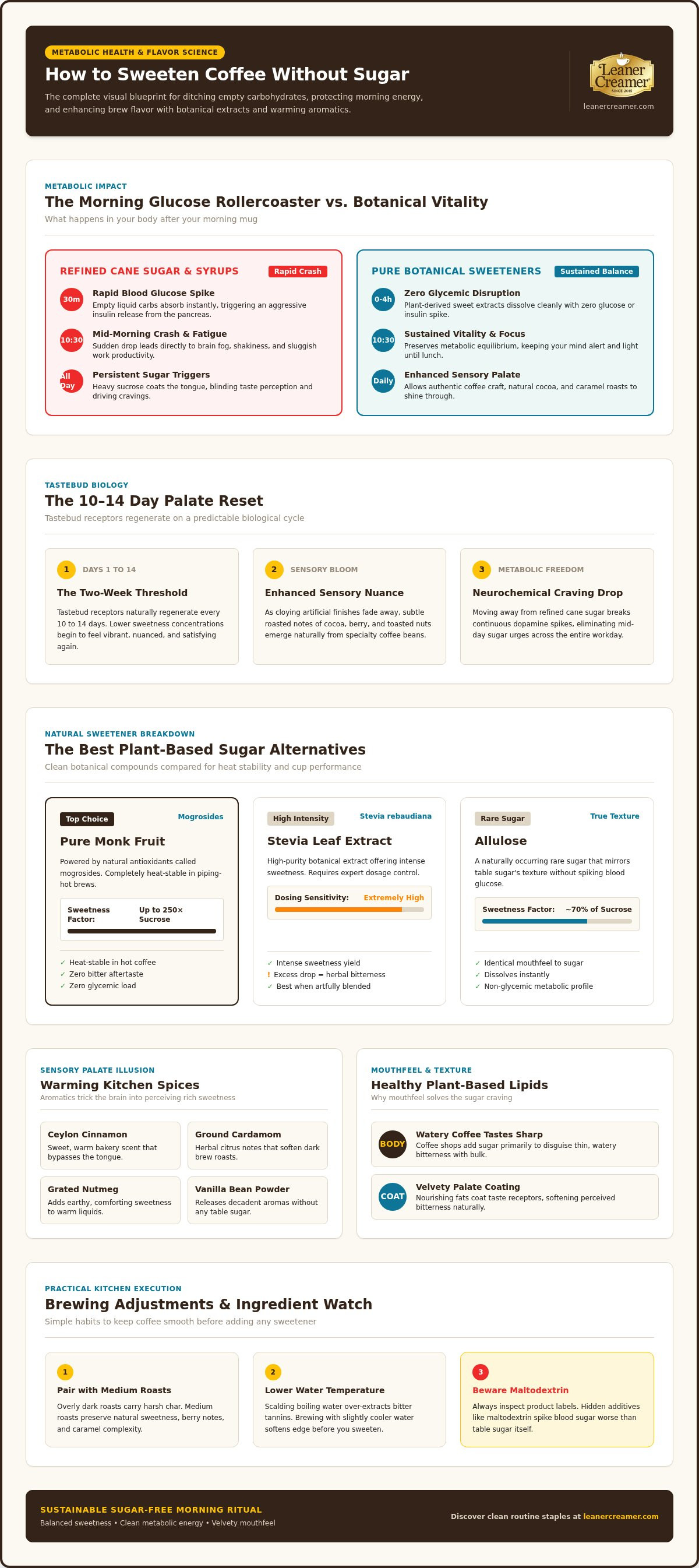
Empty liquid carbohydrates absorb rapidly. Within thirty minutes of drinking hot, sugary coffee, your blood glucose spikes, prompting an aggressive insulin release from your pancreas. What follows by 10:30 AM is predictable: brain fog, shakiness, and sudden fatigue. Sustainable vitality relies on choosing non-caloric sugar substitutes and wholesome ingredients that preserve metabolic equilibrium, keeping your focus sharp until lunch without mid-morning dips.
How Your Palate Adapts Away from Refined Sweeteners
Heavy sucrose dulls taste perception. Commercial syrups coat your tongue, blinding you to the natural cocoa, caramel, and berry notes inherent in specialty roasts. Pure botanical sweetness requires an intentional reset:
- The two-week threshold: Tastebud receptors regenerate roughly every ten to fourteen days, allowing lower sweetness levels to feel vibrant again.
- Enhanced sensory nuance: As artificial cloying finishes fade, subtle nutty and toasted notes emerge naturally.
- Craving reduction: Moving away from refined cane sugar eliminates constant neurochemical sugar triggers throughout the workday.
Mastering how to sweeten coffee without sugar transforms your routine into a nourishing act of care. Clean, steady energy. Zero crash. Pure daily comfort.
The Best Natural Sugar Alternatives for Coffee Ranked
Finding genuine harmony in your morning mug requires more than just masking bitterness. When exploring how to sweeten coffee without sugar, your criteria should center on three essentials: heat stability, authentic mouthfeel, and zero glycemic toll. The best botanical alternatives don't just mimic sugar; they elevate your entire brewing experience while leaving your body feeling balanced.
Plant-Based Sweeteners: Stevia, Monk Fruit, and Allulose
Unlike synthetic compounds among common FDA-approved sweeteners, botanical extracts deliver sweetness without artificial residues:
- Monk fruit: Powered by natural antioxidants called mogrosides, pure monk fruit extract provides up to 250 times the sweetness of sugar. It dissolves cleanly in piping-hot coffee, leaving zero lingering bitter aftertaste.
- Stevia leaf: Derived from Stevia rebaudiana, high-purity extracts offer intense sweetness. Dosing is everything. A single drop too much creates herbal bitterness, which is why masterfully formulated blends taste far superior to isolated powders.
- Allulose: A naturally occurring rare sugar that delivers roughly 70% of sucrose's sweetness. It mirrors table sugar's texture and dissolves instantly without spiking blood glucose.
For an effortless morning routine, functional sugar free coffee creamers artfully balance monk fruit and stevia with nourishing plant ingredients, skipping the mess of measuring raw extracts altogether.
Warming Kitchen Spices That Mimic Sweet Flavors
Your sense of smell guides how your brain perceives taste. A gentle dusting of Ceylon cinnamon, ground cardamom, or freshly grated nutmeg adds sweet bakery aromatics that bypass the tongue entirely. Pure vanilla bean powder acts the same way; its comforting scent tricks your sensory palate into perceiving rich, decadent sweetness without a trace of sugar.
Natural Fats: Enhancing Sweetness Perception Through Creaminess
Why do coffee shops rely so heavily on sugar? Because watery coffee tastes sharp. Healthy lipids change that dynamic completely. Natural fats physically coat the taste buds, dampening perceived bitterness and creating space for coffee's intrinsic caramel undertones to shine through.
Plant-based medium-chain triglycerides (MCTs) and coconut oil provide functional fuel that promotes lasting focus. They transform thin coffee into a velvety, cafe-style beverage with a full-bodied mouthfeel that feels deeply satisfying. Rich texture. Sustained clarity. Zero afternoon slump.
How to Sweeten Coffee Without Sugar: 5 Simple Steps
Creating a luscious, barista-level drink at home does not require sugary syrups or chemical sweeteners. When you rethink how to sweeten coffee without sugar, the secret lies in pairing intentional brewing with rich, functional plant fats. Follow these five simple steps to turn your everyday brew into a velvety, naturally sweet morning ritual:
- Select the right roast: Choose a smooth medium roast featuring natural undertones of cocoa, hazelnut, or dried fruit rather than an aggressively charred dark roast.
- Control your water temperature: Brew between 195°F and 205°F. Water hotter than 205°F scorches delicate grounds, pulling harsh chlorogenic acid lactones into your cup.
- Bloom whole spices with your grounds: Add a quarter-teaspoon of ground cinnamon or freshly crushed cardamom directly into the dry grounds before pouring water. Hot extraction pulls aromatic oils into the brew without leaving grainy sediment at the bottom of your mug.
- Dissolve clean plant sweeteners: Stir non-glycemic options like monk fruit or allulose directly into steaming coffee. Choosing documented, safe sugar substitutes ensures you sidestep bitter aftertastes while keeping blood sugar flat.
- Froth with a functional plant creamer: Emulsify functional healthy fats into the liquid to bind the aromatics, soften roast bitterness, and create a decadent, velvety microfoam.
Dialing In Roast Selection and Extraction Temperature
Bitterness often stems from improper heat rather than the coffee beans themselves. Boiling water over-extracts astringent compounds, compelling you to dump in sweeteners to mask the harshness. Keeping your kettle below 205°F preserves the bean's natural caramelization. Prefer iced drinks? Cold brewing over twelve to eighteen hours extracts far fewer acidic tannins, producing a naturally smoother, rounder base that needs minimal sweetening.
Infusing Spices and Natural Extracts into the Brew
Never dump raw spices into finished coffee with a spoon; they clump into an unappealing film. Instead, let hot brewing water draw the sweet essences out gently. A split vanilla bean tucked into your grinder or two drops of pure alcohol-free vanilla extract stirred into steaming coffee envelopes your senses in dessert-like richness without a single calorie.
Frothing Functional Plant Creamers for Rich Texture
Mouthfeel fundamentally shapes how your brain registers sweet flavors. Whisking in a scoop of clean label vanilla coffee creamer powder with a small handheld frother whips healthy coconut fats into a dense, luxurious foam. Because it blends built-in monk fruit sweetness with functional MCTs, you skip messy measuring and syrups completely. Silky comfort. Steady vitality. Pure morning ease.
Common Pitfalls When Ditching Sugar in Your Coffee
Switching away from cane sugar often feels like an immediate win for your health. Yet, many commercial sugar-free options quietly introduce new compromises. As you master how to sweeten coffee without sugar, knowing what to leave out of your cup matters just as much as knowing what to put in. Navigating past sneaky bulking agents, chemical shortcuts, and dosing mistakes ensures your morning ritual leaves you feeling genuinely refreshed rather than unsettled.
The Hidden Chemical Additives in Standard Sugar-Free Products
Most commercial zero-calorie syrups achieve their intense sweetness through synthetic compounds like sucralose or acesulfame potassium. While they provide immediate sweetness without calories, these intense lab-made molecules can disrupt gut microbiota balances and signal false hunger cues that trigger sweet cravings later in the afternoon. Many grocery-store creamers also load up on chemical stabilizers like dipotassium phosphate and carrageenan to artificially mimic dairy body, which often causes mild digestive bloating before your day even starts.
Discover our clean, transparent ingredients
Why Maltodextrin and Bulking Agents Ruin Glucose Goals
Have you ever noticed that powdery sweetener packets measure spoon-for-spoon just like sugar? Pure plant extracts like monk fruit and stevia are hundreds of times sweeter than sucrose, meaning a tiny pinch is all you need. To make them scoopable, manufacturers dilute these extracts with fillers like maltodextrin and dextrose.
- Severe glycemic impact: Maltodextrin has a glycemic index ranging from 85 to 105, which is notably higher than white table sugar (GI 65).
- Misleading labels: Because FDA labeling guidelines allow ingredients under 0.5 grams of carbohydrates per serving to be listed as "zero sugar," multiple cups quickly spike your actual blood glucose.
- The clean label check: Always look for powdered blends formulated without corn derivatives, casein, or hidden starches.
Fixing Thin, Watery Texture in Sugar-Free Coffee
Sugar does not just sweeten; it provides physical weight and viscosity. When people switch to black coffee or drop single-ingredient liquid sweetener into their mugs, they often find the experience flat and unfulfilling. A satisfying cup requires balance. Instead of settling for thin coffee, incorporating wholesome coconut oil and MCTs restores that velvety, coffeehouse body naturally. Wholesome lipids carry flavor molecules across your palate, creating a luxurious drink that satisfies your cravings while keeping your energy steady.
Creating a Sustainable, Sugar-Free Morning Coffee Ritual
A truly healthy habit should never feel like a chore. The reason so many morning resolutions fall apart isn't a lack of discipline; it's friction. Building a lasting routine around how to sweeten coffee without sugar comes down to setting up your kitchen so that the mindful choice is also the most effortless one. When your morning coffee leaves you feeling light, grounded, and clear-headed, returning to refined sugar simply loses its appeal.
Designing a Pantry for Effortless Sugar-Free Mornings
Streamline your counter space so you can craft a barista-worthy mug in under sixty seconds. Intentional pantry design eliminates early-morning decision fatigue:
- Batch your aromatics: Combine ground cinnamon, nutmeg, and true vanilla bean powder in a dedicated spice shaker next to your brewer. A quick dusting takes zero extra thought.
- Keep tools within reach: Set a small handheld milk frother beside your favorite mug. A ten-second whip transforms any blend into a velvety, airy microfoam.
- Rely on shelf-stable convenience: Stashing clean, functional powders in your pantry or office desk ensures you always have clean sweetness on hand. Stirring in a scoop of clean label salted caramel coffee creamer gives you cafe-style luxury without measuring syrups or risking dairy intolerance.
How Clean Morning Habits Elevate Long-Term Wellness
How you begin your day reverberates through your choices until bedtime. Flooding your system with simple sugars first thing sets off reactive hunger cues that derail your midday eating. In contrast, pairing balanced coffee with a large glass of water keeps your cellular hydration high and your metabolic signaling quiet.
Clean, sustained energy replaces the harsh cycle of caffeine jitters and mid-afternoon lethargy. You stay focused, clear, and energized throughout your workday. If you're ready to explore richer plant-powered blends, learn more about crafting mindful morning rituals in our comprehensive resource on the ultimate guide to dairy free creamer. Sustainable energy starts with your first sip. Take the step toward a lighter, more vibrant daily cup and Shop clean, functional creamers at Leaner Creamer.
A Sweeter, Lighter Morning Ritual Starts Now
Transforming your daily cup doesn't require giving up the comforting luxury of a warm, sweet drink. Once you understand how to sweeten coffee without sugar, you can say goodbye to morning energy crashes and synthetic aftertastes for good. True satisfaction comes from pairing clean botanical sweetness with wholesome plant lipids that naturally soften bean bitterness and keep your mind clear until noon.
By filling your mug with keto-certified, strictly glucose-friendly ingredients, you protect your body from insulin spikes while indulging in rich cafe indulgence. Real coconut oil and energizing MCTs give every sip a velvety finish, completely free from dairy, gluten, soy, maltodextrin, and artificial fillers. Wholesome ingredients. Lasting vitality. Zero compromise.
Give your body the steady, mindful start it deserves, and enjoy every rich drop of your newfound morning routine.
Frequently Asked Questions
Can you sweeten coffee naturally without using any sugar?
Yes, you can easily sweeten coffee naturally using non-glycemic plant extracts and warming spices. High-purity monk fruit, stevia leaf, and allulose provide vibrant sweetness without elevating blood glucose. Combining these extracts with aromatic spices like Ceylon cinnamon or pure vanilla bean creates a layered, sweet flavor profile. Learning how to sweeten coffee without sugar this way satisfies dessert cravings while keeping your morning energy smooth and stable.
What is the healthiest zero-sugar sweetener to put in coffee?
Pure monk fruit extract is widely considered the healthiest zero-sugar option for hot coffee. Derived from the dried fruit, it contains zero carbohydrates, carries no calories, and will not cause an insulin response. Unlike chemical compounds or sugar alcohols that may upset sensitive digestion, pure monk fruit dissolves cleanly in hot liquids without irritating your stomach or leaving an unpleasant artificial residue.
Why does stevia sometimes leave a bitter aftertaste in hot coffee?
Stevia contains sweet compounds called steviol glycosides, primarily rebaudioside A and stevioside. At high concentrations or when exposed to scalding water, certain glycosides trigger human bitter taste receptors on the tongue. To avoid this sharp finish, choose expertly balanced blends or creamers that pair stevia with monk fruit, softening individual botanical flavors into a well-rounded, natural sweetness.
Will sweetening coffee with cinnamon break an intermittent fast?
No, adding a dash of ground Ceylon cinnamon to your morning cup will not break an intermittent fast. Pure spices contain negligible caloric value and do not provoke an insulin surge. In fact, research suggests cinnamon can support balanced insulin sensitivity, making it an excellent companion for fasting mornings when you want rich, comforting flavor without activating digestion.
Does monk fruit dissolve well in hot and iced coffee drinks?
High-purity monk fruit extract dissolves almost instantly in both steaming and cold coffee. Because it contains water-soluble mogrosides, it disperses evenly without clumping or settling at the bottom of the glass. For iced beverages, giving the extract or a powdered creamer a quick ten-second spin with a handheld frother ensures a silky, lump-free consistency throughout the drink.
How can I make my coffee creamy and sweet without sugary syrups?
The best way to achieve a creamy, sweet cup without syrups is by frothing a functional, plant-based powdered creamer into hot coffee. Formulations built on coconut oil and energizing MCTs infuse healthy fats directly into the liquid. This dampens harsh bean acidity, restores rich coffeehouse body, and delivers built-in sweetness through monk fruit without any cane sugar.
Is allulose safe for daily use in hot morning beverages?
Yes, allulose is completely safe and heat-stable for everyday use in hot beverages. As a rare sugar found naturally in figs and raisins, your body absorbs it in the small intestine but excretes it intact without metabolizing it into energy. It behaves like traditional table sugar in hot coffee, offering authentic mouthfeel and zero blood sugar impact.
Why do sugar-free coffee creamers still spike my blood sugar?
Many conventional sugar-free creamers rely on cheap bulking agents like maltodextrin, corn syrup solids, or modified food starch. Maltodextrin has a higher glycemic index than pure cane sugar, driving immediate glucose surges despite "sugar-free" front-label claims. Understanding how to sweeten coffee without sugar requires reading ingredient labels closely to avoid hidden starches and artificial fillers.


