


Does your morning coffee leave you with a lingering, chemical aftertaste and a chalky layer at the bottom of your mug? It's a common frustration. You want the convenience of a shelf-stable option, but you're likely wondering how to make powdered creamer taste good without compromising your wellness goals. With 42% of shoppers now actively avoiding artificial fillers like carrageenan and hydrogenated oils, the search for a cleaner cup is real. You want flavor that feels as good as it tastes.
We understand that your morning ritual should feel like a moment of equilibrium, not a compromise. You deserve a rich, barista-quality experience that leaves you feeling light and energized long after the last sip. This guide reveals the professional techniques and ingredient secrets to transform your daily brew. We will explore the "Science of the Slurry" to eliminate clumps and identify the plant-based fats that provide true, velvety creaminess. You will discover how to achieve a gourmet flavor using clean label ingredients that respect your body. It's time to elevate your coffee routine into a mindful practice.
Key Takeaways
- Master the "Science of the Slurry" to eliminate chalky residue and create a consistently smooth, barista-quality texture.
- Learn why aeration and specific temperature ranges are the secret to unlocking a rich, velvety mouthfeel in every cup.
- Discover exactly how to make powdered creamer taste good by choosing clean ingredients that avoid the bitter aftertaste of artificial fillers.
- Elevate your morning ritual with simple flavor enhancements like sea salt and warm spices that naturally intensify creaminess.
- Shift your focus from immediate sweetness to the lasting physical sensation of lightness and sustained energy.
The Science of the Slurry: Why Texture Dictates Taste
Have you ever stared down at a half-finished cup of coffee only to see a grainy, white sediment staring back? It's discouraging. This "Chalky Mug" syndrome isn't just an aesthetic issue; it's a sign of poor emulsification. When powder fails to dissolve properly, it mutes the delicate notes of your coffee beans and leaves a film on your palate. Understanding how to make powdered creamer taste good starts with a fundamental shift in how you introduce powder to liquid. It's about chemistry, not just stirring.
A slurry is a concentrated mixture created by combining a small amount of liquid with a dry ingredient. By creating this bridge, you ensure every particle is hydrated before the volume of the coffee overwhelms it. This is particularly vital when dealing with the complex history and ingredients of non-dairy creamer, which often rely on plant-based fats that require specific conditions to emulsify correctly. Without this step, you're fighting a losing battle against physics.
To better understand the chemistry of a perfect mix, watch this helpful video:
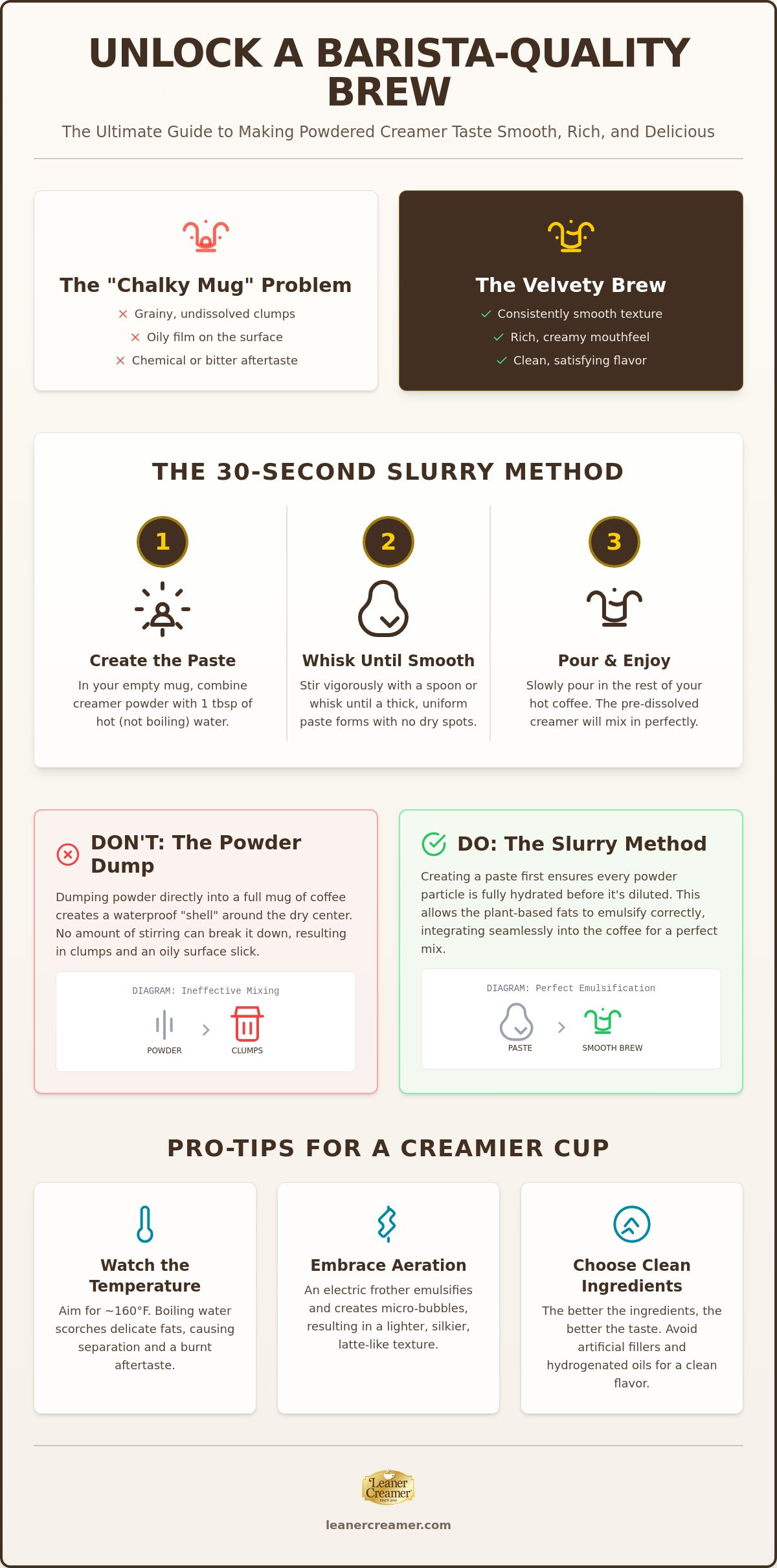
Temperature plays a hidden role in your morning ritual. While you want your coffee hot, using boiling water can actually "scorch" delicate plant fats like coconut oil. This leads to a broken texture and a bitter, burnt aftertaste. High solubility depends on maximizing the surface area where powder meets water. If the water is too hot, the outer layer of the powder gelatinizes too quickly. This traps dry pockets inside, creating those stubborn clumps that refuse to break. Aim for a gentle heat, around 160 degrees, to encourage a smooth transition.
The 30-Second Slurry Method
Start with one tablespoon of hot, but not boiling, water in the bottom of your mug. Add your desired amount of clean label coffee creamer powder. Use a small whisk or a spoon to stir until a thick, uniform paste forms. There should be no visible dry spots. Once you have a smooth base, slowly pour in the rest of your coffee. This method ensures the fats are fully integrated. The result? A rich, gourmet experience in every sip. Simple. Effective. Mindful.
Why Traditional "Dumping" Fails
When you dump powder into a full mug of coffee, the heat immediately seals the outer edge of the powder clump. This creates a waterproof "shell" around the dry center. No matter how fast you stir, you're just chasing clumps around the mug. This is why you often see an unappealing "oily slick" on top of your brew. It's a sign that the fats haven't integrated into the coffee; they're just floating. Stirring harder isn't the answer. Changing your technique is. Discovering how to make powdered creamer taste good is about patience and respecting the ingredients. Your body will feel the difference in the smoothness of the cup.
Beyond the Spoon: Advanced Techniques for a Creamier Cup
While the slurry creates the foundation, achieving a truly gourmet experience requires a bit more finesse. Most people think a simple stir with a spoon is enough. It isn't. To truly understand how to make powdered creamer taste good, you have to look at the science of coffee's mouthfeel. Texture is largely influenced by aeration. By introducing micro-bubbles into your brew, you physically change how the fats interact with your taste buds. This aeration creates a lighter, silkier sensation that mimics expensive coffee shop lattes. It's about perception.
Acidity also plays a silent role in your flavor profile. If you prefer high-acid light roasts, your creamer has to work harder. The acid can sometimes cause delicate plant-based fats to separate or taste slightly sharp. Timing is your best defense here. Never wait for your coffee to cool before adding your powder. Solubility peaks at higher temperatures. If the liquid drops below 160 degrees, the fats begin to solidify. This leads to that unappealing oily slick on the surface. Mix early. Mix hot.
The Power of the Electric Frother
An electric frother is a game-changer for plant-based powders. It doesn't just mix; it emulsifies. When you use a frother on a coconut or MCT oil-based powder, you're high-speed blending those healthy fats into the water molecules. This creates a stable, creamy foam that won't separate. For the best results, froth your slurry first to ensure a smooth paste. Then, pour in your coffee and give the entire cup a five-second pulse. This final aeration ensures a consistent, velvety texture from the first sip to the last. It's a small step that transforms a functional drink into a mindful daily practice.
Mixing Powdered Creamer into Iced Coffee
The biggest challenge is often the afternoon iced latte. If you've ever tried dumping powder directly into cold brew, you know it's a recipe for grit. The "Heat-First" rule is non-negotiable. To master how to make powdered creamer taste good in a cold drink, you must create a "Creamer Shot." Dissolve your powder in two ounces of hot water or coffee first. Once you have a smooth, concentrated liquid, pour it over your ice and cold brew. This ensures the powder stays dissolved and the texture remains smooth, even as the temperature drops. No clumps. No grit. Just pure, chilled satisfaction. Your body will thank you for the extra effort.
Ingredient Integrity: Why Most Powdered Creamers Taste "Off"
Technique alone cannot fix a product built on poor foundations. If you have mastered the slurry and the frother but your coffee still has a lingering, chemical finish, the issue is likely the ingredients. Many people spend time searching for how to make powdered creamer taste good without realizing they are fighting against industrial fillers. Traditional brands often prioritize shelf life and cost over your actual experience. This leads to a cup that feels heavy, tastes artificial, and leaves you feeling sluggish.
The "chemical" taste often reported on community forums isn't a mystery. It is the result of high-intensity sweeteners and hydrogenated oils. These processed ingredients don't just add flavor; they compete with your coffee. They create a clash of profiles that ruins the harmony of your morning ritual. True quality comes from transparency. When you choose a cleaner label, you aren't just avoiding "junk." You are allowing the real, gourmet notes of your coffee to shine through. It is about subtraction as much as addition.
The Hidden Cost of Maltodextrin
Maltodextrin is a common additive used to "bulk up" powdered products. It is cheap. It is ubiquitous. However, it is not glucose friendly. This filler has a high glycemic index, which can lead to energy crashes later in the day. Beyond the metabolic impact, maltodextrin creates a physical "filmy" coating on your tongue. This film acts as a barrier, masking the subtle acidity and body of your coffee. If your brew feels muted or waxy, this hidden filler is likely the culprit. You deserve a cup that leaves you feeling light and clear.
The Benefits of Coconut and MCT Oils
Plant-based fats like coconut oil provide a superior, natural mouthfeel that hydrogenated oils simply cannot replicate. These healthy fats emulsify into a rich, velvety texture that feels authentic on the palate. There is also a significant "satiety factor" involved. When you use a creamer powered by real fats, you feel more satisfied after your morning cup. This prevents the mindless snacking that often follows a sugar-heavy brew. MCT oil is a functional fat that supports mental clarity and provides a clean source of energy for your day. By choosing these ingredients, you turn a simple habit into a mindful practice. This is how to make powdered creamer taste good while respecting your body's needs. Purity matters. Performance follows.
Elevating Your Morning Ritual: Flavor Pairings and Enhancements
Your morning cup is more than a caffeine delivery system. It is a ritual. Once you have mastered the slurry and chosen a clean label base, the next step in learning how to make powdered creamer taste good is culinary experimentation. You don't need sugary syrups to achieve a gourmet profile. In fact, dry spices and natural extracts often provide a more sophisticated depth. Spices like cinnamon, nutmeg, or cardamom act as a bridge between the earthy notes of the bean and the creaminess of the powder.
Have you tried adding a pinch of sea salt? It sounds counterintuitive. However, salt is a powerful tool in a barista's arsenal. A tiny pinch added to your dry powder before mixing suppresses bitterness and enhances the perception of sweetness. It rounds out the flavor profile. It creates balance. This simple addition can make even a standard light roast taste like a premium blend. It is about finding equilibrium in every sip.
Natural extracts are another secret weapon. A single drop of pure vanilla or almond extract added directly into your slurry intensifies the aroma. It makes the experience sensory. When pairing flavors, consider the roast. Light roasts with floral notes pair beautifully with subtle vanilla. Dark, smoky roasts require something bolder, like a mocha or a spice-heavy blend. This is how to make powdered creamer taste good while keeping your ingredients pure. Your kitchen already holds the tools for a better cup.
The Professional Flavor Profile
Using a pre-flavored base like salted caramel coffee creamer provides an immediate head start. It offers a complex profile without the need for multiple ingredients. If you prefer a blank canvas, "Original" flavors allow you to build your own masterpieces. Try the "Golden Milk" hack. Add a dusting of turmeric and ginger to your creamer powder. It creates a warm, anti-inflammatory brew that nourishes the body and soul. Simple. Intentional. Effective.
Customizing Sweetness Without the Sugar
If you find yourself craving more sweetness, look toward nature. Monk fruit or Stevia can enhance the built-in sweetness of your clean label powder without causing a glucose spike. Options like "Decadent Mocha" satisfy chocolate cravings while maintaining your health goals. This isn't about restriction. It is about alignment. By savoring the ritual instead of rushing the caffeine, you cultivate a sense of equilibrium that lasts all day. You feel good because you chose well.
The Leaner Creamer Difference: Clean Label Meets Gourmet Flavor
How do you feel an hour after your coffee? That is the true measure of a quality creamer. Most traditional brands focus entirely on the first sip, but they ignore the heavy, sluggish feeling that often follows. We believe your morning ritual should serve your body, not just your taste buds. This is the Leaner Creamer difference. By removing the maltodextrin and hydrogenated oils, we have solved the puzzle of how to make powdered creamer taste good without the chemical aftertaste. Pure. Simple. Effective.
Our "No Junk" philosophy isn't just a marketing slogan. It is a commitment to your equilibrium. When you use coconut oil and MCT oils, you are choosing fats that your body can actually use for energy. This is how you avoid the bloating and glucose crashes associated with standard powders. Instead, you get a clean, sustained energy that supports your mental clarity throughout the morning. It is barista quality at home. Professional results. Mindful ingredients. No compromise.
While some suggest DIY recipes as the only healthy path, those often lack the professional emulsification needed for a truly smooth cup. Homemade powders can remain gritty or separate in the heat. We provide that gourmet, velvety texture through precise, clean label formulations. You get the convenience of a powder with the mouthfeel of a high-end latte. It is the best of both worlds.
A Ritual You Can Trust
Our journey began with a simple mission. As you will see on our about us page, we were tired of choosing between convenience and health. We wanted a product that was Kosher, Vegan, and Non-GMO because those standards represent transparency. In 2026, being a "label reader" is an act of self-care. Our community chooses Leaner Creamer because they prioritize their long-term physical well-being over a quick sugar fix. They want to feel light. They want to feel energized. They want to feel good. Authentic care. Daily practice.
Ready to Upgrade Your Mug?
Are you ready to experience the difference for yourself? You can explore our latest flavor innovations in the New Creamers Collection. From decadent mocha to smooth vanilla, we offer options that satisfy your cravings while respecting your wellness goals. To ensure you never run out of your morning essential, you can Subscribe and Save on your favorite blends. Join the thousands of mindful coffee lovers who have already made the switch. This is how to make powdered creamer taste good for the long haul. Your morning deserves this. Your body deserves this. Make the change.
Transform Your Daily Brew into a Mindful Practice
Master the 30-second slurry and embrace aeration with a frother to unlock a consistently smooth cup. Understanding how to make powdered creamer taste good isn't just about the mix; it's about respecting the synergy between plant-based fats and coffee acidity. By removing artificial fillers like maltodextrin, you allow the true, gourmet notes of your coffee to shine through. You no longer have to settle for a chalky texture or a muted flavor profile.
Experience the difference of a Keto-certified and Vegan friendly formula that prioritizes your long-term physical state. With zero sugar and a glucose-friendly profile, you can enjoy a rich, velvety texture without the fear of energy crashes or heavy bloating. It's time to swap the chemical aftertaste for the clean energy of coconut and MCT oils. Purity leads to performance. Equilibrium is within reach.
Your morning ritual is the foundation of your day. Choose ingredients that leave you feeling light, clear, and centered. Quality matters. You deserve a cup that tastes as good as it makes you feel.
Frequently Asked Questions
Why does my powdered creamer always clump in my coffee?
Clumping occurs when the outer layer of the powder hydrates too quickly, creating a waterproof seal around a dry center. To fix this, use the slurry method by mixing your powder with a small amount of hot liquid before filling the rest of your mug. This ensures every particle is fully hydrated. High temperatures above 160 degrees can also scorch delicate plant fats, so aim for hot rather than boiling water for the best results.
Is powdered creamer worse for you than liquid creamer?
The health impact depends entirely on the ingredient list rather than the physical format. Many liquid creamers rely on heavy preservatives and chemical stabilizers to remain pourable, while traditional powders often use maltodextrin as a cheap filler. A clean label powder is often a better choice because it eliminates the need for these artificial additives. Focus on what is inside the bag. Purity is the priority. Your body will feel the difference.
Can I use powdered creamer in cold brew or iced coffee?
You can certainly use powder in cold drinks, but you must dissolve it in a small amount of hot liquid first. Powdered fats will not emulsify in cold water; they will simply float and create a gritty texture. Create a concentrated "creamer shot" with two ounces of hot coffee or water. Pour this smooth mixture over your ice for a flawless, chilled experience. This is a key step in how to make powdered creamer taste good when the temperature drops.
What is the healthiest powdered coffee creamer for a keto diet?
The healthiest option for a keto lifestyle is a creamer that uses plant-based fats like coconut oil and MCTs without any added sugars. These ingredients provide functional energy that supports ketosis while offering a rich, natural creaminess. Avoid any brands that use corn syrup solids or maltodextrin, as these can spike your glucose levels and disrupt your fast. Look for Keto-certified labels to ensure the product aligns with your metabolic goals and keeps you feeling light.
Does powdered creamer expire or lose its flavor over time?
Powdered creamer is highly shelf-stable, but its flavor and aroma will begin to mute after six to twelve months. Exposure to moisture and air is the primary enemy of freshness. Keep your bag tightly sealed in a cool, dry place to maintain the integrity of the natural oils. If the powder develops a stale scent or changes color, it is time to replace it. Freshness is essential for a gourmet experience.
How much powdered creamer should I use for a standard cup of coffee?
A standard serving is typically one to two tablespoons for an eight-ounce cup of coffee. However, the amount depends on your personal preference for richness and mouthfeel. Start with one tablespoon and use the slurry technique to gauge the texture. You can always add more to reach your desired level of creaminess. It is about finding the balance that serves your daily palate. Individual. Intentional. Balanced.
What ingredients should I avoid in powdered coffee creamers?
Avoid maltodextrin, hydrogenated oils, and artificial high-intensity sweeteners. These ingredients are often used as cheap fillers or stabilizers, but they can cause digestive discomfort and leave a waxy film on your tongue. Reading the label is an essential part of how to make powdered creamer taste good because real flavor comes from real ingredients. Stick to transparent, clean labels that prioritize your long-term physical well-being.
How can I make my coffee taste like a latte using only powder?
Aeration is the secret to achieving a latte-like consistency with powder. Use an electric handheld frother to mix your creamer into the coffee for at least ten seconds. This process introduces micro-bubbles that emulsify the fats and create a velvety foam on top. It transforms a simple cup of coffee into a sophisticated, barista-quality experience. Simple. Effective. Mindful. You don't need a machine for a professional finish.


