


What if your morning coffee could feel as good an hour later as it does during that first, warm sip? Most of us reach for a sweetener to soften the edges of a dark roast, but the cost is often a mid-morning energy crash or a lingering chemical aftertaste. You might find yourself wondering what sweetener is best for coffee when you want to protect your glucose levels and your palate. It is a common struggle. The confusion is real.
We understand that your coffee is more than just a caffeine hit; it is a sacred daily practice. You shouldn't have to choose between a sweet flavor and a balanced body. This guide will show you how to sweeten your cup using natural, glucose-friendly alternatives that provide lasting physical harmony. We will look at the latest research on plant-based extracts and functional ingredients that help you maintain equilibrium all day long. Purity matters. Your ritual deserves it.
Key Takeaways
- Stop the cycle of mid-morning energy crashes by choosing sweeteners that prioritize long-term glucose stability over a quick sugar high.
- Discover what sweetener is best for coffee by comparing the metabolic impact of plant-based extracts against traditional natural sugars.
- Learn how to incorporate functional ingredients like healthy fats that help your body feel sustained and balanced throughout the day.
- Identify the specific clean-label alternatives that align with your keto or glucose-management goals without a lingering chemical aftertaste.
- Simplify your daily ritual with all-in-one solutions that provide built-in sweetness while supporting a mindful, healthy lifestyle.
The Coffee Sweetener Dilemma: Why Your Choice Matters
Your morning coffee should be a moment of peace. It isn't just a way to wake up; it's a way to center yourself for the day ahead. But for many, that peaceful start is followed by a predictable, heavy slump. When you consider what sweetener is best for coffee, you have to look past the first five minutes. You have to look at how your body feels two hours later. Refined sugar provides a fleeting high. It triggers inflammation and leaves you reaching for a snack before your first meeting is even over. The 'best' choice is a balance. It needs to dissolve easily; it needs to taste natural; and most importantly, it needs to respect your metabolic health.
To better understand this concept, watch this helpful video:
Many people turn to zero-calorie options to avoid weight gain. However, many common sugar substitutes can be harsh on your gut microbiome or trigger cravings in the brain. Truly healthy sweetness doesn't just subtract calories. It adds value to your body's ecosystem. Shifting your focus from immediate sweetness to long-term physical well-being changes everything. It is about equilibrium. It is about choosing ingredients that nurture your system rather than taxing it.
Understanding the Glycemic Index in Your Cup
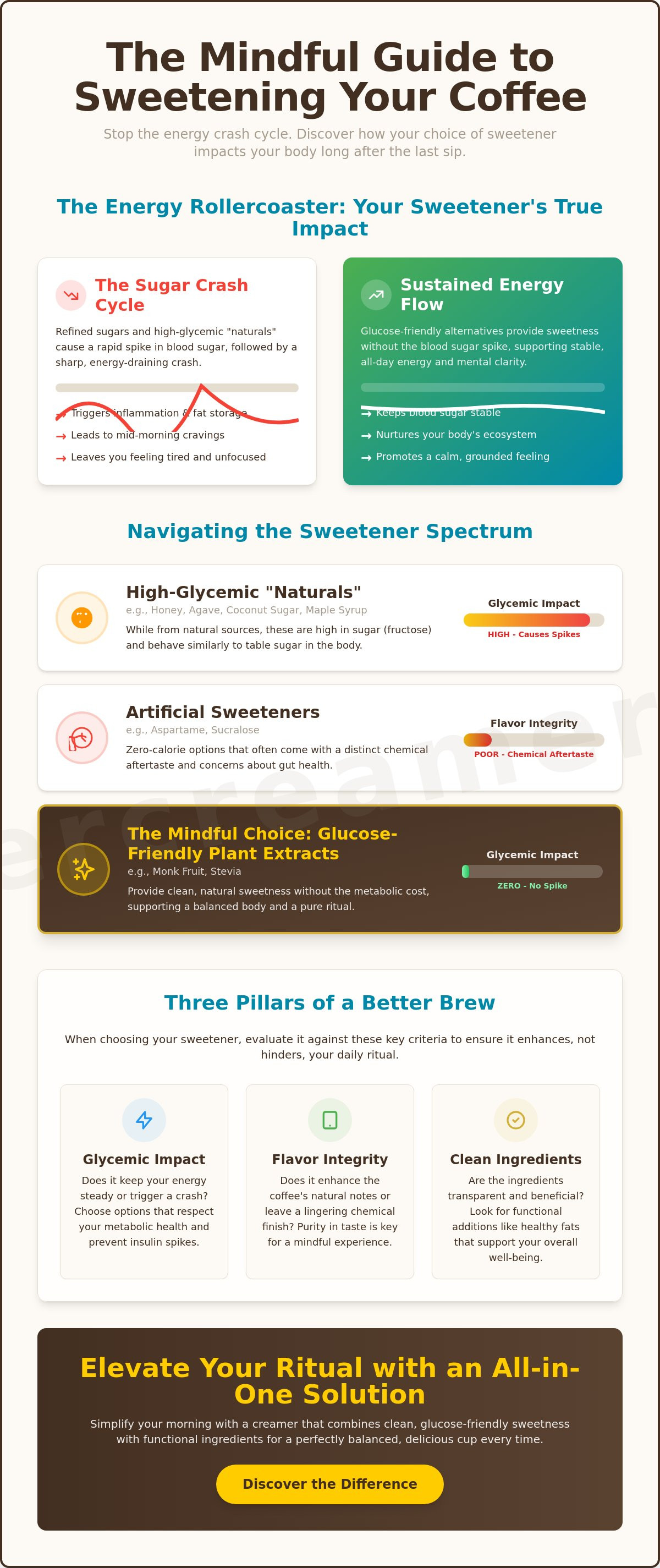
Every sip sends a signal to your pancreas. Traditional sugars cause a sharp insulin spike, which leads to fat storage and that dreaded crash. When asking what sweetener is best for coffee, you must look at the glycemic response. There is a vital difference between 'sugar-free' and 'glucose-friendly.' A glucose-friendly option keeps your blood sugar stable. It prevents the roller coaster. We often see this issue with liquid syrups. They are too easy to over-pour, leading to accidental over-consumption. Powdered options with clean ingredients offer more control and transparency.
The Psychology of the Morning Ritual
Coffee is a sensory experience. The aroma, the heat, and the texture all play a part. When you find the right level of sweetness, you aren't just masking bitterness; you are enhancing a ritual. Sourcing high-quality beans from Caffeine Lab ensures your foundation is pure, allowing the subtle notes of the coffee to shine through. A mindful morning sets the tone for a mindful day. Does your coffee make you feel anxious or grounded? The right sweetness level engages the senses without overwhelming them. Purity in your cup leads to clarity in your mind.
Natural vs. Artificial: Navigating the Sweetener Spectrum
Choosing the right way to sweeten your cup can feel like a balancing act. On one side, you have the comforting label of 'natural.' On the other, the zero-calorie promise of 'artificial.' But labels can be deceiving. When you search for what sweetener is best for coffee, you are often met with conflicting advice. Some suggest honey, while others warn of chemicals. The truth lies in how these ingredients interact with your biology. It is about transparency. It is about how you feel long after the coffee is gone. Purity matters.
The 'natural' trap is a common hurdle. We see honey or maple syrup and assume they are healthy choices because they come from the earth. While they offer trace minerals, they are fundamentally high in sugar. They spike your glucose. This stalls progress and leads to that familiar heavy feeling by mid-morning. On the opposite end, artificial options like aspartame often leave a metallic aftertaste. They feel clinical. They don't belong in a mindful ritual. Understanding the Facts About Sugar and Sugar Substitutes helps us find a better way. Modern plant-based alternatives offer a middle ground. They provide clean sweetness without the metabolic cost.
When comparing your options, consider these three pillars of a better brew:
- Solubility: How well the powder disappears into your roast without leaving grit.
- Glycemic Impact: Whether the ingredient keeps your energy steady or triggers a crash.
- Flavor Integrity: If the sweetener enhances the coffee or leaves a chemical finish.
The High-Glycemic Naturals
Coconut sugar, honey, and agave are often praised as better alternatives. They are. For baking. But for a daily coffee habit? They are less ideal. These options are high in fructose, which can tax your liver over time. They don't disappear into your brew as easily as you'd think, often leaving a thick, sugary residue at the bottom of the cup. Your ritual deserves better than a sugar-heavy start. Efficiency is key.
The Modern Plant-Based Leaders
Stevia has become a powerhouse for a reason. It is zero-calorie and derived from a leaf. It is pure. Then there is Monk Fruit. It is quickly becoming the gold standard for clean labels because of its round, natural flavor profile. Some also enjoy erythritol, a sugar alcohol that provides bulk without the carbs. Finding a sugar free coffee creamer that uses these plant-based leaders can simplify your morning significantly. It offers the sweetness you crave with the stability your body needs.
Solubility is the final test. A sweetener that clumps ruins the texture of a perfect roast. Clean, plant-based powders often dissolve the best, ensuring every sip is consistent. When deciding what sweetener is best for coffee, look for options that prioritize solubility alongside metabolic health. Consistency is the goal. Balanced. Intentional. Perfect.
Functional Sweeteners: Boosting Your Coffee’s Potential
What if your sweetener did more than just taste good? We are moving beyond the basic goal of hiding bitterness. When you ask what sweetener is best for coffee, the answer often involves ingredients that support your body's performance. It is about a holistic approach. It is about adding, not just subtracting. Adding healthy fats or warm spices can actually change how your brain perceives flavor. This allows you to use less sugar while feeling more satisfied. It is a smarter way to sip.
While some people stick to synthetic drops, recent research into a potential link between artificial sweeteners and cardiovascular health has many people looking for functional, whole-food alternatives. Purity is the new priority. You deserve to feel confident about every ingredient in your cup. Your ritual should serve your long-term well-being.
MCT Oil and Cognitive Focus
Caffeine and healthy fats are a powerful duo. When you add MCT oil to your brew, you are providing your brain with a clean source of fuel that slows the absorption of caffeine. This results in a steady, focused energy rather than a jittery peak. You feel sharp. You feel capable. MCT oil acts as a metabolic bridge in a keto coffee ritual by providing immediate energy from healthy fats without triggering an insulin response. It creates a velvety texture that naturally rounds out the flavor of the bean. This richness reduces the psychological need for intense sweetness. It is a gentle, sustained lift.
The Flavor-Enhancing Power of Spices
Spices are nature's way of tricking the palate. Cinnamon is a favorite for a reason. It doesn't just add warmth; it helps with blood sugar regulation, making it a perfect partner for your morning cup. Finding what sweetener is best for coffee often means looking in your spice cabinet rather than the baking aisle. Layering flavors like real vanilla bean or a pinch of sea salt can reduce your dependency on intense sweeteners. Choosing clean label ingredients ensures you aren't accidentally adding hidden fillers. Vanilla bean provides a floral sweetness that vanilla extract sometimes lacks. It is authentic. It is pure.
Texture plays a massive role in how we experience sweetness. A thin, watery coffee often needs more sugar to feel satisfying. A creamy, rich texture provides a sense of indulgence that signals the brain to be content with less. It is about the physical sensation of satisfaction. You finish your cup feeling nourished, not just caffeinated. This is the power of functional ingredients. They turn a simple drink into a meaningful practice.
How to Choose: A Guide Based on Your Dietary Goals
Your dietary journey is personal. Whether you are counting macros or managing blood sugar, your morning cup must align with your destination. When you ask what sweetener is best for coffee, the answer depends entirely on your goals for the day ahead. It is about more than just calories. It is about how you feel during your 10 AM meeting. Stability is the priority. A mindful choice now prevents a physical struggle later. It is a simple act of self-care.
For those on a ketogenic path, the goal is metabolic efficiency. You need zero-carb plant extracts that don't trigger an insulin response. But you also need satiety. Healthy fats provide a sense of fullness that plain stevia cannot match. It is a more complete experience. If your focus is glucose management, low-GI is your North Star. You want ingredients that keep your blood sugar in a narrow, healthy range. For weight management, the 'after-feeling' is everything. If your sweetener leaves you hungry an hour later, it isn't serving you. Vegan and plant-based drinkers need to ensure their choices are ethically sourced and truly dairy-free. Transparency matters. To find a blend that matches these high standards, explore our clean label coffee creamers designed for balanced living.
Keto and Low-Carb Essentials
Hidden ingredients can stall your progress. Many powdered sweeteners use maltodextrin as a bulking agent. This is a red flag. It often has a higher glycemic index than table sugar. Focus on net carbs instead. Powdered formats are often superior for those with busy lives. They are stable. They travel well. You can maintain your ritual at the office or on the road without compromise. It is simple. It is effective.
Reading the Labels Like a Pro
Do you know what is actually in your pantry? A clean label is a short label. Avoid fillers like soy or casein if you are looking for a pure, plant-based experience. Sourcing transparency is a sign of quality. Look for brands that are open about where their ingredients come from. What sweetener is best for coffee? The one that doesn't require a chemistry degree to understand. Check for 'no artificial ingredients' and 'no fillers' on the packaging. Your body will thank you for the intentionality. Purity is a choice you make every morning.
Elevating Your Ritual with Leaner Creamer
Morning routines should be simple. They should feel effortless. Why juggle multiple bottles, bags, and jars when you can find everything you need in one place? Most people treat flavor and creaminess as two separate problems to solve. They search for what sweetener is best for coffee while also looking for a dairy-free milk alternative. This creates a cluttered pantry and a complicated start to the day. Leaner Creamer changes that. We've created an all-in-one solution that simplifies your morning without sacrificing your health. Efficiency meets indulgence. It's a mindful upgrade.
Our glucose-friendly formula provides built-in sweetness. It's a gentle, rounded flavor that respects your body's equilibrium. This all-in-one approach answers the question of what sweetener is best for coffee by combining flavor, functionality, and ease into a single scoop. We use coconut oil and MCTs to provide that velvety texture you love. We also include functional herbs to support your daily performance. It's more than a creamer. It's a wellness tool. Since it's a powdered formula, there's no need for refrigeration. No mess. No fillers. Just clean ingredients that travel wherever you go. Stability achieved.
A Sensation That Lasts
How do you feel two hours after your last sip? That is the true test of quality. Many products focus on the immediate taste but ignore the physical toll they take later. Leaner Creamer is different. Our commitment to being dairy-free, gluten-free, and sugar-free means you can enjoy your ritual without the fear of a mid-morning crash. There are no jitters. There is no heavy, sluggish feeling. You feel sustained. You feel balanced. This focus on your long-term physical state is what makes our process unique. Learn more about our clean-label ingredients and how they serve your body's natural rhythm.
Finding Your Perfect Flavor
Healthy habits don't have to be boring. You can enjoy the richness of Italian Sweet Cream or the warmth of Salted Caramel without the guilt. Transitioning from high-sugar, liquid creamers to a cleaner routine is easier than you think. It starts with one small choice. By replacing refined sugars with our functional, plant-based sweetness, you're choosing a lifestyle that prioritizes well-being. It is a manageable improvement that makes a massive difference in how you experience your day. Are you ready to transform your morning? Explore our newest glucose-friendly flavors and find your new favorite way to wake up. Purity in every cup.
Embrace a Balanced Morning Ritual
Your morning cup is a sacred moment. It should leave you feeling energized and grounded, not searching for a snack an hour later. We've explored how plant-based extracts and functional fats can transform your daily experience. By choosing low-GI alternatives over high-sugar natural syrups, you protect your metabolic health. You maintain your equilibrium. When deciding what sweetener is best for coffee, remember that the answer is found in ingredients that support your body long after the caffeine fades. Purity is the ultimate goal. It's an act of care.
Join over 20,000+ happy coffee lovers who have already simplified their daily routine with a smarter way to sip. Our glucose-friendly powdered formulas are Keto-certified and Vegan-friendly, ensuring that every sip aligns perfectly with your wellness journey. It's time to move away from the sugar crash and toward a more intentional practice. Start your clean coffee ritual today with Leaner Creamer. Your body deserves to feel good. Every single morning. You've got this.
Frequently Asked Questions
Is Stevia really the best sweetener for coffee?
Stevia is a top choice for those seeking zero-calorie, plant-derived sweetness that won't impact blood sugar levels. It is refined from the leaves of the Stevia rebaudiana plant. While it is excellent for glucose stability, some people find it has a slight licorice finish. Choosing high-purity extracts often provides the cleanest experience for your morning ritual. Purity matters.
Does adding honey to coffee spike blood sugar?
Yes, honey will cause a significant insulin response because it is composed of approximately 80 percent sugar. While it is a natural option, its high fructose and glucose content can lead to the mid-morning energy crash many try to avoid. It is a wonderful ingredient for occasional use. However, it is less ideal for a daily habit focused on metabolic equilibrium.
What sweetener has the least aftertaste?
Monk fruit is widely regarded as having the most natural flavor profile with the least amount of lingering aftertaste. It provides a rounded sweetness that doesn't leave the metallic or bitter finish often associated with synthetic drops. It is frequently the answer when people ask what sweetener is best for coffee for a seamless transition from white sugar. It feels authentic.
Can I use monk fruit in my coffee every day?
Yes, monk fruit is safe for daily use and is recognized as a stable, heat-resistant sweetener. It allows you to maintain your sweet coffee ritual without the inflammatory cost of refined sugars. It fits perfectly into a mindful lifestyle. You can enjoy your cup every morning knowing you are protecting your long-term physical well-being. Stability is a choice.
What is the healthiest way to sweeten coffee while on Keto?
The healthiest keto approach involves combining zero-carb plant extracts with healthy functional fats like MCT oil. This pairing provides the sweetness you crave while the fats offer sustained satiety. It keeps you in ketosis and prevents the jitters. You finish your cup feeling fueled and focused. It is a smarter way to support your body's performance.
Why does my coffee taste bitter with sugar-free sweeteners?
Bitterness usually occurs when high-intensity sweeteners are used in excess or when the extraction process is less refined. Certain plant compounds can trigger bitter receptors if the balance isn't exactly right. Finding a pre-mixed, clean-label creamer often solves this problem. It ensures the ratio is perfect every time. Indulgence should never feel like a compromise.
Is coconut sugar better for you than white sugar in coffee?
Coconut sugar contains trace minerals and has a slightly lower glycemic index, but it is still fundamentally a sugar that impacts glucose. It will still trigger an insulin response. For those searching for what sweetener is best for coffee to maintain steady energy, plant-based leaders like monk fruit are more effective. Transparency in your ingredients leads to better results.
How can I sweeten my coffee without using any sugar at all?
You can use warm spices like cinnamon, pure vanilla bean, or a pinch of sea salt to naturally enhance the flavor of your roast. These ingredients trick the palate into sensing sweetness without any glucose impact. Adding a rich, creamy texture also signals satisfaction to the brain. It is a simple, intentional way to elevate your daily practice. Pure. Balanced. Grounded.


