


What if your morning ritual is quietly sabotaging your energy before the day even begins? You've likely found yourself asking, is maltodextrin bad in creamer, especially when that "healthy" splash of flavor leads to an unexpected afternoon slump. It's a common frustration for anyone trying to stay in ketosis or simply maintain stable energy levels throughout the morning. You want to trust your ingredients. You deserve to feel vibrant.
We understand that reading labels shouldn't feel like a complex chemistry experiment. With 42% of shoppers now actively avoiding artificial additives and fillers, your skepticism is well-founded. As of February 2026, the FDA is even re-evaluating the safety status of maltodextrin following increased scrutiny of ultra-processed foods. This common filler often acts as a glycemic disruptor, causing blood sugar spikes that can quickly derail your wellness goals.
Discover why this additive might be disrupting your progress and how to choose a cleaner, glucose-friendly alternative for your daily cup. We'll explore the latest 2026 regulatory shifts and provide a clear path toward a clean-label routine that supports your body. It's time to feel good about your coffee again. Pure. Simple. Intentional.
Key Takeaways
- Understand why a glycemic index of 106-136 makes this common filler more disruptive to your blood sugar than standard table sugar.
- Get the facts on why is maltodextrin bad in creamer and how it might be the hidden source of your afternoon energy crashes.
- Learn to spot the "2-gram rule" and identify industrial fillers that often hide behind misleading "zero sugar" labels.
- Reclaim your morning with a clean-label routine that focuses on how you feel long after the last sip.
Understanding Maltodextrin: The Invisible Filler in Your Coffee
Have you ever wondered why your powdered creamer stays so perfectly light and clump-free? It's often thanks to a silent partner called maltodextrin. While it helps the powder flow smoothly into your cup, it raises a vital question for your morning routine: is maltodextrin bad in creamer for your long-term wellness? This highly processed polysaccharide is a staple in the food industry. It's used primarily to improve texture and extend shelf life. Efficient. Functional. But at what cost?
To truly understand its impact, we first need to look at What is Maltodextrin. It's essentially a starch that has undergone partial hydrolysis, a process that breaks down the molecular bonds using water, enzymes, or acids. This creates a substance that technically qualifies as a complex carbohydrate on a label but behaves almost exactly like sugar once it enters your system. It's the ultimate "stealth" ingredient.
To better understand how this filler affects your body, watch this helpful breakdown:
What is Maltodextrin Exactly?
It starts as a starch, usually derived from corn, rice, or potato. Through the hydrolysis process, it's converted into a fine, white powder that dissolves instantly. Manufacturers love it because it's virtually tasteless. It's an "invisible" additive. It carries flavors and thickens liquids without changing the profile of your favorite roast. This neutrality is exactly why it's so easy to overlook when you're scanning a list of ingredients. You don't taste it, but your body certainly feels it.
Why Manufacturers Love It (And Your Body Doesn’t)
Why is it so prevalent? Cost. Starch fillers are significantly cheaper than high-quality fats like coconut oil or MCTs. In the world of powdered products, it solves the "powder problem." It keeps the creamer shelf-stable and prevents clumping. Efficient. Profitable. When asking is maltodextrin bad in creamer, one must look at the trade-off. You're trading ingredient integrity for a slightly better pour. This manufacturing convenience often comes at the expense of your metabolic equilibrium. It's a shortcut that doesn't serve your health goals.
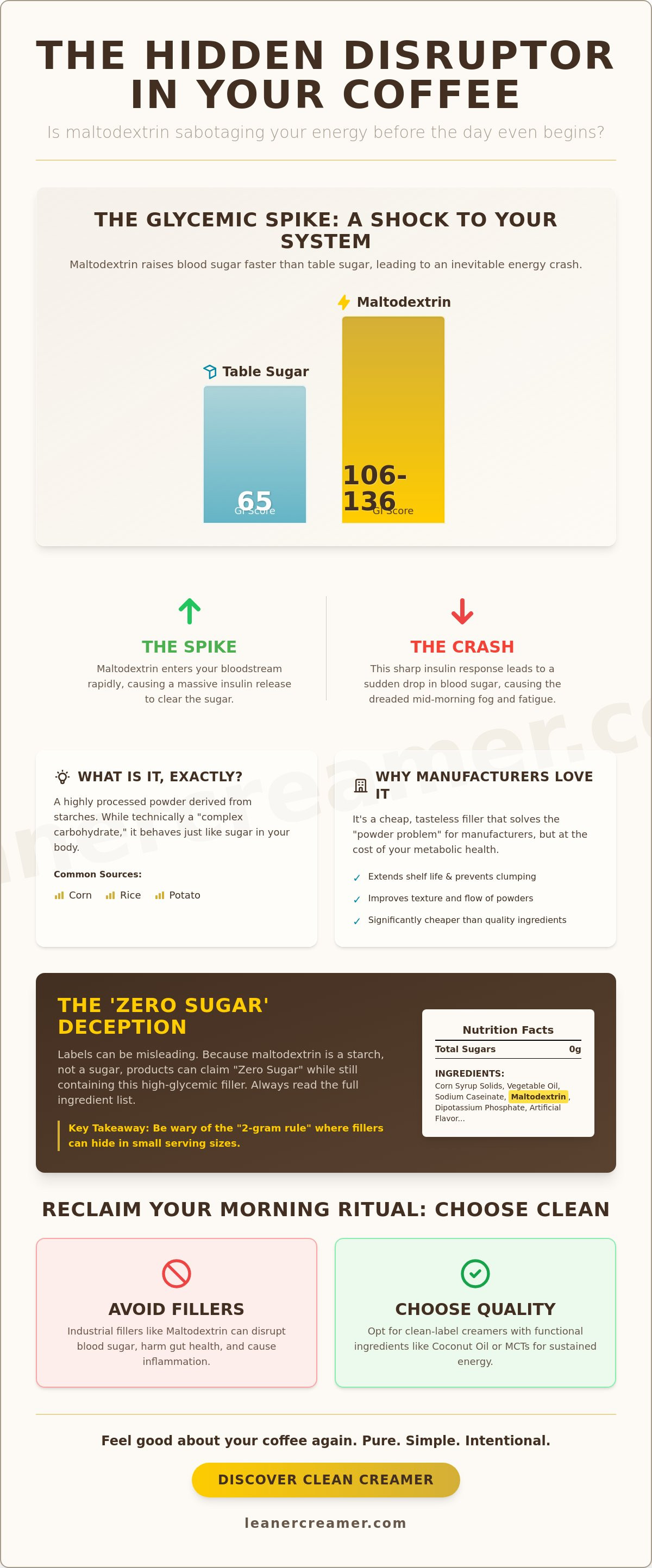
There's also a significant transparency gap to consider. Because maltodextrin is technically a starch, products can be labeled "sugar-free" while still containing this high-glycemic filler. It's a loophole that leaves many health-conscious drinkers feeling confused. You think you're making a mindful choice. In reality, you're consuming a substance that can spike your glucose just as quickly as table sugar. Confusing. Frustrating. Unnecessary. Your morning ritual deserves better than hidden fillers.
The Glycemic Spike: Why Maltodextrin Disrupts Your Morning Energy
Why does your morning coffee stop working by 10 AM? You feel that familiar heaviness. The focus fades. The mental fog rolls in. While you might blame the caffeine wearing off, the true culprit is often a metabolic roller coaster. When people ask, is maltodextrin bad in creamer, the answer lies in how your body handles the sudden influx of this high-glycemic filler. It isn't just a thickener. It's a metabolic disruptor that turns your peaceful morning ritual into a series of energy peaks and valleys.
The core of the problem is the Glycemic Index (GI). This scale measures how quickly a food raises your blood sugar. While table sugar has a GI of 65, maltodextrin scores significantly higher. According to a U.S. National Institutes of Health review, this substance can reach a GI of 136. This means it enters your bloodstream faster than pure glucose. It's a shock to your system. Your body responds with a massive insulin spike to clear the sugar, leading to that inevitable mid-morning crash. You aren't tired; you're recovering from a glucose surge.
Maltodextrin vs. Table Sugar: The GI Breakdown
Understanding these numbers is essential for anyone tracking their metabolic health. Many products marketed as "sugar-free" rely on maltodextrin to provide bulk and sweetness. It's a hidden sugar effect that bypasses traditional labeling. You think you're avoiding the sweet stuff, but your blood sugar tells a different story. Fast absorption leads to fast crashes. Consistent. Predictable. Exhausting.
| Substance | Glycemic Index (GI) |
|---|---|
| Maltodextrin | 106 - 136 |
| Pure Glucose | 100 |
| Table Sugar | 65 |
Impact on Ketosis and Fat Burning
If you're following a ketogenic lifestyle, even small amounts of this filler can be problematic. When insulin levels rise, your body receives a clear signal: stop burning fat and start storing energy. This effectively kicks you out of ketosis. The insulin ceiling represents the threshold where elevated insulin levels actively block the body from accessing stored fat for energy. Choosing a glucose-friendly coffee creamer is about more than just flavor. It's about maintaining that steady, fat-burning state that keeps you energized and focused all day long. No crashes. Just equilibrium.
This spike also influences weight management. High insulin levels signal your body to store calories as fat rather than utilizing them for fuel. It's a physiological barrier to your goals. You deserve a morning routine that works with your body, not against it. By choosing ingredients that respect your blood sugar, you reclaim your energy and your results. Transparent. Mindful. Effective.
Beyond Blood Sugar: Gut Health and the Inflammation Connection
While the energy crash is the most immediate sign of a filler-heavy morning, the story doesn't end with your blood sugar. Have you ever finished your coffee only to feel a strange, lingering heaviness in your stomach? That subtle bloat or digestive "noise" isn't just in your head. When we ask, is maltodextrin bad in creamer, we must look deeper than the glycemic response. We must look at the gut. This is where your long-term wellness and daily comfort are truly decided. Your morning cup should be a moment of ease, not the start of internal friction.
Your digestive system is a delicate ecosystem. It thrives on balance. When you introduce highly processed starches like maltodextrin, you're essentially changing the environment of your microbiome. Research has explored the impact on blood sugar and gut bacteria, suggesting that these additives can shift the balance toward harmful strains. It's about how you feel today, but also how your body functions tomorrow. A healthy gut is the foundation of a clear mind and a resilient body.
Maltodextrin and the Gut Microbiome
The microbiome disruption is a quiet but significant concern. Studies suggest that maltodextrin can suppress the growth of beneficial probiotics like Bifidobacteria. These are the "good guys" that support your immunity and even your mental clarity. At the same time, this starch may enhance the survival of less desirable bacteria. For some individuals, this imbalance leads to increased intestinal permeability, often called "leaky gut." It's an inflammatory response that can leave you feeling drained and sensitive. Choosing clean label ingredients ensures you're supporting your internal ecosystem with every sip.
Addressing Bloating and Digestive Discomfort
Do you feel "heavy" after your first cup? Many people mistake this for a caffeine sensitivity. In reality, it's often the starch-based additives causing the trouble. When considering is maltodextrin bad in creamer, the physical sensation of bloating is a major red flag. Plant-based purity offers a different experience. Unlike fillers that ferment in the gut and cause gas, natural ingredients move through your system with ease. You deserve to feel light. You deserve to feel focused. Try tracking your physical sensations for the next three mornings. Notice the difference when you remove the industrial fillers.
- Is there a lingering discomfort?
- Do you feel a sense of internal "pressure"?
- How is your mental focus two hours later?
Listening to these signals is the first step toward a more mindful ritual. It's not just about the coffee. It's about the lasting physical sensation of feeling good. Pure ingredients lead to a pure experience. No noise. Just wellness.
Reading the Label: How to Identify and Avoid Hidden Fillers
Don't let the front of the package decide your health goals for you. Marketing terms like "natural" or "healthy" are often used to mask industrial shortcuts. When you're trying to determine if is maltodextrin bad in creamer for your specific routine, you have to look past the bold claims and dive into the fine print. It's a pseudonym game. Manufacturers frequently use different names to keep you from noticing the same high-glycemic fillers that lead to energy crashes and gut discomfort. You deserve transparency. You deserve to know exactly what's fueling your morning.
Common Names for Hidden Starches
Identifying these additives takes only a few seconds once you know what to look for. While "maltodextrin" is the most common term, it often hides behind other technical names. These ingredients are used to provide bulk and shelf-stability, but they offer zero nutritional value. Scan your nutrition labels for these specific terms:
- Dextrin or Maltodextrin: The most common high-GI starch.
- Modified Food Starch: A chemically altered thickener.
- Glucose Solids: Essentially sugar in a powdered form.
- Corn Syrup Solids: A highly processed filler that spikes blood sugar quickly.
Watch out for the "zero sugar" trap. Under current labeling laws, a product can claim zero grams of sugar while still containing maltodextrin. Because it's technically a starch, it doesn't count toward the sugar total on the label. However, as we've discussed, its glycemic impact is often higher than table sugar. If a creamer has one or two grams of total carbohydrates and lists these starches, it's not truly glucose-friendly. It's a hidden spike in disguise.
Better-for-You Alternatives
A clean-label coffee routine focuses on purity and lasting physical sensations. Instead of chemical fillers, look for creamers that utilize functional fats. Ingredients like coconut oil and MCTs provide a rich, creamy texture while offering a steady source of energy. They don't cause the same insulin response as starch-based additives. You'll feel focused and light, rather than heavy and drained. For a masterclass in what a transparent label looks like, you can explore the Leaner Creamer ingredients page.
True purity markers include natural flavor carriers and ingredients that support your mental state, such as L-Theanine. This amino acid works in harmony with caffeine to provide a calm, centered focus. No jitters. No crashes. By choosing a no maltodextrin flavored coffee creamer, you're making a manageable improvement to an existing habit that serves your body well. It's about reclaiming your ritual. One mindful choice at a time.
Reclaiming Your Ritual: The Benefits of a Maltodextrin-Free Creamer
Imagine finishing your favorite mug and feeling nothing but clarity. No heavy stomach. No looming anxiety about the 10 AM crash. When we explore the question, is maltodextrin bad in creamer, we are really asking if our daily habits are serving our long-term vitality. Transitioning to a filler-free routine isn't just about avoiding a specific starch. It's about reclaiming a moment of peace. Your morning coffee should be a catalyst for your best self, not a metabolic hurdle you have to clear before noon. Pure. Simple. Effective.
Choosing a cleaner path allows you to experience the true physical sensation of purity. Instead of the "noise" created by industrial additives, your body receives clean fuel that respects your equilibrium. This shift transforms your morning from a functional act of caffeine consumption into a meaningful daily practice. You deserve to feel vibrant, not just during the first sip, but throughout the hours that follow.
Consistent Energy Without the Crash
The most immediate benefit of removing maltodextrin is the elimination of the blood sugar roller coaster. As we noted in previous sections, the high glycemic impact of starch fillers triggers a sharp insulin response. By contrast, a creamer formulated with functional fats provides sustained focus. You feel a steady, calm energy that carries you through your morning meetings without the jittery peak or the sudden valley. For more tips on creating a balanced morning, explore The Ultimate Guide to Glucose Friendly Coffee Creamers. This stable state is the foundation of a productive day.
The Leaner Creamer Difference
At Leaner Creamer, our commitment to your wellness starts with ingredient integrity. We've replaced corn-based fillers and hidden starches with a thoughtful blend of coconut oil and functional herbs. This isn't just about what we leave out; it's about what we put in to support your holistic care. We believe that is maltodextrin bad in creamer because it prioritizes manufacturing convenience over your physical well-being. Our philosophy is different. We focus on how you feel long after your cup is empty. Intentionally crafted. Reassuringly clean.
This commitment to transparency means you can trust every scoop to align with your health goals, whether you're staying in ketosis or simply seeking a more mindful lifestyle. It's a small, manageable improvement to an existing habit that yields significant results for your energy and gut health. Ready to elevate your morning? Shop the Maltodextrin-Free Collection and discover the lasting difference of a clean-label routine. Your body will thank you. Equilibrium. Found.
Elevate Your Daily Ritual
Choosing what fuels your morning is an act of self-care. You've seen how hidden starches can disrupt your metabolic balance and cloud your mental clarity. While asking is maltodextrin bad in creamer is the first step, the real goal is finding a routine that makes you feel incredible hours after your last sip. You deserve a morning that feels light, focused, and intentional. No more spikes. No more crashes. Just equilibrium.
True wellness is built on transparency and ingredient integrity. By opting for a clean label, you support your gut health and maintain steady energy levels throughout the day. It's a small change with lasting physical rewards. Our coconut oil based blends are specifically designed to provide sustained fuel without the industrial fillers that hold you back. They are glucose-friendly, Keto-certified, and completely free from maltodextrin, soy, and dairy. Pure ingredients. Real results.
Experience the difference of a maltodextrin-free morning ritual at Leaner Creamer. Reclaim your energy and trust your ingredients once again. Your best self is waiting for that first mindful cup. You've got this.
Common Questions About Maltodextrin in Your Coffee
Is maltodextrin considered an artificial sweetener?
No, maltodextrin is not an artificial sweetener; it is a highly processed carbohydrate derived from starch. While it provides bulk and texture to powdered products, it lacks the intense sweetness of substances like stevia or sucralose. It technically qualifies as a complex carb, though it behaves like a simple sugar once digested. This distinction is why it often hides on labels without being listed as an added sugar on the nutrition panel.
Why is maltodextrin in coffee creamer if it has such a high glycemic index?
Manufacturers prioritize maltodextrin because it is an inexpensive bulking agent that prevents clumping in powdered products. It ensures the creamer flows smoothly and remains shelf-stable for longer periods. Unfortunately, this manufacturing convenience often outweighs the health impact of its high glycemic index. When asking is maltodextrin bad in creamer, it's clear the industry choice serves the supply chain rather than your metabolic stability. It's a shortcut that doesn't serve you.
Can maltodextrin kick you out of ketosis?
Yes, maltodextrin can disrupt ketosis by triggering a significant insulin spike. Since insulin is the body's storage hormone, its presence signals your system to stop burning fat and start utilizing glucose. Even small amounts found in "keto-friendly" creamers can raise your blood sugar enough to stall your progress. Maintaining a fasted state or nutritional ketosis requires avoiding these hidden glycemic disruptors entirely. Choose a keto coffee creamer that relies on functional fats instead.
Is maltodextrin safe for people with Type 2 diabetes?
People managing Type 2 diabetes should exercise caution with maltodextrin due to its glycemic index of 106 to 136. It raises blood sugar faster than table sugar, which can lead to rapid glucose spikes. While the FDA currently classifies it as safe for general consumption, its metabolic impact makes it a poor choice for those with insulin resistance. It's always best to check with your healthcare provider before introducing it into your daily routine.
How can I tell if my creamer has maltodextrin if it says "Sugar-Free"?
You must look beyond the "Sugar-Free" claim and scan the ingredient list for terms like dextrin, glucose solids, or modified starch. Under current labeling laws, maltodextrin is categorized as a carbohydrate rather than a sugar. This allows brands to market products as sugar-free even when they contain high-glycemic fillers. A truly clean label will be transparent about its base ingredients, focusing on healthy fats rather than processed starches. Awareness is your best tool.
What are the best maltodextrin-free coffee creamer alternatives?
The best alternatives utilize healthy fats like coconut oil or MCT oil to provide a rich, creamy texture without the glucose spike. These functional ingredients offer sustained energy and support your metabolic health. Look for options that prioritize transparency and include wellness-focused additives like L-Theanine. Choosing a powdered coffee creamer no fillers ensures your morning ritual remains supportive of your long-term wellness goals. It's a simple swap for a better feeling.
Does maltodextrin cause inflammation or bloating?
Maltodextrin can contribute to inflammation and bloating by altering the balance of your gut microbiome. It often suppresses beneficial bacteria while encouraging the growth of harmful strains, which can lead to digestive discomfort. If you feel "heavy" or bloated after your coffee, it's a sign that these fillers are causing internal friction. Removing them allows your digestive system to return to a state of ease. Your body knows the difference between purity and processing.


