


Does your morning coffee leave you feeling truly nourished, or just temporarily caffeinated? Many of us have made the switch to plant based alternatives to avoid the bloating that comes with dairy. Yet, the choice between coconut creamer vs almond creamer often feels like a gamble between a watery texture and hidden additives. It's frustrating when a ritual meant to center you ends in a mid-morning crash. We understand that frustration. You want a creamy experience that respects your body. Pure ingredients. Real energy. No compromises.
Finding the right match is about more than just flavor; it's about how you feel an hour after that last sip. This guide explores the nutritional differences, flavor profiles, and wellness benefits of both coconut and almond options. We'll look at everything from healthy fat content to clean label integrity. By the end, you'll know exactly which choice offers the sustained energy and smooth finish your morning deserves. You deserve a coffee routine that serves your health as much as your taste buds. Let's find your perfect match.
Key Takeaways
- Understand the sensory differences between the velvety richness of coconut and the light, nutty profile of almond.
- Discover why the metabolic benefits of MCTs make the choice between coconut creamer vs almond creamer essential for keto and paleo lifestyles.
- Learn how to identify hidden sugars and artificial fillers that can compromise your daily wellness goals.
- Identify why a clean label blend avoids the curdling and watery texture common in many single-source plant creamers.
- Master the art of creating a coffee-shop quality latte at home that supports sustained energy without the crash.
What Is Coconut Creamer vs Almond Creamer?
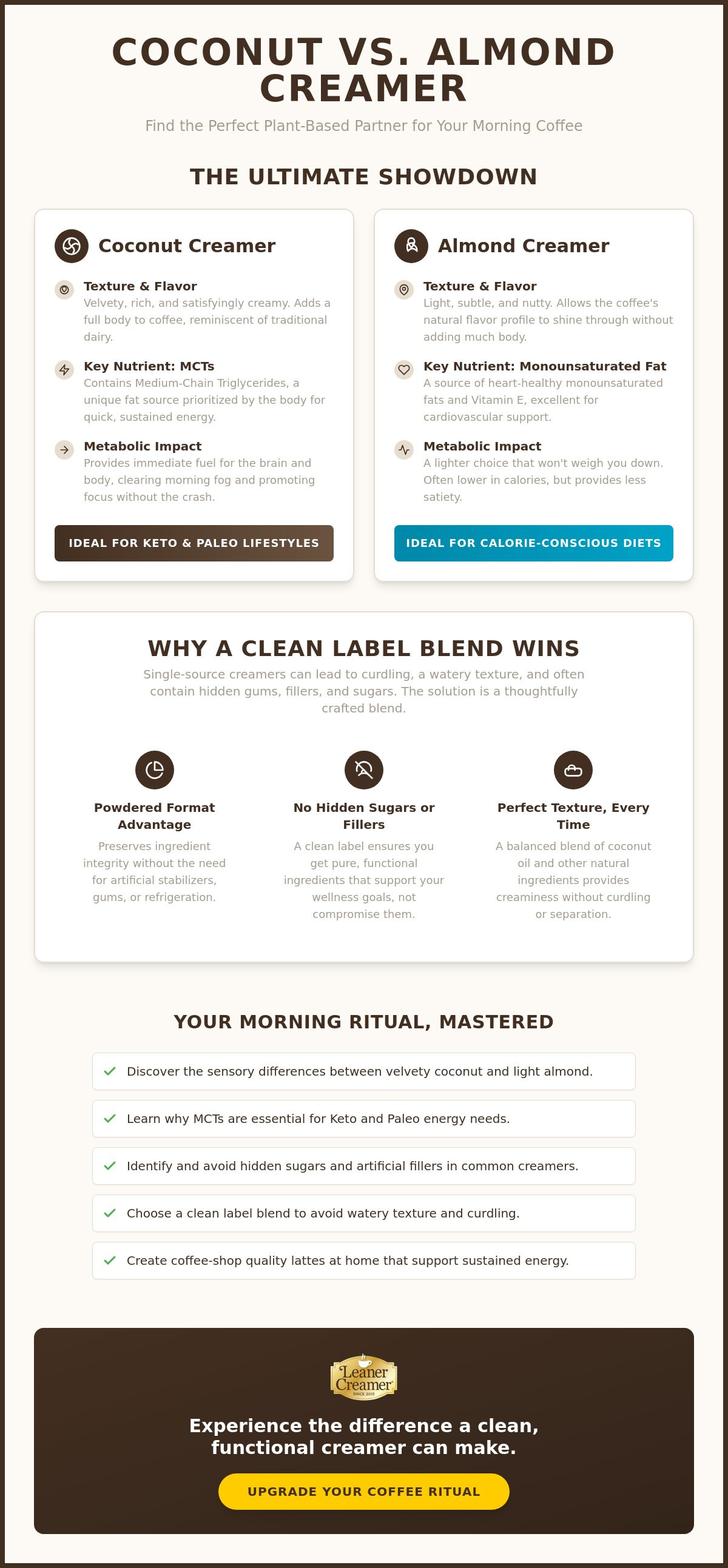
Choosing between coconut creamer vs almond creamer isn't just a matter of taste. It's a choice about how you want to feel. Coconut creamer is a rich, fat-dense option derived from the meat of mature coconuts. It offers a natural, velvety weight that many former dairy drinkers miss. It's satisfying. Almond creamer is the lighter, nutty cousin. It's made from soaked and blended almonds. It's thinner. More subtle. It lets the coffee's acidity shine through without adding much body.
The shift away from dairy is a global movement toward better digestion. People want to avoid the heavy, sluggish feeling that often follows a standard latte. Incorporating Plant milk alternatives into your coffee is a small, manageable improvement to an existing habit. The core difference is the fat profile. Coconut is high in saturated fats, specifically Medium Chain Triglycerides (MCTs). Almond is rich in monounsaturated fats. One provides sustained fuel; the other provides a light, heart-healthy touch.
To better understand this concept, watch this helpful video:
The Rise of Plant-Based Coffee Rituals
Modern coffee drinkers are prioritizing cleaner energy. It's a movement toward mindfulness. When you choose a plant-based fat, you're choosing how that energy is released into your system. Coconut fats provide a steady, reliable burn. Almond offers a crisp finish that won't weigh you down. These rituals aren't just about the caffeine hit. They're about the equilibrium of your morning. Your coffee should be a tool for wellness. It should ground you. Choosing the right fat source is the first step in that journey.
Defining the Modern Creamer Format
The format of your creamer is just as important as the base ingredient. Liquid creamers often require stabilizers and gums to prevent separation. They can feel heavy or even oily. Powdered formats are different. They preserve the integrity of the ingredients without the need for refrigeration or heavy processing. At Leaner Creamer, we choose powdered formats to ensure every scoop is pure. We believe in clean label integrity. By utilizing coconut oil as a base, we provide a functional boost that liquid almond alternatives often miss. It's about finding the ultimate balance in the coconut creamer vs almond creamer debate. You want the richness of coconut with the clean finish of a well-crafted blend. No curdling. No crash. Just pure, intentional energy.
Nutritional Breakdown: Coconut vs. Almond
When you look at the back of a label, what are you actually searching for? For many, it's a balance between flavor and functional fuel. The choice between coconut creamer vs almond creamer often comes down to how your body processes different types of fats and nutrients. While calories tell part of the story, the way those calories make you feel throughout the morning is what truly matters for a sustainable routine. A nutritional comparison of plant-based milks shows that while these two options share a dairy-free origin, their impact on your metabolism is quite distinct.
The Power of Coconut and MCTs
Coconut-based options are prized for their density and satiety. They contain Medium Chain Triglycerides, or MCTs. MCTs are a metabolic shortcut for energy that the body prioritizes for immediate use rather than storage. This means the fats in coconut don't just sit heavily in your stomach. They move. They provide immediate fuel for the brain, helping you clear that early morning fog. Beyond the fats, coconut is a natural source of electrolytes like potassium, which can help maintain hydration levels as the caffeine begins to work. It's a choice that prioritizes feeling full and focused until lunch.
The Lightness of Almond-Based Options
Almond is often the first choice for those watching their daily caloric intake. It's naturally light. It's subtle. Because it's made from heart-healthy nuts, it brings a dose of Vitamin E and monounsaturated fats to your cup. These fats are excellent for cardiovascular support. However, there's a trade-off. Many commercial almond liquids can feel watery in hot coffee, leading manufacturers to add thickeners or gums to mimic the mouthfeel of dairy. If you prefer a coffee that feels "clean" and doesn't linger on the palate, almond is a strong contender. Just be mindful of the ingredient list to ensure that lightness doesn't come at the cost of purity.
We also need to consider the glycemic impact of your morning cup. A label that says "sugar-free" isn't always the same as one that is truly glucose-friendly. Some sweeteners or fillers can still trigger a subtle insulin response, leading to that dreaded 11:00 AM energy dip. Choosing a glucose friendly coffee creamer ensures your morning ritual supports your metabolic health rather than disrupting it. By understanding the coconut creamer vs almond creamer dynamic, you can select the fuel that aligns with your specific wellness goals. Whether you need the robust, satiating power of coconut or the airy, low-calorie profile of almond, the goal is always equilibrium. Your coffee should be a source of sustained energy. No crashes. Just a mindful start to your day.
Texture, Flavor, and the Coffee Experience
How does your coffee feel on your tongue? For many, the morning cup is a sensory sanctuary. Choosing between coconut creamer vs almond creamer is often a trade-off between velvety richness and airy subtlety. While we've discussed the metabolic fuel these bases provide, the immediate experience of that first sip is what defines your daily ritual. If you've ever watched a liquid plant milk separate into unappealing white flakes the moment it hits your mug, you know that texture and chemistry are just as vital as taste. It's a common frustration. It's also avoidable.
The "curdling" effect happens because of a clash between temperature and acidity. Coffee is naturally acidic. When cold, liquid almond milk meets hot, acidic coffee, the proteins can clump together. The FDA on plant-based milk nutrients highlights that these alternatives differ significantly from dairy in composition, which affects how they behave in your brew. Powdered formats offer a sophisticated solution to this problem. By using a stable, powdered base, you ensure a consistent emulsification every time. No separation. No unappealing film. Just a smooth, harmonious blend that respects the integrity of your roast.
Mastering the Creamy Texture
Fat content is the secret to a barista-quality mouthfeel. Coconut oil is naturally superior here. It provides a weight and "cling" that mimics heavy cream without the digestive distress of dairy. High-quality coconut oil creamers use intentional emulsification to create a uniform texture. You want to avoid the "oily film" sometimes found in lower-grade coconut products. A well-crafted powder integrates seamlessly, creating a micro-foam sensation that feels indulgent. It's about achieving that equilibrium where the creamer enhances the coffee rather than sitting on top of it. Pure. Intentional. Smooth.
Flavor Pairing: Which Works with Your Roast?
Your choice of creamer should complement your bean. Coconut has a natural, tropical sweetness that pairs beautifully with dark, bold roasts. It rounds out the bitter notes and adds a layer of complexity. Almond creamer is lighter and more "toasted." It's the perfect partner for light or medium roasts, where you want to highlight the bright acidity of the coffee rather than mask it. If you're looking for a more curated experience, flavored options like clean label vanilla or salted caramel powders add a sophisticated sweetness without the sugar crash. These flavors are designed to elevate the natural aromatics of your coffee, turning a functional act into a meaningful daily practice. Which profile speaks to your morning mood?
Choosing for Your Diet: Keto, Vegan, and Beyond
Your dietary choices are a personal roadmap. They're unique to you. When you're deciding on coconut creamer vs almond creamer, you aren't just choosing a flavor. You're choosing how your body burns fuel. For those following keto or paleo lifestyles, the source of fat is everything. It's the difference between staying in ketosis and accidentally spiking your insulin. We believe your morning cup should be a tool for balance. It should help you feel grounded and ready for the day ahead.
The Keto Coffee Strategy
Coconut oil is the gold standard for fat-burning. Because it's rich in MCTs, it helps your body maintain a state of ketosis without the inflammatory effects of dairy. It's a clean energy source. This is why many high-performance diets prioritize coconut over almond. Almond is heart-healthy, but it doesn't offer the same metabolic "shortcut" that coconut fats provide. If you're looking to elevate your morning ritual while staying dairy-free and sugar-free, you need to understand how these fats work. Check out The Ultimate Guide to Keto Friendly Coffee Creamer for a deeper dive into these strategies.
Glucose-Friendly Rituals
Weight management is often a game of balancing satiety with calorie density. Almond creamer is low in calories, which appeals to some. But does it keep you satisfied? Coconut creamer provides lasting fullness. However, the biggest threat to your goals isn't the nut or the fruit. It's the fillers. Many commercial options use maltodextrin or corn syrup solids. These are hidden sugars. They cause a spike and a crash. We ensure our glucose friendly coffee creamers are free from these metabolic disruptors. For more on this, read The Ultimate Guide to Glucose Friendly Coffee Creamers.
Allergies and sensitivities also play a major role in this decision. While almonds are a common nut allergen, the FDA classifies coconut as a fruit. This makes it a safer, nut-free alternative for many households. Additionally, many people find that soy-free and gluten-free options reduce the systemic inflammation that leads to bloating. It's about finding that perfect equilibrium. You want a creamer that supports your specific dietary needs without compromising on the experience. How do you want to feel two hours after your coffee? That is the real test of a quality ingredient.
Ready to upgrade your routine? Explore our collection of clean label coffee creamers to find the perfect match for your wellness journey.
Why a Clean Label Blend Wins Every Time
The debate over coconut creamer vs almond creamer often centers on which single ingredient is superior. But why limit yourself to just one? Choosing a "single source" creamer sometimes means you miss out on the functional balance your body craves. A purely almond-based liquid might be too thin for a satisfying mouthfeel. A heavy coconut cream might feel too oily in a light roast. We believe the true solution lies in a thoughtful blend that prioritizes ingredient integrity. It's about the physical sensation that follows your morning cup. Do you feel energized and light? Or do you feel the heavy weight of additives?
By focusing on clean label standards, we eliminate the "junk" that plagues many commercial alternatives. You won't find maltodextrin, carrageenan, or artificial syrups in our formulas. These additives are often used to mask a lack of quality or to create an artificial thickness. They can disrupt your digestion and cause unnecessary inflammation. Instead, we use coconut oil as a functional base to provide the essential MCTs that fuel your brain. The result is a morning ritual that leaves you feeling focused and grounded. No bloat. No crash. Just pure, intentional equilibrium.
Beyond Coconut and Almond: Functional Ingredients
A modern coffee routine should do more than just lighten your brew. It should support your cognitive health. That's why we look toward functional ingredients like L-Theanine and MCTs to enhance the caffeine experience. These components work in harmony to provide a steady stream of energy without the jitters. Choosing a powdered format is also a deliberate choice for purity. It allows for a longer shelf life without the need for chemical preservatives or stabilizers. It's a more mindful way to consume. You can learn more about our commitment to transparency in our Ingredient Philosophy.
Your New Morning Ritual
Transitioning to a cleaner, plant-based habit is a small change with a massive impact on your long-term wellness. It's a daily practice of self-care. When you brew at home, you take total control of what enters your system. You also enjoy the convenience of a "Skip the 6$ coffee run" lifestyle while maintaining barista-quality standards. You get the rich flavor you love without the hidden sugars or the premium price tag. It's convenient. It's nourishing. Most importantly, it's a routine that finally serves your body as well as it serves your taste buds. Are you ready to feel the difference in your coconut creamer vs almond creamer journey? Shop the New Creamer Collection and find your perfect morning match today.
Your Morning, Refined
Choosing between coconut creamer vs almond creamer is about more than just a flavor profile. It's a choice about how you want to feel long after that last sip. You now understand that while almond offers a light, heart-healthy touch, coconut provides the satiating MCTs needed for sustained mental fuel. The most important takeaway? The integrity of the label matters more than the base ingredient alone. Avoiding hidden sugars and artificial fillers is the key to a morning without the crash.
Your coffee is a meaningful daily practice. It should support your equilibrium. Our blends are dairy-free, sugar-free, and keto-certified to ensure they align with your wellness roadmap. By infusing MCT oil and removing maltodextrin, we've created a ritual that prioritizes your long-term physical sensation. It's time to stop settling for watery textures or sluggish energy levels. You deserve a cup that grounds you. Elevate your ritual with our clean-label, glucose-friendly creamers today. Your body will thank you for the mindful start.
Frequently Asked Questions
Is coconut creamer healthier than almond creamer for weight loss?
Coconut is often more effective for weight loss because of its satiating fat profile. While almond is lower in raw calories, it rarely keeps you full. The MCTs in coconut provide immediate energy that helps curb mid-morning cravings. Choosing between coconut creamer vs almond creamer for weight management means choosing between a low-calorie liquid and a functional fat that supports your metabolism. Satiety is key.
Does coconut creamer taste like coconut in coffee?
Quality coconut creamers don't always taste like a tropical dessert. When derived from pure coconut oil, the flavor is surprisingly neutral and creamy. It enhances the coffee's body without masking the beans. If you prefer a subtle sweetness, it provides a natural roundness that avoids the bitterness sometimes found in plain almond liquids. It's a smooth, balanced experience.
Will almond creamer curdle in hot coffee?
Liquid almond creamer frequently separates or curdles in hot, acidic coffee. This is a chemical reaction to the coffee's pH level. It's frustrating. Powdered alternatives solve this problem entirely. By using a stable, dehydrated format, the creamer emulsifies perfectly every time. No more unappealing flakes in your morning cup. Just a harmonious, velvety blend.
Which creamer is better for a Keto diet?
Coconut creamer is the superior choice for a Keto diet. It's naturally high in MCTs, which your body can convert directly into ketones for fuel. Almond provides healthy fats but lacks this specific metabolic advantage. For those in ketosis, coconut fats offer a reliable energy boost that supports fat-burning mode. It's the gold standard for staying in ketosis.
Are powdered plant-based creamers processed?
The word processed can be misleading. While powdered creamers undergo a drying process, the goal is to preserve ingredient integrity without the need for refrigeration or chemical stabilizers. Clean label powders focus on simple, recognizable ingredients. They are a modern improvement over liquid versions that rely on gums and thickeners to stay shelf-stable. Purity is the priority.
Can I use coconut creamer if I have a nut allergy?
Yes, you can typically use coconut products if you have a tree nut allergy. The FDA recognizes coconut as a fruit rather than a botanical nut. However, always consult your doctor if you have a severe sensitivity. In the coconut creamer vs almond creamer debate, coconut offers a safe, creamy alternative for households that need to remain strictly nut-free. Safe and inclusive.
What ingredients should I avoid in plant-based creamers?
Steer clear of maltodextrin, carrageenan, and artificial syrups. These fillers are often used to create a creamy texture cheaply, but they can cause bloating and blood sugar spikes. Always look for a clean label that prioritizes transparency. Your body deserves ingredients that support your wellness, not ones that hide behind marketing terms. Read every label carefully.
How much creamer should I use for a glucose-friendly diet?
For a glucose-friendly routine, stick to one or two servings of a sugar-free powdered creamer. This amount provides the richness you crave without disrupting your metabolic balance. Because our blends are free from hidden sugars, you can enjoy a creamy experience without the mid-morning crash. Focus on the physical sensation of sustained energy. One scoop is often enough for a perfect cup.


