


You've just poured a fresh cup of coffee. The steam rises, promising a moment of calm. You add a scoop of your favorite clean-label powder, but instead of a silky swirl, you see stubborn, chalky clusters. The ritual is ruined. Your morning feels off before it even begins. It's deeply frustrating to watch high-quality wellness ingredients go to waste. You might be asking, why does my powdered creamer get lumpy when I just want a moment of peace? You aren't alone in this experience. It's a common hurdle for those of us choosing pure ingredients over heavy chemical stabilizers.
We believe your daily habits should feel nurturing, not stressful. You deserve a smooth experience that aligns with your balanced lifestyle. In this article, you'll learn the science behind why powders react to moisture and heat. We will show you the exact steps to achieve a perfectly velvety cup every single morning. From proper storage secrets to a mindful mixing technique, you'll gain the confidence to protect your supplements and your routine. Let's fix the clumping and get back to the integrated experience your body deserves. Pure bliss. No lumps.
Key Takeaways
- Explore the science of bridging to understand why does my powdered creamer get lumpy and how to easily resolve it.
- Master the tempering ritual by creating a smooth paste before filling your mug for a silky, integrated texture.
- Discover why powdered formats are structural superheroes that resist curdling, even in high-acid coffee roasts.
- Learn how to store and pour your creamer to protect your clean-label supplements and eliminate morning frustration.
- Transition from clumpy coffee to a velvety ritual that prioritizes your physical sensation and long-term well-being.
Why Does Powdered Creamer Get Lumpy? The Science of Dissolution
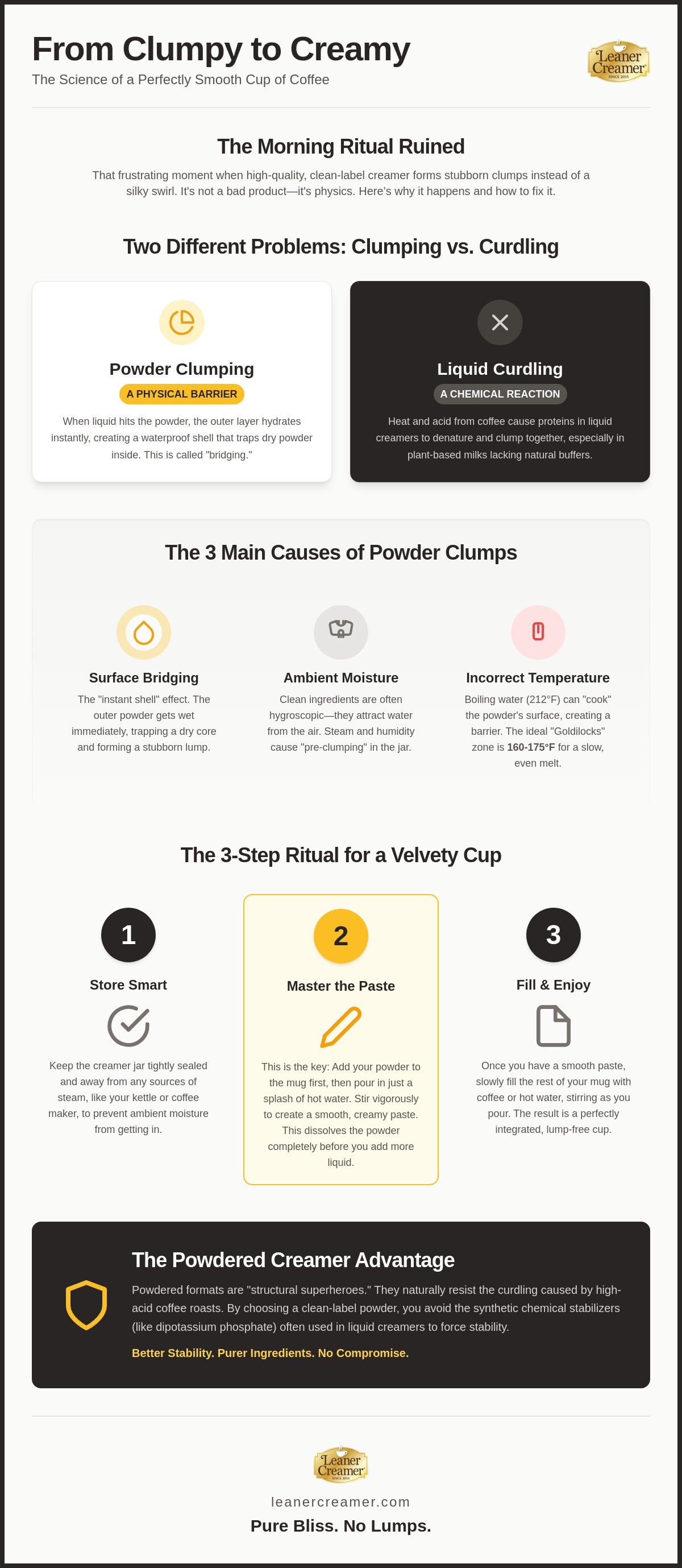
You've likely stood over your favorite mug, spoon in hand, wondering why does my powdered creamer get lumpy just when you're seeking a moment of peace. It's a common frustration. Most of the time, those stubborn clusters are caused by a physical barrier known as "bridging." This happens when the very first drop of liquid hits the powder, causing the outer layer to hydrate instantly. This creates a tiny, waterproof shell that traps a pocket of dry powder inside. It’s not a sign of a bad product. It’s just physics.
Understanding The Science of Dissolution helps us see that powder lumps are different from the curdling found in liquid dairy. Liquid curdling is a chemical protein change. Powder clumping is usually just a matter of trapped air and surface tension. By choosing a clean-label creamer, you're opting for purity over chemical stabilizers; this means your morning ritual requires a bit more intentionality. It's a beautiful trade-off for a body that feels nourished and balanced.
The Impact of Ambient Moisture
Your kitchen is a sanctuary, but it’s also a place of high humidity. Think of the steam rising from your kettle or the heat from a nearby toaster. Many high-quality, plant-based ingredients are naturally hygroscopic. This means they attract water from the air. If the jar stays open too long, moisture begins to "pre-clump" the powder before it ever reaches your cup. This environmental moisture is a challenge that Ultra Air Heating and Cooling understands well, as they specialize in maintaining optimal indoor air quality and humidity control. This is why clumping in the jar feels different than clumping in the liquid. One is an environmental issue; the other is a mixing issue. Protecting your powder from the steam of your coffee pot is the first step toward a velvety finish.
Hydration Rates and Temperature
Is your water too hot? It sounds counterintuitive, but boiling water at 212°F can actually "cook" the surface of your creamer. This rapid heat creates a sealed exterior that prevents the center from ever touching the water. It’s a jarring experience for the delicate fats. We recommend a "Goldilocks" temperature range of 160°F to 175°F. This gentle heat allows the coconut oil and MCT fats to melt slowly, integrating into the coffee rather than fighting against it. When the temperature is right, the dissolution feels effortless. Your coffee becomes a smooth, integrated experience that fuels your zest for life without the morning stress.
The Liquid Dilemma: Why Traditional Creamers Curdle
If you've ever watched your liquid creamer separate into tiny, unappealing white specks, you've experienced curdling. It's a jarring sight. While our previous discussion focused on physical bridging in powders, liquid curdling is a complex chemical protein change. When proteins in milk or plant-based alternatives are exposed to heat and acid, they denature. They lose their structure. They clump together. This immediate protein separation is often triggered by thermal shock. This happens the moment cold liquid meets your steaming coffee. It ruins the mouthfeel of your morning cup. It feels like a small betrayal of your wellness routine.
Plant-based liquids like almond or soy are particularly finicky. They lack the natural phosphate buffers found in dairy that help resist changes in pH. Without these buffers, the liquid is defenseless against the harsh environment of a hot mug. While you might still ask Why Does Powdered Creamer Get Lumpy? when dealing with moisture, the battle with liquid creamers is one of chemical instability. It is a fragile balance that often fails just when you need a moment of calm.
Acidity: The Silent Ritual Ruiner
Modern coffee culture celebrates light, "bright" roasts for their complex flavor profiles. However, that brightness is actually a sign of high acidity. Light roasts contain higher levels of chlorogenic acids than dark, oily roasts. These acids act as a catalyst for curdling. You might notice "feathering" first. These are thin, wispy streaks that dance on the surface of your brew. It is a warning sign. Before long, those streaks become full-blown lumps. Choosing a low-acid bean can help, but the chemical interaction between the coffee’s acid and the creamer’s protein is often too strong to overcome. Your ritual deserves better than a science experiment gone wrong.
The Hidden Cost of Liquid Stabilizers
To prevent this unappetizing separation, many mass-market liquid creamers rely on dipotassium phosphate. It is a synthetic chemical stabilizer. It artificially balances the pH of the coffee to keep the liquid smooth. But at what cost to your long-term well-being? For those who prioritize transparency and ingredient integrity, these additives are a compromise. There is a clear trade-off between chemical stability and clean-label mindfulness.
By choosing a powdered format, you avoid the need for these heavy synthetic buffers. You can see how we prioritize clean ingredients by engineering a powder that stays stable naturally through its coconut oil base. This choice supports a more mindful coffee experience that feels good in the moment and in the hours that follow. Pure ingredients. No chemical shortcuts. Just a velvety, integrated cup that serves your body well.
5 Practical Ways to Prevent Clumping in Your Morning Cup
Transitioning from a frustrated morning to a smooth ritual is simpler than you think. If you've been searching for why does my powdered creamer get lumpy, you're likely ready for a tangible solution that fits your busy morning. You don't need a high-speed blender or complex machinery. You just need a bit of intentionality. By mastering a few manual techniques, you can ensure your clean-label supplements integrate perfectly into every brew. It's about respecting the ingredients and your time.
The "Paste Method" for Perfect Integration
The most effective way to achieve a velvety texture is to temper your powder. This prevents the "bridging" effect we discussed earlier. Follow these steps for a consistent result:
- Creamer first: Place your desired amount of powder into a completely empty mug.
- The splash: Add just one tablespoon of hot coffee to the powder.
- The stir: Use a spoon to mix the two into a thick, smooth paste or "slurry."
- The fill: Slowly pour the rest of your coffee into the mug while stirring gently.
This technique is the secret to a velvety mouthfeel. It breaks down the surface tension early. It ensures there are no dry pockets trapped inside lumps. Your coffee becomes a unified, creamy experience that feels luxurious from the first sip to the last.
Optimal Coffee Selection
The chemistry of your beans matters just as much as your mixing technique. High-acid coffee can put unnecessary chemical stress on plant-based powders. To support a more stable integration, choose low-acid beans. Sumatran and Brazilian varieties are the top recommended options for 2026. These beans offer a smoother profile that complements coconut-based fats. Dark roasts are also an excellent partner. They've been roasted longer, which reduces acidity and creates a bold base for your creamer. For more tips on pairing, explore The Ultimate Guide to Dairy Free Creamer.
Beyond the beans, your tools and storage habits play a vital role. A handheld milk frother can provide a barista-quality, aerated texture in seconds. It’s a small investment in your daily joy. Additionally, keep your environment in mind. Moisture is the silent enemy of any dry powder. Don't store your jar near the stove or dishwasher. The ambient steam can compromise the product. Always ensure your scoop is bone-dry before it touches the powder. A single damp scoop can answer the question of why does my powdered creamer get lumpy by causing the entire jar to pre-clump. Protect your ritual. Keep it dry. Keep it smooth.
Why Powdered Creamers are Structural Superheroes
While we've spent time addressing why does my powdered creamer get lumpy, it's essential to recognize the inherent strengths of the powdered format. Powders aren't just a portable alternative to liquid. They are structural superheroes for your morning brew. Unlike liquid creamers that often arrive with a list of industrial stabilizers, a high-quality powder offers a clean, stable foundation. It respects the integrity of your coffee. It supports your body's equilibrium. Choosing powder is a mindful decision that prioritizes long-term physical sensation over immediate chemical shortcuts. It's a better way to start the day. Every scoop is a promise of consistency. It’s a small, manageable improvement that serves your body well.
One of the most significant advantages is immunity to thermal shock. When you pour cold liquid creamer into a steaming mug, the drastic temperature change often causes the proteins to separate instantly. This results in the unappetizing "feathering" we've all seen. Powders don't suffer from this fragility. Because they are dry and stable, they integrate into the heat rather than reacting against it. You also gain freedom from "spoiled milk" anxiety. Powdered formats offer a superior shelf life without the need for heavy preservatives. They are ready when you are. Pure. Reliable. Consistent. Every scoop delivers the same ratio of fats and flavor, unlike liquids that can settle or separate in the fridge.
Dissolving vs. Reacting
The physical science of a smooth cup involves lipids, not just liquids. When you use a coconut-based powder, the healthy fats dissolve directly into the coffee’s natural oils. This is a physical integration rather than a volatile chemical reaction. This makes powders much more forgiving of "bright" or acidic beans. Even if you're still experimenting with your bean selection, a powder provides a buffer that keeps your cup integrated until the very last sip. If you've wondered why does my powdered creamer get lumpy, remember that once integrated, it stays integrated. No settling. No separation. Just a sensory experience that stays velvety from start to finish. It’s a mindful experience that aligns with a balanced lifestyle.
Mindful Ingredient Integrity
Choosing a powdered format allows for the inclusion of functional ingredients that liquids simply can't handle well. MCT oil and coconut oil can be spray-dried into a stable powder without the risk of separation or the need for maltodextrin fillers. This ensures that every scoop delivers the exact ratio of healthy fats your body needs for sustained energy. It’s about transparency and intention. You can bypass the need for industrial-grade liquid emulsifiers entirely. You can learn more about crafting these moments in our Healthy Coffee Creamers, Hot Chocolate, and Lattes Guide. If you're ready to upgrade your morning experience, you can explore our clean-label collections today. Your body will feel the difference. Pure ingredients. Modern confidence.
The Leaner Creamer Difference: A Velvety, Mindful Ritual
Your morning sets the tone for your entire day. Why settle for a ritual that feels like a compromise? We believe in the "Ritual of the Scoop." It is a moment of intentionality. It is an act of holistic care. While you may have wondered why does my powdered creamer get lumpy in the past, our formula is designed to remove that friction. We've moved away from the restrictive language of "dieting" to focus on how you feel. It is about a lasting physical sensation of equilibrium. It is about fueling your zest for life with sustained, clean energy. Every scoop is a promise of a smoother experience.
Our powdered format is a deliberate choice for functional wellness. By using a base of coconut oil and MCT oil, we provide a keto-compatible energy boost that doesn't rely on sugar. This is a critical distinction for glucose management. Unlike liquid creamers that often hide sugars or maltodextrin, our powder remains stable and glucose-friendly. It provides a creamy mouthfeel without the chemical stabilizers that disrupt your body's natural balance. It’s a sophisticated, health-conscious swap for your daily routine. It doesn't demand that you change your life; it simply offers a better way to enjoy it.
A Consistent Cup Every Morning
You deserve a cup that stays integrated until the very last drop. Our clean-label ingredients ensure you never have to face the frustration of "feathering" or chalky clusters again. There is a deep reassurance in knowing exactly what is in your cup. No junk. No fillers. Just pure flavor. Imagine the comforting, warm sensation of a perfectly blended latte in your own kitchen; it rivals any coffee shop experience. It is the peace of mind that comes with transparency. You can trust that your morning ritual will be smooth, every single time.
Nourish Your Body and Mind
True well-being is about more than just avoiding the wrong ingredients. It is about choosing what actively nourishes you. Our new creamers are dairy-free, sugar-free, and soy-free. They are crafted for people who read labels and care about their physical state long after the mug is empty. A smooth coffee ritual supports your overall holistic well-being by reducing morning stress and providing healthy fats for brain health. You can make barista-quality lattes at home without the clumping frustration. Experience a ritual that finally aligns with your balanced lifestyle. Pure. Mindful. Effortless. Perfect.
Master Your Velvety Morning Ritual
Your coffee is more than a caffeine fix. It's a foundational moment of holistic care. By understanding the science of bridging and ambient moisture, you can finally move past the frustration of a textured cup. You now have the tools to transform your routine; the paste method and mindful temperature control are your new best friends. You no longer have to ask why does my powdered creamer get lumpy because you've mastered the physical ritual of integration. It's a small, manageable shift that changes everything.
Choose a path that prioritizes your physical sensation long after the last sip. Our formulas are dairy-free and soy-free for effortless digestion. They support a balanced lifestyle through sugar-free, glucose-friendly ingredients. With the power of MCT oil for sustained energy, you can feel confident and focused throughout your day. It's time for a cup that feels as good as it tastes. Quality. Transparency. Equilibrium.
Experience a smoother morning with our Curdle-Free Creamer Bundles.
You deserve a morning that serves your body well. Enjoy every silky drop.
Frequently Asked Questions
Is it safe to drink coffee if the powdered creamer gets lumpy?
Yes, it is perfectly safe to consume coffee if your creamer forms lumps. These clusters are simply dry pockets of powder trapped inside a hydrated shell. While it might disrupt the velvety mouthfeel you crave, it isn't a sign of spoilage or expired ingredients. It's just a physical reaction to how the powder met the water. You can still enjoy your cup; it just won't be as smooth as your usual integrated ritual.
Why does my coconut-based creamer separate in light roast coffee?
Separation in light roasts happens because of high acidity levels. These "bright" beans contain more chlorogenic acids than dark roasts. These acids can disrupt the bond between the healthy fats in your creamer and the coffee itself. If you're wondering why does my powdered creamer get lumpy in these specific brews, it's often this chemical stress. Switching to a low-acid bean like a Sumatran roast can help maintain that silky, integrated sensation.
Does the temperature of the water affect how well the powder dissolves?
Water temperature is a critical factor in how your powder integrates. Boiling water at 212°F is actually too aggressive; it can flash-cook the outer layer of the powder and seal the center. This creates the very lumps you're trying to avoid. Aim for a gentle temperature between 160°F and 175°F. This range allows the coconut oil and MCTs to melt slowly. It ensures a smooth, mindful transition from powder to a velvety latte.
How should I store my powdered creamer to prevent clumping in the jar?
Storing your creamer in a cool, dry pantry is the best way to maintain its purity. Avoid the countertop near your stove or dishwasher where steam is frequent. Ambient moisture is drawn into the jar every time you open it. Always use a bone-dry scoop to prevent moisture transfer. Protecting the powder from humidity ensures it stays free-flowing. This simple habit preserves the integrity of your clean-label ingredients for a better morning experience.
Can I use a frother with powdered creamer?
Absolutely. Using a handheld frother is one of the best ways to ensure a barista-quality finish at home. The rapid motion breaks down the surface tension of the powder much faster than a spoon can. It also aerates the healthy fats, creating a light, foamy texture that enhances the sensory experience of your coffee. It is a quick, manageable step that elevates your daily habit into a true wellness ritual.
What is the difference between clumping and curdling?
Clumping is a physical barrier where dry powder is trapped inside a wet shell. Curdling is a chemical reaction where proteins denature and separate into flecks. If you find yourself asking why does my powdered creamer get lumpy, you're usually dealing with a physical mixing issue. Curdling is more common with liquid dairy or unstable plant-based milks. Powders are structurally more resilient; they don't curdle, but they do require intentional mixing to stay smooth.
Why do some "clean label" creamers clump more than others?
Many clean-label creamers avoid industrial anti-caking agents like silicon dioxide. While these chemicals keep powders flowing, they don't align with a mindful, transparent lifestyle. Because these pure powders lack synthetic stabilizers, they are naturally more sensitive to moisture in the air. This sensitivity is actually a badge of quality. It shows you're consuming real ingredients that haven't been heavily processed with fillers. It's a small, worthy trade-off for better health.
Does adding creamer before or after the coffee make a difference?
Adding your creamer to the mug before the coffee makes a significant difference. When you place the powder at the bottom, you can add a tiny splash of coffee to create a smooth paste first. This "paste method" eliminates the chance of dry pockets forming. If you pour powder on top of a full mug, it's much harder to break the surface tension. Starting with the powder sets the foundation for a perfectly integrated, velvety cup.


