


What if the very thing you rely on for a morning spark is actually stealing your energy before the day even begins? It’s a question many of us ignore as we pour that familiar, milky splash into our favorite mugs. You might find yourself wondering, is coffee mate bad for you, especially when that second cup leads to digestive discomfort instead of a gentle wake-up call. Your morning ritual should be a moment of pure, guilt-free comfort. Full stop. We agree that a creamy, rich texture is a non-negotiable part of the experience. You shouldn't have to sacrifice your well-being for the sake of a delicious cup.
This deep dive into 2026 ingredient standards reveals the truth about the processed oils and hidden sugars found in many conventional creamers. We promise to show you how to decode those complex labels so you can maintain stable blood sugar and lasting energy. We'll explore the impact of synthetic additives and introduce you to clean-label alternatives that prioritize your health. It’s time to find a better way to fuel your day and embrace the comfort after the cup.
Key Takeaways
- Understand how processed ingredients like corn syrup solids and industrial oils impact your body and energy levels long after your morning ritual is over.
- Explore the hidden composition of processed creamers to finally answer the question: is coffee mate bad for you and your long-term wellness goals?
- Master the "Rule of Five" to quickly identify clean-label creamers and spot hidden red flags like hydrogenated fats and artificial stabilizers at a glance.
- Discover how swapping industrial seed oils for functional fats can help you avoid glucose spikes and find true comfort after the cup.
- Learn how to elevate your daily habit with mindful, gluten-free alternatives that respect your body as much as they do your coffee.
The Coffee Mate Composition: What Is Actually in Your Cup?
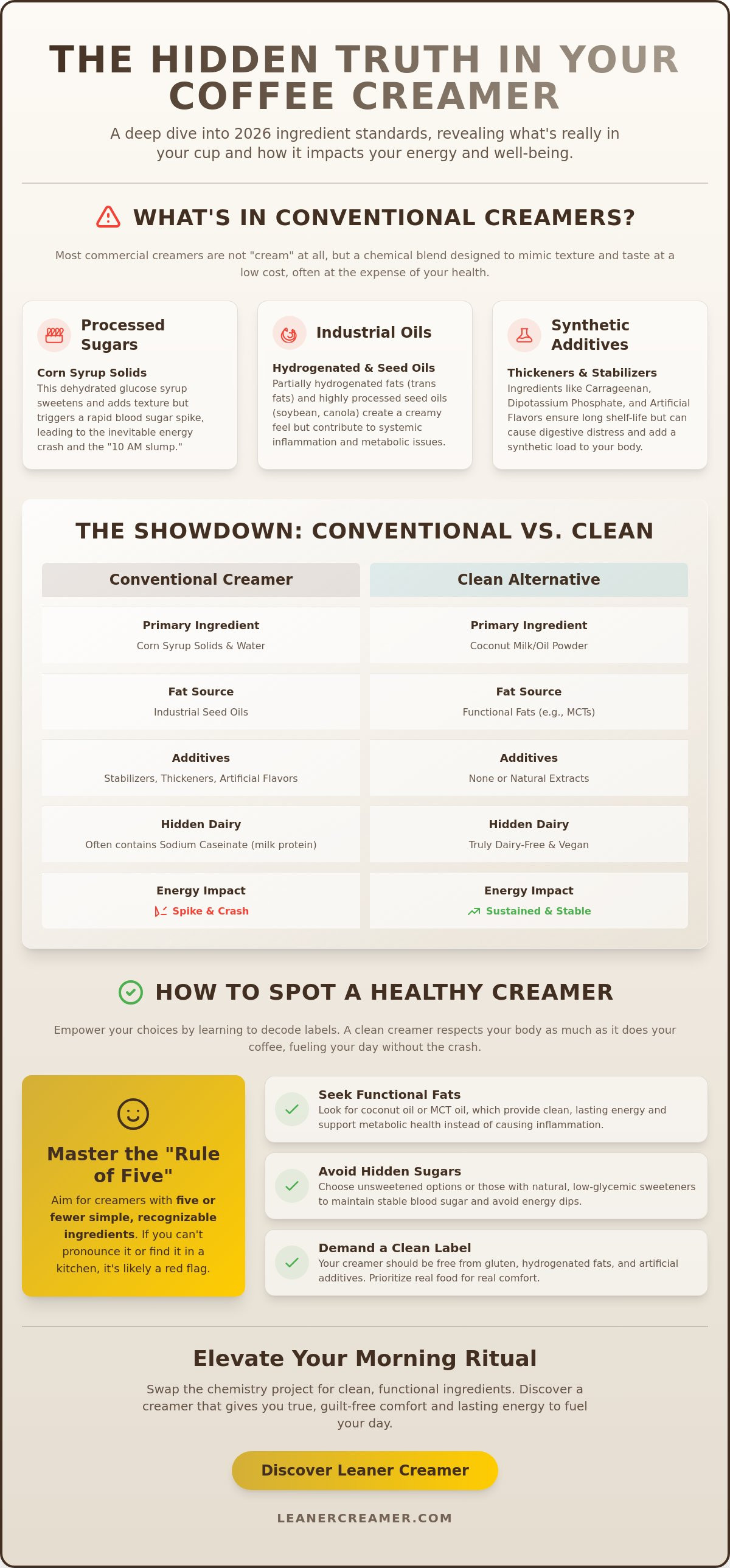
Your morning coffee is more than a caffeine fix. It is a ritual. It is a quiet moment of comfort before the world starts demanding your attention. But when you stop to ask, is coffee mate bad for you, the answer lies hidden within the fine print of the ingredient label. Most commercial creamers are not "cream" at all. They are a carefully engineered blend of water, sugar, and vegetable oils designed to mimic the texture of dairy at a lower production cost. Full stop.
The primary driver of that velvety texture is corn syrup solids. These are a type of glucose syrup that has been dehydrated to a low moisture content. They do more than just sweeten; they create a sense of hyper-palatability. This ensures your coffee feels rich and satisfying, even though it lacks real fats. While this makes the drink enjoyable in the moment, these refined sugars can lead to energy crashes later in the day. Your body deserves better than a chemistry project in a mug.
The "non-dairy" label is another point of confusion for many wellness-seekers. While these products are lactose-free, they are rarely vegan. Most traditional versions contain sodium caseinate, which is a protein derived from milk. This ingredient provides the whitening power and creamy flavor that consumers expect. For those with strict dairy allergies or those following a plant-based lifestyle, this hidden additive is a significant hurdle. It is a reminder that "non-dairy" is a marketing term, not a health guarantee.
The Big Three: Sugar, Oils, and Thickening Agents
The history of Coffee-Mate ingredients is rooted in convenience. For decades, these products relied on partially hydrogenated oils to provide shelf stability. Although the FDA mandated the phase-out of these trans fats by June 2018, modern formulas still use highly refined vegetable oils like palm or soybean oil. To keep these oils from separating, manufacturers add thickening agents like carrageenan and cellulose gel. These additives can cause digestive distress for sensitive individuals. Furthermore, "0g Sugar" labels are often misleading; they typically replace cane sugar with artificial sweeteners like sucralose, which can disrupt your gut microbiome.
Shelf-Life vs. Biological Life: Why It Lasts So Long
Have you ever wondered why a bottle of creamer can last for weeks in the fridge? The secret is dipotassium phosphate. This mineral salt acts as a stabilizer, preventing the coffee's natural acidity from curdling the creamer. While it keeps your drink looking smooth, it is another synthetic component your body must process. Artificial flavors are also used to ensure the taste stays consistent and lingers on the palate long after the cup is empty. A clean label is the antidote to these chemical stabilizers, focusing on transparent ingredients that prioritize your comfort after the cup.
Why These Ingredients Matter: The Impact After the Cup
What happens when the initial caffeine buzz fades? If you're asking is coffee mate bad for you, the answer often reveals itself in how you feel two hours after your last sip. Most traditional creamers rely on corn syrup solids to provide that familiar sweetness. These processed sugars trigger a rapid rise in blood glucose, forcing your pancreas to pump out insulin to compensate. This cycle creates the 10 AM slump that leaves you reaching for another cup just to stay focused. It's a physiological roller coaster that disrupts your natural energy flow. Full stop.
Industrial seed oils like soybean or canola oil create that signature creamy texture, but they carry a hidden metabolic cost. These oils are often highly processed and can contribute to systemic inflammation when consumed daily. According to EWG's guide to coffee creamer ingredients, many of these additives and saturated fat levels are linked to long term health concerns. When these oils combine with high sugar content, they create a heavy burden on your digestive system and your heart health.
Metabolic Health and Blood Sugar Management
Liquid calories are notoriously difficult for the body to track. When you drink your sugar, your brain doesn't register the same level of fullness as it does with solid food. This disconnect is a primary driver of metabolic syndrome, a cluster of conditions that increase the risk of heart disease and type 2 diabetes. Choosing glucose-friendly options is essential for long term weight management and stable moods. You can find more details on maintaining this balance in the ultimate guide to glucose friendly coffee creamers. Balanced energy starts with what you put in your mug at 7 AM.
Digestive Comfort and Sensitivity
Do you experience bloating or gas after your morning coffee? It might not be the beans. Traditional formulas often use thickeners and artificial dyes to mimic the look of real dairy. These additives can irritate the gut lining and disrupt the delicate balance of your microbiome. Color shouldn't come from a lab. Many people find relief by switching to plant-based fats like coconut oil. These medium-chain triglycerides offer a more stable energy source than sugar. They provide a slow burn that fuels your brain without the digestive distress. It's about creating a mindful coffee ritual that respects your body's boundaries. When considering if coffee mate is bad for you, look at the ingredients that linger in your system long after the cup is empty.
Comparing Labels: Processed Creamers vs. Clean Alternatives
What if your creamer actually cared how you feel? When you look at a standard label, you're often met with a wall of text. A typical bottle of processed creamer can contain 12 or more ingredients, many of which are lab-created stabilizers and thickeners. In contrast, clean alternatives prioritize a minimalist approach. This matters because a shorter list means your body spends less energy processing synthetic additives. When asking is coffee mate bad for you, the answer often lies in the source of its richness. Processed versions rely on industrial seed oils, like soybean or canola, which are high in omega-6 fatty acids. Better choices utilize coconut oil or MCTs. These aren't just fats; they are functional fuels that support your metabolism and focus. You're swapping empty calories for ingredients that work for your body.
The Powder Advantage: Why Liquid Isn’t Always Better
Choosing a powder format over a liquid is a mindful choice for your body and the planet. Liquid creamers require chemical preservatives to remain shelf-stable, often relying on additives like carrageenan or cellulose gel to maintain texture. Powdered formats naturally eliminate the need for many of these stabilizers. They also reduce environmental footprints. A single pouch of powdered creamer can replace up to 4 bulky plastic bottles, significantly cutting down on household waste. Plus, you gain total control over your portion. You decide the exact creaminess of your ritual every single morning. It's about portability too; your wellness journey doesn't have to pause when you're away from home. Being able to pack your ritual in a bag ensures consistency in how you feel.
Taste and Texture: Can Clean Actually Be Creamy?
Many people hesitate to switch because they fear a watery, thin cup of coffee. This is a myth. The science of plant-based fats, specifically those found in coconut, allows for a velvety mouthfeel that rivals traditional dairy. Coconut oil contains about 90% saturated fat, including medium-chain triglycerides that emulsify beautifully in hot liquids, creating a rich micro-foam. You don't have to choose between your health and your morning joy. Health shouldn’t require a sacrifice in flavor. Full stop. By focusing on how you feel after the cup, you realize that clean ingredients provide a more sustained satisfaction than the temporary spike of high-fructose corn syrup. When considering is coffee mate bad for you, think about the long-term balance of your daily habits. A clean alternative delivers the comfort you crave without the mid-morning crash.
Navigating the Grocery Aisle: How to Spot a Healthy Creamer
Does your creamer actually care about how you feel? It's a question worth asking as you stand in the dairy aisle. When you wonder is coffee mate bad for you, the real answer is found on the back of the bottle. You deserve a morning ritual that supports your wellness goals without compromise. Your body knows the difference between real nourishment and chemical fillers.
The "Rule of Five" is your best defense. Look for labels with five or fewer recognizable ingredients. If the list reads like a chemistry textbook, put it back. You should also watch for these specific red flags:
- Mono- and diglycerides: These emulsifiers often contain hidden trans fats that don't have to be listed on the label if they fall below 0.5 grams per serving.
- Hydrogenated fats: These are highly processed oils that can drive inflammation and impact heart health.
- Artificial colors: Titanium Dioxide is often added to create that creamy white color. The European Food Safety Authority banned this as a food additive in 2022 due to health concerns.
Understanding certifications helps you cut through the marketing noise. Keto-Certified products ensure your blood sugar stays stable. Vegan labels guarantee no animal products, but they don't always mean the product is "clean." Check the Nutrition Facts for the serving size. A single tablespoon is the standard, yet most people pour 30 to 45 milliliters into a single cup. This triples the calorie and sugar count instantly. Full stop.
Hidden Sugars and Their Many Names
Sugar hides behind dozens of different aliases. Maltodextrin and dextrose are common additives in powdered creamers. Maltodextrin has a glycemic index as high as 150, which is significantly higher than table sugar at 65. It causes a rapid insulin spike that leads to a mid-morning crash. "Sugar-free" options often rely on artificial sweeteners that can disrupt your gut microbiome. "Natural flavors" is another tricky term. It can include various substances, including solvents and preservatives, that are not required to be disclosed. When you're trying to decide if is coffee mate bad for you, remember that transparency is key.
The Importance of Clean Label Rituals
Your morning cup is more than a caffeine hit; it's a foundation for your day. Transitioning to functional foods means choosing ingredients that work for you, not against you. Small changes lead to significant health wins over time. When you prioritize clean ingredients, you notice the difference in your energy levels and focus. Check out our guide to clean rituals for a complete pantry makeover.
Ready to upgrade your morning? Experience the comfort after the cup with a creamer designed for your well-being.
Elevating Your Ritual with Leaner Creamer
What if your morning coffee actually cared how you feel? Most people reach for a creamer to mask the bitterness of their brew, but they rarely consider the physical cost of that choice. When you ask yourself, is coffee mate bad for you, the answer usually hides in the heavy processing and synthetic additives that linger in your system long after the caffeine wears off. At Leaner Creamer, we believe your morning ritual should be a source of sustained wellness, not a temporary fix followed by a mid-day crash.
Our philosophy is built on one simple promise: comfort after the cup. We focus on how you feel at 2:00 PM, not just during the first sip. By utilizing functional fats like coconut oil, we provide a rich, creamy texture that supports your body. Coconut oil contains Medium Chain Triglycerides (MCTs), which are processed by the liver for immediate energy rather than being stored as fat. It is a mindful approach to indulgence. Full stop.
We remain strictly committed to ingredients that respect your biology. Our formulas are glucose-friendly, gluten-free, and soy-free. We don't use the artificial trans fats or high-fructose corn syrups that often lead people to wonder if coffee mate is bad for you. Instead, we offer a clean, plant-based alternative that aligns with your health goals without sacrificing the flavor you crave.
Why We Choose Powdered Perfection
Liquid creamers often rely on chemical stabilizers and emulsifiers like carrageenan or dipotassium phosphate to maintain shelf life and texture. We chose a powdered format to eliminate that unnecessary "junk." Our powder is shelf-stable, portable, and incredibly versatile. It integrates seamlessly into hot coffee, cold brews, or even your favorite morning smoothie recipes.
This formula specifically supports keto and low-carb lifestyles. Since 2015, we have helped thousands of coffee lovers maintain ketosis while enjoying a decadent cup. By removing the sugar-heavy fillers found in traditional brands, we ensure your blood sugar remains stable. You get the creaminess you want without the insulin spike you don't. It is balance in a bottle.
Join the Mindful Coffee Movement
Making the switch is about more than just changing a label; it's about respecting your body's daily needs. Users frequently report a significant difference in their digestion and energy levels within the first 7 days of switching. One long-time customer noted that they finally found their "comfort after the cup" because the bloating associated with oil-based liquid creamers simply vanished.
Your coffee is a ritual. It is the quiet moment before the day begins. Ensure that moment serves you well into the late afternoon. It is time to move past the mystery ingredients of the past and embrace a cleaner, more intentional way to drink. Upgrade your morning ritual with Leaner Creamer and feel the difference that real, functional ingredients can make.
Reclaim Your Morning Ritual
Your daily coffee is more than a quick caffeine fix; it's a sacred moment of peace before the day begins. When asking is coffee mate bad for you, the answer is found in the hydrogenated oils and corn syrup solids that often linger in your system. These processed additives can disrupt your natural balance and lead to a mid-morning slump. Full stop. You deserve a creamer that respects your body as much as your taste buds.
Modern wellness requires intentionality in every sip. By switching to clean-label alternatives, you prioritize long-term vitality over temporary convenience. Leaner Creamer offers Keto-Certified and Vegan formulas that use glucose-friendly ingredients to keep your energy steady. With over 10,000 5-star reviews, our community has proven that you don't have to sacrifice creaminess for health. It's time to focus on how you feel after the cup.
Experience comfort after the cup with our clean-label creamers.
Take the next step toward a more mindful lifestyle today. You're worth the upgrade.
Frequently Asked Questions
Is Coffee Mate actually dairy-free?
Coffee Mate is classified as non-dairy by the FDA, but it isn't truly dairy-free because it contains sodium caseinate, a derivative of milk. While it lacks lactose, this protein can still cause issues for the 68 percent of the global population who struggle with dairy sensitivities. It's a confusing distinction for anyone trying to maintain a strictly plant-based ritual. For true comfort after the cup, you should look for labels that explicitly state "vegan" or "100% plant-based." Full stop.
Does Coffee Mate cause inflammation?
Yes, many of the ingredients in this creamer, such as highly refined vegetable oils and corn syrup solids, are linked to systemic inflammation. A 2021 study published in the journal Nutrients found that ultra-processed additives can disrupt gut health and trigger inflammatory markers in the body. Your morning ritual should feel restorative, not taxing. Choosing clean, real ingredients helps you avoid that heavy, sluggish feeling that often follows a processed breakfast.
Can I use Coffee Mate on a keto diet?
Coffee Mate isn't ideal for a strict keto diet because it relies on corn syrup solids and sugar for flavor. Even the "Sugar-Free" varieties often contain maltodextrin, which has a glycemic index of 110, significantly higher than table sugar at 65. If you're wondering is coffee mate bad for you while trying to stay in ketosis, these hidden carbohydrates can quickly stall your progress. A better choice is a creamer featuring healthy fats like coconut oil or MCTs.
What are the healthiest alternatives to Coffee Mate?
The healthiest alternatives are minimally processed options like coconut milk, almond milk, or clean-label powder creamers made with functional ingredients. Look for a list with five or fewer recognizable items. These choices support a balanced lifestyle and ensure you feel light and energized after the cup. Swapping out synthetic thickeners for real, plant-based fats transforms your daily habit into a genuine act of self-care. It's a simple upgrade for a better morning.
Why does Coffee Mate have 0g sugar but list corn syrup?
Coffee Mate lists 0g of sugar because FDA labeling guidelines allow companies to round down to zero if a serving contains less than 0.5 grams of sugar. However, the primary ingredients often include corn syrup solids, which are pure glucose. This loophole can be misleading for those tracking their metabolic health. If you use three or four servings, you're consuming nearly 2 grams of hidden sugar before you've even finished your first mug. Transparency matters in every ritual.
What happens to my blood sugar when I use processed creamers?
Processed creamers can cause a rapid spike in blood glucose due to high-glycemic ingredients like maltodextrin. According to the American Diabetes Association, even small amounts of these refined syrups can impact insulin sensitivity over time. What if your creamer actually cared how you feel? Stable blood sugar means no mid-morning crash. Choosing a balanced, clean-label option keeps your energy steady and your focus sharp all day long. Full stop.
Is the powder version of Coffee Mate better than the liquid?
Neither version is significantly better for your wellness as both rely on refined oils, corn syrup, and thickeners like carrageenan. The powder version is shelf-stable for up to 730 days, while the liquid lasts about 14 days once opened. When asking is coffee mate bad for you, the physical form matters less than the ingredient list. Both options lack the whole-food nutrients found in clean alternatives that support a mindful, healthy lifestyle.
Can Coffee Mate cause digestive issues like bloating?
Yes, many people experience bloating and gas because of synthetic additives like carrageenan and dipotassium phosphate. A 2017 report by the Cornucopia Institute highlighted that carrageenan can cause intestinal inflammation and distress in sensitive individuals. Your morning coffee should be a moment of pure comfort. If you find yourself feeling uneasy after the cup, it's a clear sign that these industrial thickeners are disrupting your delicate digestive balance.


