


What if your "healthy" morning ritual is actually the silent saboteur of your metabolic progress? It's a frustrating reality for many wellness seekers. You've switched to "sugar-free" options, yet you still experience that familiar mid-morning energy crash. You're likely asking, does coffee creamer spike insulin even when the label claims zero grams of sugar? We understand the disappointment of forcing down bitter black coffee just to stay on track with your goals. You shouldn't have to sacrifice comfort for the sake of your health. Your coffee should be a moment of peace, not a source of metabolic stress.
This article reveals how hidden additives like maltodextrin, which has a glycemic index as high as 110, impact your body after the cup. You'll discover how to identify the clean, plant-based ingredients that keep your insulin stable and your energy levels balanced throughout the day. We're providing a clear path to maintaining a creamy, delicious ritual that actually supports your long-term well-being. It's time to enjoy your coffee with total confidence and zero guilt. Full stop.
Key Takeaways
- Learn how your morning ritual influences metabolic health and why true "comfort after the cup" depends on managing your insulin response.
- Uncover the hidden fillers in "sugar-free" labels and find the definitive answer to the question: does coffee creamer spike insulin?
- Explore the science of how healthy, plant-based fats can blunt a glucose spike, offering a more balanced and intentional start to your day.
- Master a simple two-step audit to identify glycemic triggers in your pantry and replace them with clean, keto-compatible alternatives.
- Discover how choosing a mindful, dairy-free creamer ensures your coffee remains a nourishing ritual without the metabolic crash. Full stop.
Understanding the Insulin Response to Coffee Creamer
Your morning coffee is more than a caffeine delivery system. It is a ritual that sets the tone for your entire day. However, your body processes every ingredient in that cup with clinical precision. Insulin is the primary hormone responsible for managing your energy and fat storage. Think of it as a gatekeeper. When insulin levels are high, your body is effectively locked in storage mode, making it nearly impossible to tap into fat stores for fuel. Many wellness-conscious drinkers ask, does coffee creamer spike insulin? The answer lies in how your pancreas reacts to what you stir into your mug.
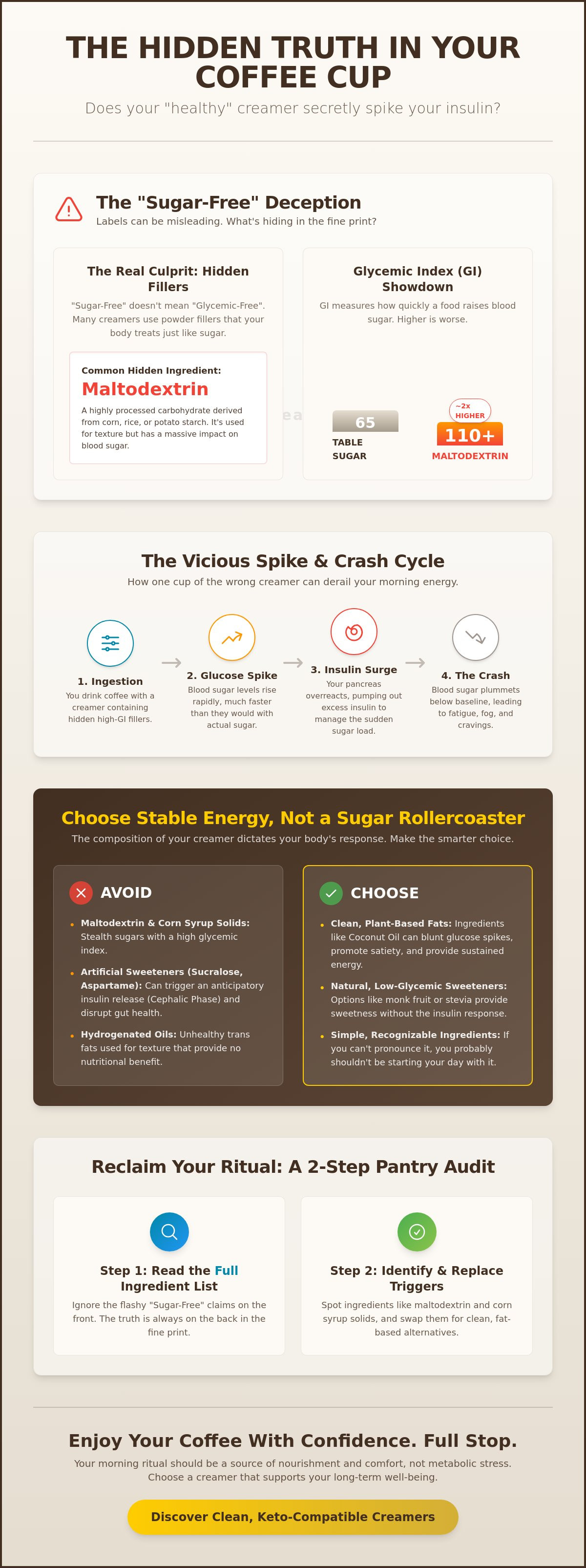
A "spike" isn't just a clinical term. It is a physiological event that dictates your energy levels for hours. When you consume high-glycemic sugars or certain additives, your blood glucose rises rapidly. In response, your pancreas pumps out insulin to usher that sugar into your cells. This often leads to a "crash" where blood sugar levels dip below baseline, leaving you tired and hungry before lunch. Understanding the difference between a glucose spike and an insulin response is vital. You can actually trigger insulin even without a massive rise in blood sugar, especially when your body perceives "sweetness" without the accompanying calories.
The most reliable indicator of a spike isn't a laboratory test. It is your "after the cup" feeling. If you feel a surge of energy followed by shakiness, brain fog, or an intense craving for a snack within 90 minutes, your insulin has likely spiked and crashed. A balanced ritual should provide sustained comfort that carries you through your morning. Full stop.
Does Black Coffee Alone Raise Insulin?
Pure black coffee is generally considered safe for metabolic fasting. It contains almost zero calories and no sugar. However, caffeine does play a role in your metabolic landscape. It stimulates the release of cortisol, your body's primary stress hormone. A 2008 study published in the journal Diabetes Care demonstrated that caffeine can temporarily decrease insulin sensitivity in some individuals. This means your body might require a bit more insulin to manage blood sugar than usual. When you add a standard Non-dairy creamer loaded with corn syrup solids, you compound this natural cortisol response. You're essentially giving your body a double dose of metabolic stress right when it needs stability most.
The "Cephalic Phase" Insulin Response
Your body begins processing your breakfast before you even swallow. The "Cephalic Phase" refers to the insulin release triggered by the mere taste or smell of food. When your tongue detects sweetness, your brain signals the pancreas to prepare for incoming glucose. This is why the debate over artificial sweeteners is so intense. Some studies suggest that the intense sweetness of chemicals like sucralose can trigger an anticipatory insulin release. This "false alarm" can leave you feeling hungrier because the insulin has no actual sugar to process. Ingredient quality determines the severity of this reaction. Choosing clean, plant-based fats over chemical sweeteners helps ensure your morning ritual remains a source of nourishment rather than a metabolic disruption.
The "Sugar-Free" Trap: Hidden Ingredients That Impact Glucose
Does your creamer label boast "0g Sugar"? It might be a lie by omission. Many people ask, does coffee creamer spike insulin even when the sugar count is zero? The answer is often a resounding yes. The culprit is usually found in the fine print of the ingredient list. Maltodextrin is a common powder filler used to create texture. It carries a glycemic index between 106 and 136. For comparison, white table sugar has a glycemic index of approximately 65. This means that "sugar-free" powder could be hitting your bloodstream twice as hard as the real thing. It is a metabolic wolf in sheep's clothing.
Commercial creamers also rely on corn syrup solids and other stealth carbohydrates to provide that familiar creamy mouthfeel. These ingredients are technically complex carbohydrates, so they don't count as "sugar" on a label, but your body doesn't know the difference. They break down rapidly into glucose. When you consume these additives, your pancreas releases insulin to manage the surge. This disrupts the steady energy you want from your morning ritual. What if your creamer actually cared how you feel? Choosing a clean, plant-based alternative ensures you get the comfort you crave without the hidden metabolic cost.
Artificial sweeteners like Aspartame and Sucralose present another layer of the "sugar-free" trap. While they contain zero calories, research suggests they can alter your gut microbiome. This shift in gut health can lead to decreased insulin sensitivity over time. You aren't just drinking a beverage; you're setting the tone for your entire day. Understanding the impact of added sugars and their chemical substitutes is the first step toward a more mindful habit.
Reading Between the Lines of Nutrition Labels
The FDA allows brands to claim "0 grams" of sugar if a serving contains less than 0.5 grams. This sounds small, but most coffee drinkers use two or three times the recommended serving size. If you use three servings of a creamer containing 0.4 grams of hidden carbs, you've consumed over a gram of sugar before your first meeting. Thickening agents like carrageenan and various gums can also behave like sugar in the blood for sensitive individuals. Clean Label is the only way to ensure glucose safety. Full stop.
Sugar Alcohols: The Good, The Bad, and The Spiky
Not all sugar alcohols are created equal. Erythritol is generally glucose-friendly with a glycemic index of 0. It passes through the system with minimal impact on blood sugar. Maltitol is a different story. With a glycemic index as high as 52, it can cause significant spikes. It is also linked to digestive discomfort in roughly 60% of consumers. When you wonder does coffee creamer spike insulin, the specific type of sweetener matters. Selecting creamers that prioritize real, plant-based ingredients ensures comfort after the cup. Your ritual should support your wellness, not undermine it.
Fats vs. Carbs: How Creamer Composition Affects Your Blood Sugar
Your body processes every sip based on the ratio of fats to carbohydrates. If your creamer is loaded with sugar or corn syrup, your pancreas releases insulin to manage the sudden glucose rise. This is why many people wonder, "does coffee creamer spike insulin" shortly after their morning ritual. When you choose a creamer high in refined carbs, you're setting yourself up for a mid-morning energy crash. A balanced composition changes the narrative entirely. It's about choosing ingredients that respect your body's natural rhythm.
Healthy fats act as a physical barrier in your digestive system. They slow down the absorption of any sugars present, which prevents the sharp peaks and valleys in your blood sugar levels. This stability is the key to "comfort after the cup." You feel sustained rather than temporarily buzzed. Choosing diabetes-friendly coffee creamers that prioritize healthy fats over hydrogenated oils helps maintain this delicate metabolic balance. Full stop. By focusing on quality fats, you protect your energy and your long-term health.
The Role of MCTs and Coconut-Based Fats
Medium-chain triglycerides, or MCTs, are a metabolic powerhouse. Unlike long-chain fats found in many processed foods, MCTs travel directly to your liver to be used for immediate energy. They don't require the same heavy insulin response that sugars do. This makes them an ideal choice for anyone seeking metabolic flexibility. Coconut-based fats provide a rich, creamy texture without the inflammatory baggage of traditional dairy. You can explore more about these glucose friendly coffee creamers to see how they fit into a mindful morning routine. These fats help you stay in a focused state while providing the brain-boosting fuel you need to start your day.
Dairy-Free Benefits for Insulin Sensitivity
Liquid dairy contains lactose, which is a natural sugar that many people overlook. Even unsweetened milk can cause a subtle rise in glucose because lactose is a disaccharide. Some research suggests that dairy proteins like whey and casein may stimulate an insulin response that is disproportionate to their carb content. This is why plant-based, dairy-free options often feel "cleaner" in your system. When you remove the heavy proteins and sugars found in cow's milk, you reduce the metabolic load on your body. The physical sensation is noticeable. You feel light and focused instead of heavy or sluggish. Switching to a powdered, plant-based fat source offers several benefits:
- Eliminates the hidden lactose found in liquid milk and cream.
- Provides a stable energy source that doesn't trigger a "does coffee creamer spike insulin" concern.
- Supports a gut-friendly environment by avoiding common dairy sensitivities.
- Promotes long-term insulin sensitivity by keeping glucose levels within a narrow, healthy range.
Choosing a dairy-free alternative isn't just about avoiding allergens. It's about optimizing how your body handles fuel. When your morning ritual supports your blood sugar, the rest of your day follows suit with more balance and less hunger.
How to Enjoy Your Coffee Without the Insulin Spike
Your morning cup should feel like a warm hug, not a metabolic hurdle. If you're asking yourself, "does coffee creamer spike insulin," the answer depends entirely on your choices. You can protect your blood sugar while keeping your favorite ritual intact by following a few intentional steps. It's about choosing ingredients that offer comfort after the cup.
- Step 1: Audit your current creamer. Flip the bottle and look for hidden glycemic fillers. Ingredients like maltodextrin, corn syrup solids, and cane sugar are common culprits. These additives often cause a sharper rise in insulin than simple table sugar. Full stop.
- Step 2: Prioritize powdered, plant-based fats. Liquid dairy and many liquid alternatives contain lactose or thickeners that can nudge your glucose levels upward. Powdered plant-based fats provide a stable, creamy texture and a velvety mouthfeel without the hidden carbohydrates.
- Step 3: Test your response. If possible, use a continuous glucose monitor (CGM) to track your levels for 120 minutes after your coffee. A 2021 study published in the Journal of Diabetes Science and Technology showed that individual responses to specific foods can vary by over 20 percent. Your data is your best mentor.
- Step 4: Shift your focus. Train your palate to crave creaminess and the ritual itself rather than blunt sweetness. When you prioritize the rich texture of healthy fats, the need for added sugar naturally fades away.
Creating a Glucose-Friendly Coffee Ritual
The first drink of your day sets the metabolic tone for the next 24 hours. A high-sugar start triggers an insulin spike that leads to a predictable mid-morning crash. By pairing your coffee with mindful habits, like a five-minute morning walk or intentional breathing, you help stabilize your blood sugar. You can find inspiration for these clean habits in this guide to healthy coffee creamers hot chocolate and lattes. It's a simple way to ensure your ritual serves your body well.
Timing Matters: Coffee and Fasting
If you practice intermittent fasting, you've likely heard the "pure fast" versus "dirty fast" debate. A pure fast limits you to water and black coffee. A dirty fast allows for small amounts of healthy fats. Because fat has a negligible impact on insulin compared to carbs, adding a clean, sugar-free creamer can help you sustain your fast longer by providing satiety. This approach respects your body's metabolic needs while keeping your cherished morning ritual alive.
Looking for a better way to start your day? Explore clean creamer options that prioritize your wellness and your taste buds.
Elevating Your Ritual with Leaner Creamer
Your morning coffee should be a moment of peace, not a source of metabolic stress. Many people ask, does coffee creamer spike insulin? The answer often depends on hidden sugars and synthetic fillers found in grocery store aisles. We formulated our powders to eliminate that worry entirely. By choosing strictly glucose-friendly and keto-compatible ingredients, we ensure your body stays in balance. Our plant-based coconut oil base delivers the rich, velvety texture you love without the glycemic load of traditional liquid creamers. It's about a ritual that respects your wellness goals and your physiology.
Transitioning to a new routine doesn't mean giving up the comfort of a creamy cup. It means upgrading to a product that cares about how you feel long after the caffeine wears off. We focus on the "after the cup" experience, ensuring you feel energized and stable rather than sluggish or hungry. This shift in perspective turns a simple beverage into a foundational part of a mindful lifestyle.
Clean Ingredients for a Mindful Morning
We believe in transparency. Our functional creamers are built on a clean-label philosophy that puts your health first. Our formula contains 0 grams of sugar and relies on high-quality, plant-based fats. You won't find dairy, soy, or gluten here. Full stop. Choosing a powdered format isn't just about convenience; it's about purity and stability. Liquid creamers often require heavy preservatives and chemical emulsifiers to stay shelf-stable on a store shelf. Our powders maintain their integrity without those unnecessary additives.
This is a better way to coffee. It's an intentional choice that prioritizes what goes into your body so you can focus on what you get out of your day. Every scoop provides a consistent, clean experience that supports a mindful morning. By removing the allergens and irritants found in standard creamers, we've created a product that invites everyone to the table, regardless of dietary restrictions.
Guilt-Free Indulgence
You don't have to sacrifice flavor to maintain steady blood sugar levels. If you're still wondering does coffee creamer spike insulin, the key is always the ingredient list. Whether you prefer the warmth of hazelnut or the classic sweetness of vanilla, our blends provide deep satisfaction without the sugar-filled consequences. The peace of mind comes from knowing your choice is truly glucose-friendly and won't kick you out of ketosis or cause a mid-morning crash.
What if your creamer actually cared how you feel? When you switch to Leaner Creamer, you're choosing comfort after the cup. You're opting for a lifestyle that values long-term energy over a temporary sugar high. It's time to stop settling for creamers that work against your health goals. Explore our collection today and discover a more balanced ritual that loves you back.
Elevate Your Morning Ritual for Lasting Comfort
Your morning cup should be a source of peace, not a source of hidden metabolic stress. We've explored how conventional additives can disrupt your balance, answering the critical question: does coffee creamer spike insulin? The reality is that many "sugar-free" options rely on ingredients like maltodextrin that can trigger a sharp glucose response. Choosing a blend rooted in clean, plant-based fats helps stabilize your energy levels instead of causing a mid-morning crash. It's about the comfort you feel after the cup. Full stop.
Leaner Creamer offers a mindful alternative trusted by over 100,000 health-conscious coffee lovers who prioritize their well-being. Our Keto-Certified and sugar-free formulas use dairy-free ingredients to ensure your ritual remains pure and intentional. You don't have to sacrifice the creamy texture you love to maintain a healthy glucose response. By making a simple, data-driven swap, you're choosing a lifestyle that supports your body's natural rhythm. It's time to enjoy a better, more balanced start to your day.
Shop our Glucose-Friendly Coffee Creamers for a Better Ritual
Take care of your body, and it will take care of you.
Frequently Asked Questions
Does sugar-free creamer raise insulin levels?
Sugar-free creamers generally don't cause a major spike, but it depends entirely on the specific sweetener used. A 2013 study published in Diabetes Care found that certain artificial sweeteners like sucralose can trigger a cephalic phase insulin response in 20 percent of individuals. It's about how you feel after the cup. Choosing clean, plant-based options keeps your ritual balanced and your metabolism steady. Full stop.
Can I use coffee creamer while intermittent fasting?
Adding creamer technically breaks a fast because it introduces calories and nutrients that require digestion. Many practitioners, including Dr. Jason Fung, suggest staying under 50 calories to maintain a fasted state, but even small amounts of fat can trigger a minor metabolic response. What if your creamer actually cared how you feel? If your goal is total gut rest, it's better to stick to black coffee during your fasting window.
Which sweeteners in creamers are safest for blood sugar?
Monk fruit and Erythritol are the most reliable choices for maintaining stable glucose levels. Erythritol has a glycemic index of zero, meaning it won't cause your blood sugar to move at all. These real ingredients ensure you don't experience a physical crash 60 minutes after your morning ritual. It's a mindful way to enjoy your coffee without the hidden metabolic stress of traditional sweeteners.
Is it better to use liquid or powdered creamer for glucose control?
High quality powdered creamers often provide better glucose control because they contain fewer liquid stabilizers and preservatives. Many liquid versions use emulsifiers and thickeners like maltodextrin, which has a glycemic index of 110. That's higher than table sugar. A clean, coconut-based powder offers a more balanced experience that focuses on your comfort after the cup. It's a simple, intentional upgrade for your daily habits.
How long after drinking creamer would an insulin spike occur?
An insulin response typically begins within 15 to 30 minutes after you finish your drink. According to a 2017 report from the American Diabetes Association, blood glucose levels usually peak about 60 minutes after ingestion. Understanding does coffee creamer spike insulin helps you time your morning ritual for sustained energy rather than a quick burst followed by a mid-morning slump. Full stop.
Does MCT oil in creamer help prevent insulin spikes?
MCT oil helps stabilize your blood sugar response by slowing down the absorption of other ingredients in your coffee. A 2018 study in the Journal of Nutraceuticals and Food Science noted that healthy fats like MCTs don't require insulin for processing and can even improve insulin sensitivity. This makes MCT-infused options a better choice for a mindful, healthy lifestyle. It feels like a sophisticated way to support your body.
Can stevia-based creamers cause an insulin response?
Pure stevia doesn't raise insulin levels because it has a glycemic index of zero and no caloric load. Research from the Journal of Dietary Supplements in 2010 indicated that stevia might even help lower post-meal glucose levels in some people. However, you must check for fillers like dextrose or maltodextrin that brands often sneak into the mix. Stick to transparent, clean ingredients to ensure your ritual remains pure and nurturing.
What are the best dairy-free creamers for diabetics?
Coconut milk and almond milk creamers are the top plant-based choices because they are naturally low in carbohydrates and sugars. Coconut-based creamers provide healthy fats that promote satiety without the 12 grams of lactose found in a single cup of cow's milk. These alternatives ensure your coffee remains a source of comfort rather than a source of blood sugar volatility. It's an essential part of a holistic, balanced life.


